
x
Restaurant cleaning services keep kitchens safe, compliant, and welcoming by combining daily surface care with scheduled deep cleaning of ventilation, equipment, and high‑risk zones. This guide helps you compare in‑house routines, professional restaurant cleaning contractors, and commercial kitchen specialists so you can choose the right level of support.
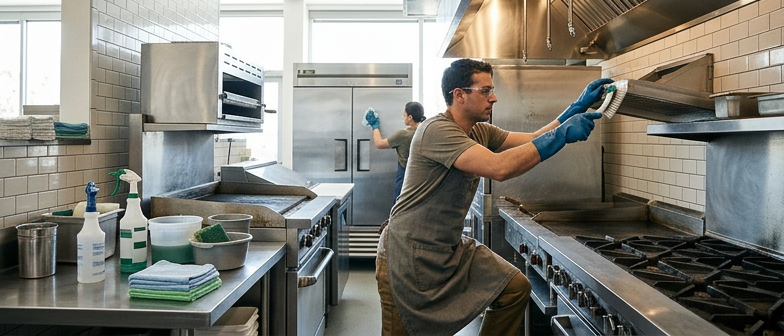
Restaurant cleaning services are a core part of food safety, not just a cosmetic extra. A professional cleaning service knows how to remove grease, food residue, and moisture that let bacteria, mold, and pests thrive. When high‑touch areas, prep tables, and restrooms are cleaned and sanitized on a strict schedule, the risk of cross‑contamination and foodborne illness for guests and staff drops sharply. In busy kitchens, trained cleaners also help keep walkways clear, floors dry, and chemicals properly stored, which supports compliance with OSHA standards and helps prevent slips, burns, and other avoidable injuries.
From a regulatory and brand perspective, consistent restaurant cleaning services are just as critical. Health inspections focus heavily on cleanliness, from the cooking line and dish area to vents, hoods, and floors, and poor scores can quickly become public and harm your reputation. Working with a professional cleaning service that understands what health inspectors expect makes it easier to document routines, show that sanitation procedures are followed, and correct issues before they appear on a report. Over time, a visibly clean dining room, bar, and kitchen builds guest trust, encourages positive reviews, and protects the long‑term image of the business.
In a busy restaurant, everyday cleaning services focus on visible and high‑touch areas that affect food safety and guest perception from hour to hour. Front‑of‑house staff wipe and sanitize tables, menus, payment terminals, and restrooms during service, while floors are swept and spot‑mopped. Back‑of‑house teams frequently wipe down prep tables, equipment exteriors, handles, and smallwares with food‑safe products that are labeled for sanitizing, not just general cleaning. Cleaning removes dirt and spills; sanitizing lowers germs on food‑contact surfaces to safe levels after washing; disinfecting, usually reserved for non‑food‑contact surfaces such as door plates or restroom fixtures, is aimed at killing a wider range of microorganisms. Understanding this cleaning, sanitizing, disinfecting difference helps managers set realistic expectations for what in‑house routines must cover every shift.
Restaurant deep cleaning services go beyond these routine tasks to remove buildup that daily work rarely reaches, such as under and behind line equipment, inside hoods and vents, around drains and grout, and on high surfaces that accumulate grease and dust. These intensive jobs often require specialized tools, heavy‑duty degreasers, and knowledge of ventilation and fire‑safety standards, so operators schedule professional teams on a regular monthly or quarterly cycle, depending on menu and volume. Everyday work keeps surfaces visibly clean and properly sanitized in the short term, while periodic deep cleaning restores heavily used areas and supports health‑inspection expectations. The most effective programs clearly define which tasks stay with staff each shift and which belong in a scheduled deep‑cleaning plan, so nothing falls into the gap between routine upkeep and intensive work.
Daily routines in a restaurant should focus on visible guest areas and high‑risk food contact surfaces so that everyday cleaning stays ahead of health inspectors’ expectations. Front of house teams wipe and sanitize tables, menus, chairs, and payment terminals between guests, then sweep and damp‑mop floors at close. Back of house, cooks and dish staff degrease line equipment, sanitize prep tables and cutting boards, rotate and label food, empty and disinfect waste bins, and clean handwashing sinks. A professional cleaning service can support the in‑house crew by handling end‑of‑day restrooms, entry glass, and touchpoints like door handles, keeping standards consistent even on busy nights.
Commercial kitchen cleaning services target risks that everyday cleaning cannot control. In a busy restaurant, grease quickly coats hoods, ducts, exhaust fans, and nearby ceilings, driving both fire danger and poor indoor air quality. Restaurant deep cleaning services use strong degreasers, heat, and mechanical agitation to strip residue from hidden areas of the ventilation system, lowering the chance of flare‑ups and helping meet fire codes and OSHA standards on safe air handling and worker exposure. For many operators, scheduling commercial specialists is the only realistic way to keep these systems within acceptable safety limits.
Food‑contact surfaces and high‑use equipment demand a stricter approach than front‑of‑house areas. Professionals trained in health‑department rules understand the difference between cleaning, sanitizing, and disinfecting, and adjust methods for prep tables, cutting boards, grills, fryers, and refrigeration gaskets. When owners search for kitchen cleaning services near me, they want crews who can break down equipment, clean under and behind it, and reassemble it correctly so cross‑contamination risks stay low. A specialized provider also selects products and dwell times that work against common foodborne pathogens while remaining safe in food‑service spaces.
Because these tasks are complex, many managers hire contractors who focus on back‑of‑house environments. These teams schedule deep cleans around service hours, coordinate with in‑house staff, and document completed work so operators can show due diligence if inspectors request records. Partnering with experts in commercial kitchen cleaning services and occupational safety supports a consistent, auditable program instead of last‑minute emergency cleanups, helping restaurants keep kitchens ready for inspection at any time.
When you hire commercial kitchen cleaning services, expect an inspector‑ready scope of work focused on fire safety, ventilation, and food‑contact hygiene. A reputable provider will separate routine work from full restaurant deep cleaning services, typically covering hoods, ducts, exhaust fans, grease traps, equipment exteriors and undersides, walls, floors, and hard‑to‑reach areas. They should clarify what is cleaned, degreased, sanitized, or disinfected, and list the products and methods used so you can confirm compliance with local health and safety standards.
Restaurant cleaning contractors specialize in foodservice environments and typically structure their work around your operating hours, menu, and traffic patterns. Unlike ad‑hoc cleaners or one‑time crews, they follow consistent procedures, often aligned with occupational safety and health standards and local health inspection expectations, so that floors, restrooms, and high‑touch surfaces are cleaned the same way every night. Many of these cleaning service companies offer company‑wide cleaning services that standardize checklists and training across multiple locations, which is especially useful if you run several units and need the same hygiene level and documentation in each dining room and kitchen.
Broader commercial cleaning contractors, who may serve offices, retail, and warehouses in addition to restaurants, can complement your in‑house team by taking on heavier or specialized tasks while staff handle everyday wipe‑downs and quick resets. A typical arrangement is to have employees manage front‑of‑house tidying during service while an external provider delivers scheduled company cleaning services for tasks like machine scrubbing floors, high‑level dusting, or periodic back‑of‑house detailing. By clearly defining responsibilities, communication channels, and inspection routines with your chosen contractor, you gain a professional framework for cleanliness that supports food safety, employee morale, and a consistent guest experience without overloading your own team.
Why are restaurant cleaning services critical for safety and reputation?
They control grease, food residues, and moisture that attract bacteria, mold, and pests, and keep walkways and restrooms safer. Regular cleaning and sanitizing cut foodborne illness risks and show guests and inspectors that hygiene is taken seriously.
How do everyday cleaning services differ from restaurant deep cleaning?
Daily work focuses on visible areas and high‑touch points during and after service. Restaurant deep cleaning services reach under and behind equipment, walls, ceilings, and ventilation to remove built‑up grease and soil that daily routines miss.
How can company‑wide cleaning programs help multi‑unit restaurants?
Cleaning service companies that support multiple locations standardize checklists, chemicals, and training, so every unit has the same hygiene level, documentation, and inspector‑ready routines, reducing compliance gaps.
What should I expect from commercial kitchen cleaning services near me?
A professional cleaning service should define a clear scope for hoods, ducts, exhaust fans, floors, and hard‑to‑reach areas, and state what is cleaned, degreased, sanitized, or disinfected with products that meet local health rules.
How do restaurant cleaning contractors differ from general commercial cleaning contractors?
Restaurant specialists build their work around kitchen workflows, grease and food‑contact risks, and health inspections, while general commercial cleaning contractors focus more on offices or retail and may lack that food‑service expertise.