
x
When a door won’t close, sags, or a garage door refuses to open, the repair choices and costs can be confusing. This guide helps you compare common Door Repair options, typical prices, and which pro—handyman, carpenter, locksmith, or garage door specialist—to call for safe, affordable fixes.
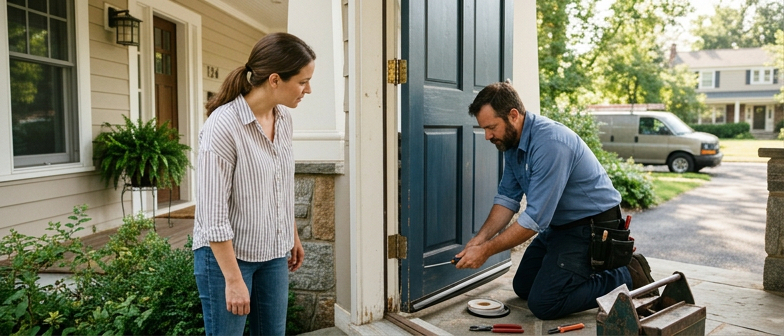
Door repair often starts with familiar symptoms at home: doors that stick, drag on the floor, rattle, or refuse to latch. A door that will not close can result from loose hinges, a misaligned strike plate, swelling from moisture, or a warped slab. The cost to fix a door that will not close depends on whether a quick adjustment, such as tightening hinges or light planing, solves it or whether hardware or frame parts must be repaired or replaced. Correcting frame damage, adjusting the lock set, or rehanging the door usually costs more, but these repairs protect comfort, energy efficiency, and security.
Garage doors add another set of issues, especially when the door will not open. A garage door that refuses to lift may have a failed opener, bent tracks, or a broken spring, and repair pricing changes with each cause. Opener reprogramming or sensor alignment is usually less expensive than mechanical work, while torsion or extension spring repair tends to be among the priciest tasks because it requires specialized parts and careful, safety‑focused handling. Whether you are dealing with a sticking entry door or a garage door that will not open, overall costs are shaped by the type of door, how complex the problem is, local labor rates, and how urgently you need service.
Structural problems with a door usually start at the frame or hinges. Moisture, settling, or impact can twist or crack the jamb, or pull it away from the wall. When you look for door frame repair nearby, a pro first checks whether the frame is solid and square. Small gaps, loose trim, or minor movement are often fixed with shims, new screws, and patching. If the frame is rotted, badly split, or so out of alignment that the latch no longer meets the strike plate, you may have to choose between repairing sections or replacing the entire frame to restore support and security.
A sagging or rubbing door often points to failing hinges or fasteners rather than a bad door slab. To fix a sagging door, start by tightening existing screws, then swap worn hinge screws for longer ones that reach the wall framing. Sometimes adjusting hinge position or adding thin shims behind a hinge leaf gives enough lift for the door to clear the floor or threshold. When hinges are bent, corroded, or pulling out of soft or damaged wood, it is usually better to call a local door hinge replacement service to reinforce the jamb and install new hardware safely.
Deciding whether to repair or replace the frame depends on damage and how the door is used. If the jamb is mostly sound but slightly out of square, a professional can realign the frame, reset hinges, and tune the latch for less cost than a new prehung unit. When the frame is warped, decayed, or cracked around the lock area, replacement tends to be stronger and longer lasting. Exterior doors that provide security and weather protection benefit from sturdier framing and well anchored hinges, while interior doors with moderate issues may be good candidates for targeted structural repairs.
| Option | Best For | Pros | Cons |
|---|---|---|---|
| Minor frame repair | Slightly out-of-square jambs | Lower disruption, keeps existing trim | Limited improvement for severe warping |
| Targeted hinge reinforcement | Sagging doors with sound framing | Improves alignment, preserves door slab | Less effective if jamb wood is compromised |
| Sectional frame replacement | Localized rot or cracking | Strengthens weak areas, moderate cost impact | May not fully correct long-term settling |
| Full frame replacement | Warped or decayed exterior frames | Higher stability, better security and weather resistance | More invasive work, higher budget and planning needs |
To fix a sagging door, slowly open and close it and note where it rubs at the top, latch side, or threshold. Inspect each hinge for loose screws or gaps, then tighten the screws with a hand screwdriver. Replace any stripped screws with longer ones that reach the framing. If the door still drags, slightly loosen the top hinge screws on the jamb, pull the door toward you, and retighten to lift the latch side, often avoiding the need for a full hinge replacement.
If hinge tightening and repositioning do not help, remove hinge pins one at a time, clean off paint or debris, and lightly lubricate before tapping them back in. If the door edge still binds, mark rub points with a pencil, take the door off, and plane or sand only those spots before sealing the bare wood. When wood around hinge screws is cracked or the door will not stay aligned, it is time to look for nearby door hinge replacement services and consider a professional repair.
When a door becomes difficult to use or will not close properly, the hardware is usually the first thing to check. Sticking locks, latches that miss the strike plate, loose hinges, and broken door handles all affect how the door works and how secure it is. Broken door handle repair might only require tightening screws or replacing a worn part, but damaged locks, misaligned strikes, or tired door closers often need a trained hand. In most areas, door hardware issues are handled by different trades: locksmiths focus on locksets and deadbolts, handymen deal with everyday knobs and latches, and carpenters or door specialists take on heavier hinges and more complex hardware. Understanding who repairs door hardware near you helps you contact the right person and avoid paying someone who cannot address the specific problem.
Choosing between a handyman or carpenter for door repair depends on whether the issue is limited to hardware or involves the door and frame. A general handyman is usually suitable for smaller jobs, such as tightening or replacing hinges, installing a new handle set, or adjusting a latch that is only slightly out of line. When hardware trouble comes from a warped frame, a sagging door, or damage from moisture or impact, a carpenter is better suited because they can adjust or rebuild the door and frame so the hardware works correctly again. If the hardware includes high security locks, smart devices, or specialty closers on commercial or accessible doors, you may need a locksmith or dedicated door hardware technician. First deciding whether the problem is mainly mechanical or structural makes it easier to choose effective, appropriate help.
For simple Door Repair, such as minor sticking, latch adjustment, or basic broken door handle repair, hire a handyman. They are usually the ones who repair common door hardware and can realign a door that still closes and locks without rebuilding the frame.
Call a carpenter when you need someone who regularly handles door hardware plus more serious problems, like fixing a sagging door or repairing a stressed frame. They can reset hinges, rebuild jambs, and correct structural issues around the opening.
For a garage door that won’t open or is stuck halfway, use a dedicated garage door pro. Garage door won’t open repair often involves high‑tension springs and heavy panels, so trained specialists should handle spring replacement, track adjustments, and opener service.
Garage door spring work is one of the most hazardous parts of Door Repair. These springs store enough energy to lift the door, so a break or slip can cause serious injury or damage. Because of this risk, spring work is usually left to trained pros rather than DIY. Garage door spring replacement cost depends on the door’s size and weight, whether you use extension or torsion springs, local part prices, and any emergency surcharge when the door is stuck closed. Labor is often higher than for other door repairs because handling springs safely requires specialized tools and extra safety steps.
When a garage door won’t open, a broken or weakened spring is a common cause, though cables, tracks, or the opener may also be involved. Technicians check that springs are correctly rated and balanced, and often suggest replacing both so the lifting force stays even, which raises the immediate bill but can reduce future service calls. If the hardware is very old, rusted, or keeps failing, it can be smarter to plan a broader garage door repair or upgrade instead of paying for repeated emergencies.
Why won’t my door close properly, and what does repair usually cost?
Common causes are loose hinges, a misaligned latch or strike plate, or a slightly warped door. Simple adjustments to fix a door that will not close often cost about $50–$120, while rehanging the slab or repairing the frame can run $120–$250 or more.
When should I repair a door frame instead of replacing it?
Small gaps, loose trim, or minor damage can be shimmed, glued, or reinforced by a carpenter offering door frame repair near you. If the frame is rotted, badly split, twisted, or can’t hold the lock securely, it is usually safer to replace the entire frame.
How can I quickly fix a sagging interior door?
Watch where the door rubs, then tighten all hinge screws with a hand screwdriver. Replace stripped screws with longer ones into the wall framing. If the door still sags, adjust the top hinge slightly so the latch side lifts and the door closes smoothly.
Who should repair broken door hardware or a loose handle?
For a broken door handle, wobbly knobs, basic latches, or hinge replacement, a handyman or carpenter for door repair is usually enough. Call a locksmith for jammed key locks or deadbolts, or a door hardware specialist for heavy commercial hinges and closers.
What does garage door spring replacement cost, and should I do it myself?
Garage door spring replacement cost is typically $200–$400, more for large or heavy doors or emergency visits. Because springs are under high tension and can cause serious injury, garage door spring work should be done only by trained technicians, not DIY.