
x
When your water heater is leaking or too old to keep up, you face urgent choices about replacement, costs, and safety. This guide helps you decide between gas and heat pump models, estimate installation and labor, compare quotes, handle permits, and qualify for tax credits or rebates.
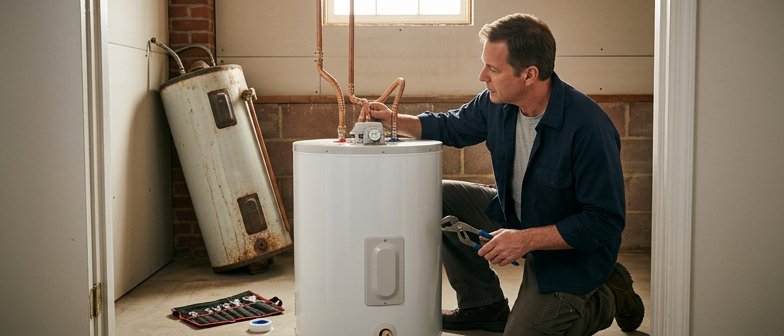
You usually need to consider water heater replacement when the unit is 8–12 years old, can’t keep up with hot water demand, or shows rust and corrosion around fittings or at the base. If you need to replace a leaking hot water tank, ongoing drips can quickly cause serious damage, so swapping the unit is often safer than repeated patch repairs. First shut off a leaking water heater by turning off power at the breaker for electric models or setting the gas control to off, then closing the cold water supply valve above the tank. Once the leak is controlled, a licensed plumber can inspect the system and help you decide whether a repair is realistic or if age, condition, and safety risks mean installing a new unit.
When the tank is actively flooding or there are strong gas odors or signs of electrical burning, treat the situation as an emergency and contact an emergency water heater installer near you instead of waiting for a routine appointment. Keep people away from standing water, avoid switching electrical devices on or off, and ventilate any suspected gas fumes while you call for help. Many professionals can guide you by phone to stabilize the problem until they arrive, then help you move forward with a safe, code-compliant replacement.
When planning a water heater replacement, separate the price of the unit from the cost of professional installation. Basic tank heaters are a few hundred dollars, while high‑efficiency or specialty models can exceed a thousand. The overall water heater replacement cost with labor depends on how easy the old unit is to reach, whether new gas, electrical, or venting connections are needed, and if local codes require upgrades such as seismic strapping or an expansion tank. These elements together determine the final project total.
Fuel type strongly affects pricing, especially when comparing gas water heater replacement cost with electric or heat pump units. Swapping a gas tank for a similar gas model in the same location is usually one of the more straightforward and affordable projects, but you still need a qualified installer to handle gas connections. Costs increase if the gas line or venting must be modified or older components must be brought up to current safety standards. Changing from gas to another technology can raise both material and labor charges because of added electrical or plumbing work.
To avoid unexpected charges, request and compare several water heater installation quotes from licensed contractors and review exactly what each proposal includes. Check who is responsible for pulling the water heater permit, since some areas expect the installer to handle permitting while others allow homeowners to apply directly. Permit fees, inspection costs, and any code‑driven corrections should be listed or clearly explained. An itemized estimate that separates equipment, labor, disposal, and permitting helps you judge whether a bid is realistic for your budget.
| Water Heater Type | Upfront Equipment Cost Level | Typical Installation Complexity | Permit and Code Upgrade Impact | Best Fit Budget Strategy |
|---|---|---|---|---|
| Standard Gas Tank | Low to Medium | Simple replacement when lines match | Moderate; focused on venting and safety | Prioritize clear labor and permit breakdown |
| High-Efficiency Gas | Medium to High | More involved venting and gas adjustments | Higher; efficiency and safety checks | Compare quotes that detail upgrade work |
| Heat Pump Water Heater | High | Complex; electrical and space needs | High; electrical capacity and airflow rules | Use itemized bids and factor potential incentives |
| Gas to Heat Pump Conversion | High | Most complex; gas changes plus new wiring | High; multiple trades and inspections | Seek multiple quotes with separate material and labor |
When you collect estimates for water heater replacement, compare what each quote includes, not just the price. Ask contractors to separate the water heater replacement cost with labor, equipment, parts, disposal, and any extras such as expansion tanks or new shutoff valves. Make sure the quote explains any code upgrades, changes to gas or electrical connections, and warranty coverage on both the water heater and the installation work.
Permits are essential for legal, safe installation, so confirm in advance who will obtain the water heater permit. In some areas the installer handles the paperwork and inspection fees, while in others the homeowner files and pays the city or county directly. Each quote should state how permits and inspections are managed, who meets the inspector, and whether possible reinspection costs are included in the overall project price.
When planning a water heater replacement, a key decision is whether to install a traditional gas unit or a heat pump water heater. Gas heaters burn natural gas or propane to heat water quickly and are familiar in many homes. Heat pump models use electricity to move heat from the surrounding air into the tank, relying on high‑efficiency technology instead of direct combustion. This difference in how they produce hot water affects energy use, operating costs, and how well each type fits your existing utilities.
Gas systems usually have a lower purchase price, but the total gas water heater replacement cost should include venting, gas line changes, and labor. Heat pump units cost more upfront to buy and install, yet they can cut energy bills over time because they use far less electricity than standard electric tanks. Many areas offer incentives for high‑efficiency equipment, so checking your heat pump water heater rebate eligibility can reduce the initial investment. When you compare installation quotes, ask contractors to show both the installed price and projected utility savings.
Performance and practical needs also differ. Gas water heaters suit households that already have gas service and want fast recovery, provided there is safe venting. Heat pump water heaters work best in spaces with enough room and air volume, such as a basement or large utility area, and they may slightly cool or dehumidify that space while running. Considering local code rules and any efficiency requirements tied to rebates or tax credits will help you choose between gas and heat pump options that match your budget, energy goals, and available space.
When planning a water heater replacement, compare gas versus heat pump water heater options against your household’s hot water demand and existing utilities. Gas units suit high, continuous use and homes with gas lines and venting already in place. Heat pump models work best in areas with enough space, moderate room temperatures, and adequate electrical capacity, and their lower operating costs can offset higher upfront pricing when you also qualify for heat pump water heater tax credits or rebates.
To choose the right system, think about how long you’ll stay in the home and whether you meet typical heat pump water heater rebate eligibility rules, since incentives can shrink the final installation cost. If you want a straightforward like‑for‑like gas replacement, a modern gas unit may be easier. If long‑term utility savings matter more, a heat pump model is often the better fit for your budget and comfort.
When you replace an older unit with a high‑efficiency model such as an ENERGY STAR heat pump water heater, you may qualify for a federal Heat Pump Water Heater Tax Credit and local incentives. A federal credit reduces the income tax you owe, and you usually claim the water heater tax credit when you file your annual return using the IRS form specified for energy‑efficient equipment. The heater must meet efficiency standards, be installed in your primary residence, and fall within current dollar limits and timelines, so you should confirm the latest rules on official tax and energy‑efficiency websites before buying or filing.
Utility companies, state energy offices, and city programs often offer separate rebates that can be combined with federal benefits, but heat pump water heater rebate eligibility depends on your location, the model, and whether a licensed contractor does the installation. Programs typically require product registration, proof of purchase, and documentation such as permits or installation invoices, and they set firm deadlines for submitting rebate requests. Reviewing these requirements and available incentives before scheduling Water Heater Replacement helps you estimate your actual cost and avoid missing savings.
What should I do first if I need to shut off a leaking water heater?
Turn off power at the breaker for electric units or set the gas control to off, then close the cold water supply valve above the tank and call a licensed plumber.
When is it time to replace a leaking hot water tank instead of repairing it?
If the tank itself is leaking, the heater is 8–12 years old, or corrosion is visible at the base or fittings, replacement is usually safer and more cost‑effective than repair.
How can I compare water heater installation quotes effectively?
Ask each contractor to itemize the unit price, labor, parts, permits, disposal, and code upgrades, then compare scope of work, warranties, and total cost, not just the cheapest number.
Who typically handles the permit for a water heater replacement?
In most areas the installing plumber or HVAC contractor pulls the water heater permit, but you should confirm in writing who is responsible before the job starts.
How do gas and heat pump water heaters differ in cost and incentives?
Gas heaters usually have lower upfront cost but higher ongoing fuel use, while heat pump units cost more initially, may qualify for a heat pump water heater tax credit or rebate, and often cut long‑term energy bills.