
x
When memory loss makes home life unsafe or exhausting, choosing a memory care home raises questions about timing, licensing, daily supervision, and monthly room‑and‑board costs. This guide helps you compare nearby residences and understand financial and care options.
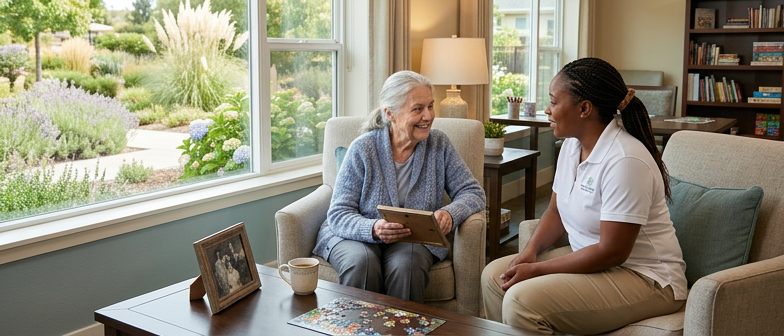
A memory care home is a residential setting for people living with Alzheimer’s disease and other dementias who need ongoing support but not the intensive medical care of a hospital or skilled nursing facility. Compared with typical assisted living, these residences use structured daily routines, secure layouts, and safety features to reduce confusion and wandering. Staff receive training in cognitive changes, behavior, and communication, and assist with personal care, supervision, and everyday decision‑making. In California, memory care homes usually operate under specific residential care licenses that set minimum standards for staffing, safety, and resident rights, which distinguishes them from general senior housing.
Families often consider this option when a person can no longer live safely at home, even with relatives or in‑home aides. Typical residents are older adults with moderate to advanced cognitive impairment who require close supervision, frequent reminders, and help organizing daily tasks, but who still benefit from social contact and familiar routines. Homes emphasize continuous monitoring and planned small‑group activities, music, and gentle exercise to support function and reduce isolation. Some settings provide round‑the‑clock oversight for individuals who may be awake or unsettled at night. When comparing nearby residences, families can look at how each home’s environment, staffing patterns, and daily activity program match the person’s needs and safety risks.
When families compare memory care homes nearby, it helps to start with the specific needs of the person living with dementia. Important factors include how much help is needed with daily tasks, what kind of behavioral support is required, and whether a smaller household-style setting or a larger community feels more comfortable. Visiting several residences, observing daily routines, and noticing how staff interact with residents can reveal differences that written materials may leave out. Asking about dementia-specific staff training, staff-to-resident ratios on each shift, and how health changes are monitored gives a clearer sense of how supervision is actually provided.
Service packages differ by residence, so it is important to review what is included in the monthly fee and what is billed separately. Core services often cover room and board, basic personal care, medication assistance, and planned activities, while transportation, incontinence supplies, or one-on-one support may involve additional charges. When comparing supervision and activities, families can ask how often programs are offered, whether they are adjusted for different stages of memory loss, and how staff encourage meaningful engagement instead of only passive entertainment. Understanding these details makes it easier to compare homes on more than just price or appearance and to see which services are truly included.
To decide whether a particular residence is a good long-term fit, families can consider both current needs and likely future changes in dementia care. Some homes are prepared to provide around-the-clock support as conditions progress, while others have limits on the medical or behavioral needs they can safely manage. It is useful to ask how the home responds if a resident begins to wander, show agitation, or need more physical assistance, and which situations might lead staff to recommend a move to a different level of care or another type of memory care setting.
When assessing memory care homes close to home, families can look beyond distance and consider staffing levels, how night shifts are covered, and whether team members receive ongoing dementia training, because this affects supervision and responses to changes in behavior or health. It is also useful to notice clear signage, secure but not overly restrictive doors, quiet spaces, and natural light, since these features support orientation and may reduce agitation. Reviewing sample daily schedules shows how often residents join structured activities that fit different stages of memory loss, including small group programs, individual time, movement, and social contact, helping identify residences that better support routine, comfort, and dignity.
Before choosing a memory care home, families can use state licensing databases to confirm the residence is approved to care for people living with dementia and review license status, inspection findings, complaints, and enforcement actions. Reading several years of reports shows how consistently the home meets safety, staffing, and medication rules. A site visit adds context that records cannot provide. During a tour, relatives can watch how staff interact with residents, check whether doors and outdoor areas feel both secure and respectful, and see how daily routines support orientation and comfort. Asking about handling night emergencies, dementia training for new staff, coordination with health care providers, and how concerns are addressed helps families compare what they observe with official inspection findings.
Families usually consider a memory care home when safety, health, or daily routines are no longer manageable at home. Common signals include wandering, falls, medication problems, increasing confusion at night, or serious caregiver strain. A dementia or Alzheimer’s diagnosis helps track changes and supports discussions with health professionals about when round‑the‑clock supervision in a specialized residence may better protect the person’s well‑being.
How long it takes to move into memory care depends on local openings, required assessments, and financial planning. Some residences can admit quickly in urgent situations, while others have waitlists lasting weeks or months. Typical steps include visiting potential communities, comparing supervision and services, arranging health and cognitive evaluations, and submitting medical records and admission forms. Families also review contracts, clarify what monthly fees cover, and confirm how room, board, and care costs will be paid.
Placement is often easier with professional guidance. Physicians, hospital social workers, and community dementia organizations can outline options and suggest questions that help match needs with an appropriate setting. Some families work with independent placement specialists, who help compare residences and coordinate assessments but do not choose for the family. After a residence is selected, staff schedule the move, prepare an initial care plan, and gather information about routines and preferences to support a safer transition.
When a move to a memory care home feels overwhelming, neutral advice from health professionals and community agencies can clarify options. Physicians, neurologists, and hospital social workers can discuss whether memory care is appropriate and point to nearby residences, while local aging services and caregiver centers help families compare typical supervision, activities, and licensing information. Dementia-focused nonprofits may offer care consultations that review safety, behavior changes, and budget. Families who use a private placement adviser should ask how the adviser is paid and which homes they visit regularly, to understand that suggested residences may represent only part of the choices available in the area.
Monthly costs in a memory care home depend on location, room type, and how much assistance a person with dementia needs. Charges usually combine room and board with supervision, personal care, and structured activities. Private rooms typically cost more than shared rooms, and higher support needs lead to higher fees when residents require intensive hands-on help or frequent monitoring. Families can request written summaries of base rates, care-level adjustments, and room and board fees to compare different residences on similar terms.
When reviewing memory care home monthly costs, families should separate services included in the standard package from items billed separately. Common inclusions are meals, housekeeping, basic personal care and hygiene, medication reminders or administration, and access to group activities. Extra charges may be added for transportation, specialized supplies, one-on-one behavior support, or coordination with outside health professionals. Some residences change fees as dementia progresses, while others use tiered care levels based on regular assessments. Clear explanations of what is included and what can change over time help reduce the risk of unexpected bills.
Financial eligibility for payment sources is shaped by program rules rather than by the home alone. Families often rely on personal savings, retirement income, and insurance benefits when available. Public programs that assist with long-term care may set conditions related to income, assets, medical need, and the type of licensed facility. These requirements can differ by jurisdiction and may change, so people are usually advised to consult official agencies, benefits counselors, or legal and financial professionals familiar with local regulations. Comparing residences should include asking which payment sources they accept and how they support documentation.
Careful comparison of services included in the fee structure helps make budgeting more realistic. Some homes bundle supervision, activities, and routine health monitoring into one rate, while others itemize services and charge separately for complex medication management or added support. Families can ask how often health status is reviewed, how price changes are communicated, and whether there are clear criteria for when a person’s needs exceed what can safely be provided on site. Understanding how transitions to higher levels of care are handled can clarify both future costs and the types of settings that may be needed later.
What does a memory care home provide beyond typical assisted living?
It offers secure layouts, structured routines, dementia‑trained staff, help with daily care and medications, and closer supervision to limit wandering and confusion.
How can families compare nearby memory care residences?
Visit several homes, watch how staff interact, ask about staffing ratios, dementia training, night coverage, health checks, and which supervision and activities are included in monthly fees.
How do families verify licensing and care quality for a memory care setting?
They can review the state licensing database for the current license, inspection findings, complaints, and any enforcement actions, and compare this with what they observe during a tour.
When should someone with dementia move into a 24‑hour care home?
Consider a move when wandering, falls, medication errors, or severe nighttime confusion become frequent, and caregiver strain is high; discuss these changes with the person’s physician or neurologist.
Which financial issues should be checked before choosing a memory care home?
Request a written list of monthly costs and room‑and‑board fees, what services are included, possible care‑level add‑ons, and which payment sources may apply, confirming details with official agencies or qualified advisers.