
x
Home massage service in Singapore can feel far more convenient than travelling to a spa, but it raises questions about licensing, pricing and timing. This guide helps you compare home, office and hotel visits, check legality and packages, and decide when and how to book.
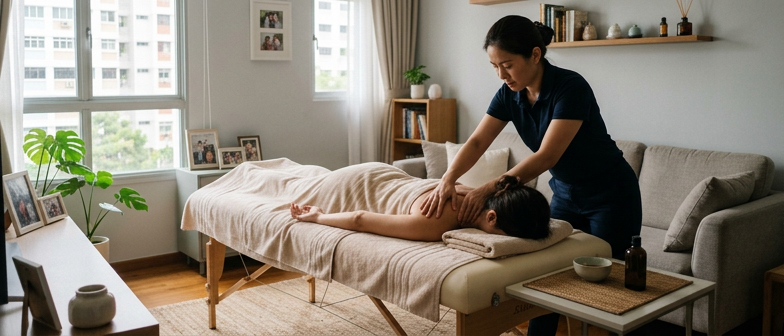
Home and other outcall massage services involve therapists travelling to a client’s residence, hotel room or office instead of the client visiting a spa. This arrangement can suit people with long work hours, caregiving duties or limited mobility, and is sometimes used for workplace wellness when staff book a massage at the office after work. When exploring such services, clients usually need to check whether the provider covers their neighbourhood, how hotel visits are handled and whether the therapist can follow building rules such as security registration and visitor access times.
Even when therapists travel to the client, these services operate within the regulatory framework for massage establishments in Singapore. Commercial businesses generally require a licence and must follow rules on where they can work, how they engage staff and what professional standards apply, while independent practitioners need to comply with relevant laws for their form of practice. People considering a home or hotel visit can review how each service defines its coverage area and how it distinguishes between private homes, serviced apartments and offices, then compare this mobile format with traditional spa visits in terms of scheduling, privacy and comfort.
Booking a massage at home reshapes the experience compared with visiting a spa. A home session emphasises convenience and privacy, with no travel time or waiting and the treatment taking place in a familiar setting. This suits people with mobility constraints, demanding work schedules or caregiving responsibilities. Spas, by contrast, are set up as dedicated wellness spaces with curated ambience and support staff, which some clients prefer when they want distance from household routines, to meet friends or to pair massage with other leisure activities.
Services and equipment also differ between home visits and spa facilities. Outcall practitioners usually bring a portable table, basic linens and oils, and provide common techniques such as Swedish, deep tissue or sports massage that fit safely into a living room, hotel room or office. Spas can install fixed tubs, steam rooms and specialised treatment suites, so they tend to offer broader menus such as hydrotherapy or multi-step rituals. When comparing outcall massage packages, clients often look at session duration, whether group bookings are possible, and available add-ons such as focused work on feet, head or neck.
Costs and practical arrangements vary as well. Some providers treat home appointments as all-inclusive, while others separate transport fees, late-night surcharges or higher rates for particular areas. The same practitioner may work in a spa by day and take home bookings after work hours, but prices, minimum duration and coverage zones can differ. People choosing between a home visit and a spa session typically weigh total time involved, level of privacy, how quiet their home environment is, and how clearly the outcall terms and any extra charges are explained before confirmation.
| Setting | Key Strengths | Main Limitations | Best For | Booking Notes |
|---|---|---|---|---|
| Home massage visit | High privacy and convenience | Dependent on quiet, suitable space | Busy professionals, caregivers, limited mobility | Check transport fees and coverage zones |
| Traditional spa visit | Curated ambience and wider facilities | Requires travel and fixed appointment slots | Social meetups, special occasions, multi-step rituals | Compare package menus and add-on treatments |
| Office after-work session | Group scheduling and workplace wellness | Needs management approval and dedicated room | Teams seeking relaxation after work | Confirm minimum group size and timing rules |
| Hotel outcall massage | Comfort in temporary accommodation | Subject to hotel security and access policies | Travellers wanting in-room treatment | Verify hotel acceptance and late-night surcharges |
| Mixed home and spa usage | Flexibility to match mood and schedule | Different price structures and policies | Clients who vary between quiet and social settings | Review outcall package terms before confirming |
Home visits suit individuals who value privacy and familiar surroundings, but they depend on whether the massage provider serves your neighbourhood and can enter your building without issues. After‑hours office sessions are usually arranged for several staff and may need management approval, a clean, quiet room, and clear schedules so they do not interfere with work.
Hotel call‑outs work for travellers or staycation guests, yet you should confirm the therapist is permitted to operate in guest rooms and that hotel rules allow external services. Whichever location you choose, check the areas covered, possible surcharges linked to distance or parking, and what details you must share in advance so the therapist can plan travel, equipment set‑up and session duration.
Home and outcall massage is covered by the regulatory framework for massage establishments, which seeks to reduce unlawful or unsafe activities. When a therapist visits a home, hotel room or office, the individual or company behind the service is expected to comply with licensing rules, land-use requirements and employment regulations. This may involve operating from approved premises where relevant, following licence conditions and ensuring that foreign therapists hold suitable work passes and recognised qualifications. Knowing that such rules exist helps clients distinguish wellness-focused services from arrangements that could fall outside the law.
Clients can check whether a massage provider is properly licensed by referring to official resources that list approved establishments and explain licensing categories or exemptions. Many providers share their licence number and business registration on websites, receipts or booking platforms, and these details can be cross-checked against government look-up tools or public registers. It is prudent to confirm that the business address matches the licence record and that the type of service described, including home or hotel visits, fits within what the licence permits.
People who prefer home massage can further assess legitimacy by looking at how the service is presented and run. Clear descriptions of wellness-oriented treatments, transparent fees and proper invoicing all suggest attention to compliance. In contrast, vague marketing or claims that do not reflect typical health and wellness norms may indicate higher regulatory risk. If uncertainty remains, clients can contact the relevant licensing authority to confirm whether a provider is authorised and to clarify any limits placed on home-based services before making a booking.
For any home massage service, it helps to know how licences are regulated. The core licence for a massage establishment is usually issued by law‑enforcement authorities, and basic details can be checked through official business e‑services. Clients can confirm the registered name of a company, then search government licence directories to see if the business and any listed studio address are approved for massage activities before booking home or hotel visits.
Location rules and therapist eligibility are part of compliance. Converting a shop, office or residence into a massage studio normally requires planning approval, and property owners need to follow local guidelines. When foreign therapists are hired, employers should ensure they hold valid work passes and meet sector‑specific conditions. For home massage bookings, choosing providers that openly state their licence status, business address and therapist credentials allows clients to cross‑check these details with official sources.
For home or hotel massage, each provider sets its own booking rules, but some patterns are common. Same‑day or late‑night slots may be offered when a therapist is free, yet evening and weekend periods often fill early, especially during festive or school‑holiday seasons. Many services advise arranging an outcall visit at least one to three days in advance for popular times, and checking in advance whether your home, office, or hotel is within their coverage area and fits the therapist’s schedule.
Outcall massage fees are usually quoted per session or per block of time. Some operators include transport within the rate, while others add a separate call‑out or travel charge linked to distance, location, or timing. Prices can vary with session length, type of massage, and whether the visit is to a central home, an office, or a hotel. Before confirming, it is helpful to ask what the fee covers, including duration, equipment such as a portable bed, and any surcharges for parking, hotel access, or public‑holiday bookings.
When comparing outcall massage packages, it is useful to look beyond the base price. Important aspects include session length, therapist training, licence status of the service, and how flexible the booking, rescheduling, and cancellation terms are. Some providers offer discounted bundles for repeat visits, while others focus on occasional, on‑demand appointments. Considering total value, including convenience of home or office visits and clear transport and change‑fee policies, can help you choose an arrangement that suits your routine.
How does a home massage service in Singapore work compared with visiting a spa?
A therapist travels to your home, hotel or office with a portable table and oils, while a spa requires you to go to a dedicated facility with shared amenities and staff on site.
Can I book a home massage for tonight, or must I schedule in advance?
Some providers accept same‑day or late‑night bookings if therapists are free, but busy evenings and weekends typically require booking at least one to three days ahead.
Is it legal to have a massage therapist come to my home or hotel room in Singapore?
Outcall massage is generally allowed when the company holds a valid massage establishment licence and therapists work under proper employment and immigration rules.
Does the quoted price for outcall massage usually include transport costs?
Many services build transport into their fee or add a separate call‑out charge, so clients need to check the price breakdown and any surcharges for specific locations or times.
How can I verify that a home massage provider is properly licensed?
You can search the business name in official government e‑services that list registered companies and licensed massage establishments, then confirm that details match the provider’s information.