
x
If you’re worried about cracked, storm‑damaged, or aging trees near your home, Tree Risk Assessment helps you understand real failure risks, reporting levels, and insurance or permit requirements so you can budget for inspections, advanced decay testing, and multi‑tree assessments before deciding on pruning or removal.
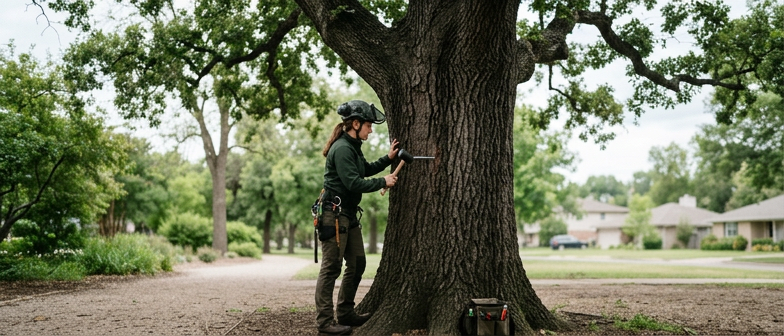
A Tree Risk Assessment is a structured evaluation of how likely a tree or its parts are to fail and what could be harmed if that happens. A qualified tree risk assessor reviews defects in the trunk, branches, and roots, overall health and species traits, and how wind, construction, or soil changes affect the tree. The outcome is more than a simple verdict on removal; it is a set of tree risk assessment levels explained in plain language, rating both likelihood of failure and possible consequences to people, buildings, vehicles, or utilities. This helps you decide whether monitoring, pruning, cabling, or removal is the most reasonable response.
A professional opinion becomes essential when you notice cracks, decay, or storm damage, when trees stand close to homes or property lines, or when an insurer, lender, or city requires documentation. In those situations you would look for a qualified tree risk assessor near you, often a certified arborist trained in current standards. Their written findings can serve as an arborist report for an insurance claim after a branch or entire tree fails, and can also support permit applications or real estate decisions. Knowing what the evaluation does and does not cover sets expectations about what can be predicted, what residual risk remains, and when follow-up inspections or additional testing may be recommended.
| Risk level | Typical tree condition | Suggested homeowner action | When a professional assessment is essential |
|---|---|---|---|
| Low | Minor defects, healthy canopy | Periodic monitoring from ground | When insurer or city requests documentation |
| Moderate | Noticeable defects, limited targets nearby | Schedule pruning and follow-up checks | When tree is near house, driveway, or property line |
| High | Cracks, decay, or storm damage in major parts | Prompt mitigation such as pruning or cabling | When people, buildings, or vehicles are within reach |
| Extreme | Severe structural weakness over busy areas | Plan for urgent removal or major risk reduction | When an arborist report is needed for an insurance claim or permit |
In modern Tree Risk Assessment, risk levels are typically rated as low, moderate, high, or extreme by weighing defects, site conditions, and what could be hit, such as homes, play areas, or power lines. These categories guide whether a tree only needs monitoring or urgent mitigation or removal, and they shape how risk is explained to owners, insurers, and permitting authorities.
Because these ratings affect legal and financial outcomes, it is important to use a qualified tree risk assessor rather than a general landscape worker. Certified arborists with formal risk training follow recognized standards, document observations, and justify their conclusions in writing, so an arborist report for an insurance claim clearly links the assigned risk level to specific defects, storm history, and recommended work such as pruning, cabling, or removal.
Visible cracks in the trunk or major limbs are a clear sign to contact an arborist experienced with cracked trees in your area. Long vertical splits, bark pulling away from the wood, or a limb separating from the trunk can mean serious structural weakness, especially when the tree leans over a house, driveway, play area, or utility lines. A qualified tree risk assessor can decide whether pruning, cabling, or removal is safest and record the Tree Risk Assessment so you have documentation for a neighbor, landlord, or insurer.
After high winds, heavy snow, or ice, arrange a professional inspection for storm‑damaged trees rather than just quick cutting. Look for hanging or broken branches, trees that suddenly lean, soil mounded or cracking near the base, or roots exposed after saturated ground and wind. Because weakened trees can fail days or weeks after bad weather, timely assessment helps sort out which trees need urgent work, which can be monitored, and which remain low risk.
Root and foundation problems are easier to miss but can be just as serious. Schedule a local root damage assessment if you see cracked sidewalks, driveways, or foundations, raised pavers, or sudden drainage changes near mature trees. It is also wise to request a tree inspection before buying a house so a consulting arborist can identify high‑risk trees, roots close to utilities, or hidden decay that could lead to expensive future work. Calling early, as soon as you notice visible damage, usually keeps costs lower and leaves more management options.
In tree risk assessment, visible cracks are major warning signs that the trunk or primary limbs may fail. Watch for fresh splits with bright wood, bark peeling in strips, or cracks that run deep into branch unions. Horizontal or spiral fractures and cavities around these splits indicate serious structural weakness. If a large crack hangs over a driveway, sidewalk, or play area, contact an arborist who regularly handles cracked trees so a qualified professional can decide if pruning, cabling, or removal is needed.
After severe wind, ice, or heavy rain, storm‑damaged trees may look sound from a distance but be unsafe up close. Look for hanging or partially broken branches, tilted trunks, bark stripped from one side, or freshly heaved soil at the base. Similar warning signs appear with root problems, such as lifted pavement, new soil mounds, or a tree that suddenly leans after nearby digging. In these cases, arrange a local inspection for storm‑damaged or root‑compromised trees to judge how likely the tree is to fall and what action will keep people and property safe.
When people ask how long a Tree Risk Assessment or general tree inspection takes, they usually mean a visual check of one or two yard trees. A basic visit often runs thirty to ninety minutes on site, with extra time if the arborist prepares a written summary. A home buyer tree assessment before closing takes longer because the assessor must walk the whole property, review site conditions, and produce a report that a building inspector, real‑estate agent, lender, or insurer can understand. If you want an inspection before buying a house, allow for lead time, since qualified assessors may be booked several days to a week ahead in storm season or busy market periods.
Costs depend on how detailed the Tree Risk Assessment is and how many trees need to be checked. Pricing for a home buyer report may be a flat fee or charged per tree, while the cost for assessing multiple trees on a large yard or shared property is often a minimum visit charge plus an amount for each additional tree. Advanced tree decay testing is more expensive because it uses specialized tools and extra time to interpret trunk data, so it is usually reserved for high‑value or borderline trees where removal would be a major expense. Confirm in advance whether your estimate covers only visual assessment or also a formal document suitable for insurance, lenders, or permit applications.
| Assessment Type | Typical Use | Pros | Cons |
|---|---|---|---|
| Basic visual inspection | One or two yard trees | Fast visit, lower cost, minimal disruption | Limited detail, may miss hidden decay |
| Home buyer tree assessment | Inspection before closing on a property | Property‑wide view, report usable for lenders and insurers | Takes longer, scheduling lead time, higher overall fee |
| Advanced tree decay testing | High‑value or borderline trees | Detailed internal decay data, supports tough keep‑or‑remove decisions | Specialist tools, higher cost, more time on site and analysis |
| Multi‑tree risk assessment | Large yards or shared properties | Consistent ratings across many trees, supports long‑term planning | Longer field time, cumulative cost, more complex reports |
Inspection time depends mainly on how many trees are assessed and how detailed the Tree Risk Assessment must be. Checking one street tree is quick, but a multi‑tree risk assessment for a whole property or HOA takes longer because each tree needs a risk rating, photos, and notes, which also increases overall cost.
A tree inspection for home buyers often takes more time and has a higher home buyer tree assessment cost than a simple visit for current owners. Buyers usually want written risk levels, future maintenance estimates, and advice on removal or preservation, so the arborist looks beyond immediate hazards and considers long‑term stability over the life of the mortgage.
Site conditions also affect how long a tree inspection takes. Large or steep lots, tight access, fences, and coordination with several stakeholders slow the work and raise multi‑tree risk assessment costs, especially where utilities or shared boundaries require extra documentation of constraints and liability.
What does a modern Tree Risk Assessment include?
It reviews trunk, branch, and root defects, species traits, general health, and site factors like wind, soil changes, and construction. The arborist rates likelihood of failure and what could be hit, then recommends monitoring, pruning, support, or removal.
When should I call an arborist for a cracked tree near my home?
Call a qualified tree risk assessor quickly if you see long splits, bark tearing away, or a limb opening from the trunk, especially over a house, driveway, play area, or power lines. They can document the crack and advise pruning, cabling, or removal.
How are tree risk levels explained to property owners?
Risk is usually rated low, moderate, high, or extreme, based on defects, conditions, and targets. The arborist links each level to actions, from simple monitoring and routine maintenance to urgent mitigation or removal.
How long does a typical tree inspection take and what affects cost?
Inspecting one or two trees usually takes 30–90 minutes, longer if a written report or permit assessment is needed. Time and price increase with tree number, property size, report detail, and any advanced decay testing.
What should home buyers and insurers know about tree reports?
For buyers, the assessor walks the site, checks multiple trees, and prepares a report on risks before you purchase. For an insurance claim, the report focuses on pre‑existing defects, storm damage, and whether recommended work was previously done.