
x
Pool lighting control has moved from simple switches to networked LED and DMX systems, raising questions about panel pricing, transformer and Wi‑Fi compatibility, and troubleshooting flicker or noise. This guide helps you compare control options, plan drawings and costs, and coordinate contractors for safe, reliable installations.
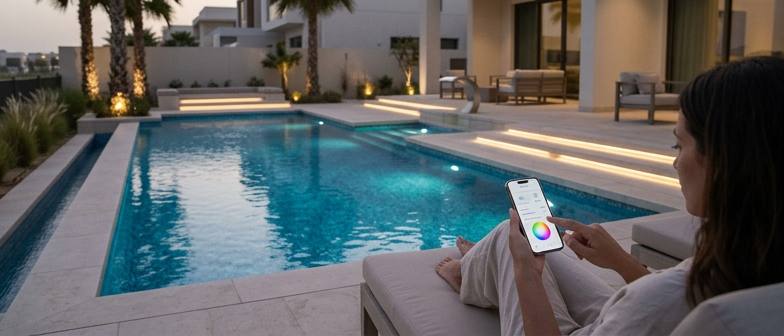
Modern pool lighting control covers the path from electrical supply and transformers to drivers, controllers, and user interfaces that govern underwater and perimeter luminaires. For an AE this usually involves low‑voltage LED fixtures, protective devices, and control hardware laid out so wet niche components remain clearly separated from dry‑location equipment. Systems range from simple switched circuits with step‑down transformers to addressable digital solutions that can vary colour, intensity, timing, and scenes, and that may link to building management platforms. Design must follow pool‑specific safety provisions, enclosure ratings, earthing and bonding practices, and routing rules for cabling around shells, decks, and plant spaces.
Connected controllers are increasingly common, using Wi‑Fi or similar networks and mobile apps for setup and operation. AE practitioners need to verify how these devices integrate with project networks, review cybersecurity exposure, and confirm that app‑based control works consistently with fixed panels and emergency overrides. Regional suppliers, including those serving projects in the UAE, may package transformers, control enclosures, and software, but engineers still have to examine datasheets, interface descriptions, and commissioning steps rather than relying on generic product claims. Later sections build on this overview with more detailed control topologies, integration options, documentation expectations, and typical troubleshooting patterns for issues such as flicker, noise, or loss of connectivity.
When an AE develops the pool lighting control concept, a primary decision is the control architecture. A DMX‑based system enables precise colour mixing, scene programming, and coordination with other show or façade lighting, but it needs careful addressing, cable routing, and suitable gateways to any building management platform. Simpler multi‑channel or relay‑based controllers support basic white or limited colour‑changing effects and are often easier to commission and maintain. Selection should reflect the visual performance required, owner capability to manage a more complex network, and confirmed compatibility between controllers and underwater fixtures, including supported protocols, load capacity, and recommended wiring topology.
A second focus is the interface between control equipment, pool light transformers, and electrical distribution. Underwater luminaires are typically low voltage, with transformers placed in niches, grouped remotely, or located in control rooms. The AE must coordinate voltage, frequency, and load rating, and understand any limits on dimming or colour control when transformers sit ahead of electronic drivers. Incompatible transformer types can cause tripping, flicker, or shortened lamp life, so specifications should define acceptable technologies and derating. Close coordination with the electrical engineer on fault protection, bonding, and separation distances is necessary, and the chosen control architecture must respect safety constraints for pool zones and isolation of control circuits from the wet environment.
To support constructability and compliance, the AE should set clear drawing and documentation requirements aligned with the selected architecture and local standards. Typical outputs include single‑line diagrams for feeders, transformers, and panels; schematics for DMX or other control buses; and layouts showing junction boxes, conduits, and luminaires with circuit identifiers. On projects supplied through regional distributors, for example in the UAE, documentation should match authority review practices and any adaptations of pool safety codes. Requiring shop drawings and as‑built records that reflect the original control intent helps later troubleshooting and retrofits, and allows facility teams to see how controllers, transformers, and underwater fixtures work together across the pool lighting system.
| Architecture Type | Visual & Control Capability | Design & Coordination Effort | Transformer & Safety Considerations |
|---|---|---|---|
| DMX‑based system | Fine colour scenes, synchronised effects | High; detailed addressing and bus routing | Strict transformer compatibility, careful isolation |
| Simple multi‑channel controller | Basic zoning, limited colour changes | Medium; straightforward wiring layouts | Standard low‑voltage coordination, defined derating |
| Relay‑based switching | On/off control, white light focus | Low; simple single‑line diagrams | Emphasis on fault protection and separation distances |
| DMX with building management gateway | Integrated pool and façade lighting control | High; cross‑discipline documentation | Requires clear bus segregation from power circuits |
In pool lighting control, transformer choice determines how control panels connect to underwater fixtures and the supply. Designers match secondary voltage and power rating to the combined load of all lights, allowing for LED inrush current and any manufacturer derating. They also review isolation type, single or multi-tap outputs, and whether the transformer can work with dimming or color-changing controls without creating electrical noise on low-voltage runs to DMX or other control gear. Transformer location is coordinated with panels and junction boxes to limit voltage drop and keep low-voltage circuits separated from line-voltage feeders.
Low-voltage interfaces for pool lights are shaped by NEC Article 680, which sets requirements for bonding, grounding, and clearances. Transformers feeding underwater luminaires must be listed for pool service, provide adequate isolation, and be installed outside restricted zones unless specifically rated. Conduit routing, equipotential bonding of metalwork, and positions of control enclosures are shown on pool light control drawings so inspectors can confirm spacing and protection details. Addressing these code conditions early helps keep the control system electrically safe while allowing low-voltage circuits and smart controllers to operate reliably.
When selecting a pool lighting control panel, the engineer clarifies load, zoning, and code constraints before choosing hardware. Panel capacity must suit transformer ratings and the number of lighting zones, with clear separation between wet-area circuits and other services. Protective devices, enclosure rating, and short-circuit performance are defined first, then contactors, relays, and manual overrides are added. Optional features such as touchscreens, schedulers, or gateways to building automation are considered only if they serve identified operational needs, so panel pricing reflects the required control logic rather than generic extras.
Connectivity affects both usability and coordination with wider systems. Wireless controllers with Wi‑Fi and mobile apps can simplify color selection, scene changes, and basic diagnostics, but they rely on stable networks, firmware support, and compliance with site cybersecurity rules. The engineer checks radio coverage, encryption options, and whether the application works with common mobile platforms and meets facility IT policies. Where reliability or tighter integration is critical, wired Ethernet links, dry contact interfaces, or protocol converters are often preferred, with cloud access treated as an optional supervisory layer.
Cost planning groups the control system into hardware, connectivity, installation, and supplier conditions. Hardware cost depends mainly on the number of zones, protection devices, enclosure type, and any smart controller modules, so the engineer prepares a bill of quantities that separates power components from user-facing interfaces. Installation cost estimates reflect cable routes to transformers and fixtures, required segregation, any civil or structural adjustments, and testing specified by local regulations. Coordinating with regional suppliers, including those based in the UAE when relevant, helps confirm delivery times, local approvals, and typical technical support, which can then be built into a flexible cost model.
Handheld remotes are paired with the pool lighting controller during commissioning using the manufacturer’s procedure. The designer confirms wireless range, protocol compatibility, and documents channel or scene mapping. When a remote is replaced after failure or loss, the same pairing steps are followed and firmware compatibility with the controller is checked to reduce issues such as missing colours or slow response.
Wi‑Fi enabled controllers and mobile apps require network setup and basic cybersecurity checks. During app installation, the controller is added to a secured network, firmware is updated where available, and access to presets and schedules is limited to authorised users. For ongoing maintenance, it is useful to keep credentials current, switch off unused remote access features, and record key network or cloud details to support future connectivity troubleshooting.
For pool lighting control projects, the AE should coordinate with contractors from concept design and define interfaces clearly. Drawings need to show control zones, cable routing, transformer locations, and separation from other pool services to support local electrical and pool safety codes. Control panel layouts, enclosure protection ratings, and integration points with building or home automation should be documented in schedules and diagrams rather than left to site judgement. The AE can describe minimum installer qualifications, such as experience with low voltage pool systems and common control protocols, and clarify responsibilities for commissioning and functional testing.
Where regional practice and suppliers shape pool lighting work, the AE should align design documents with typical contractor capabilities while specifying performance and compliance criteria instead of brand names. A bill of quantities that separates control hardware, cabling, civil works, and commissioning helps the client compare installation cost proposals on a consistent basis. During construction, planned site meetings and contractor method statements help manage interface risks, including routing control cables away from high voltage conductors and preserving access for future maintenance. Clear allocation of warranty, spare parts, and software update duties for control interfaces reduces disputes after handover.
How do modern pool lighting control systems differ from basic switched setups?
Modern systems use low‑voltage LED drivers, controllers and user interfaces to manage colour, scenes and timing, instead of only turning a transformer on and off.
When should an engineer choose a DMX pool lighting system instead of simpler controllers?
DMX is suited to projects needing precise colour mixing, scene programming and integration with show or façade lighting, where owners can support more complex commissioning and maintenance.
What factors most affect pool light control panel pricing?
Cost is driven by enclosure rating, protective devices, number of zones, transformer capacity and any added features such as schedulers or automation gateways.
What basic drawing information does a pool lighting control contractor need?
Drawings should show control zones, cable routes, transformer and panel locations, segregation from other pool services, and interfaces with any home or building automation system.
What are common causes of flickering pool LEDs and how are they checked?
Typical checks include verifying transformer compatibility, tightening low‑voltage connections, confirming controller load limits and inspecting for water ingress at fixtures or junction boxes.