
x
Sun-drenched beaches and poolside decks have become unexpected runways, where men trade modest trunks for daring silhouettes, strategic cutouts, and fabrics that cling like a second skin. As sporty basics evolve into statement pieces, comfort technology now merges with unapologetic sensuality, reshaping expectations of what’s worn in the water.
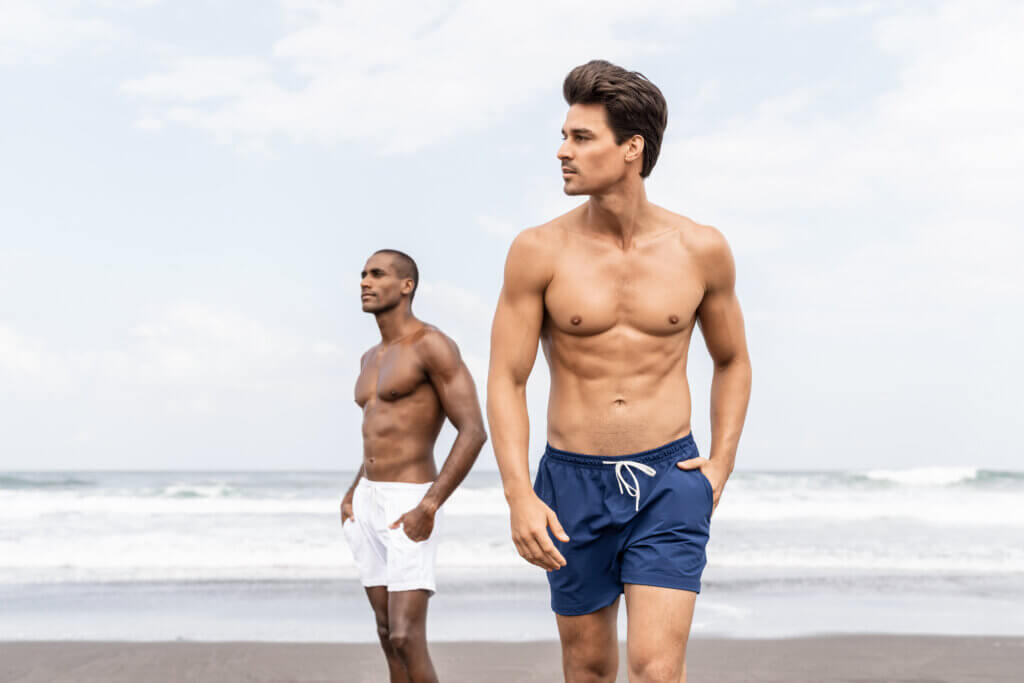
Ultra‑high leg openings, tiny side straps, and low waistbands strip things back to the minimum, shifting attention from “Is this swimsuit stylish?” to “How do the lines of the body look?”. Fabric at the thigh sweeps sharply upward, exposing more hip and side glute, so legs appear longer and the waist‑to‑hip curve more dramatic. Compared with wide‑sided trunks, every step lets quads, hips, and glutes flex visibly, especially when wet fabric clings and sharpens contours. For many wearers the real thrill is not just how much skin shows, but how muscles and curves seem to “move inside the outline”, turning a tiny garment into a moving frame around the body.
The first reaction to these micro cuts is often: “That looks like bedroom wear that escaped outside.” After one honest try, the feeling can flip completely. The logic is simple: stop pretending to be low‑key and let the suit announce “I’m reasonably pleased with this body.” High legs and minimal back coverage highlight curves people never noticed on themselves; low fronts pull the gaze away from mid‑section worries toward hips and thighs. Social feeds full of similar looks lower the shock factor, and what once felt outrageous gradually becomes a normal option in a holiday suitcase, especially for those who treat swim days as a reward for time spent training.
However fearless the design, comfort still lives in the basics: stretch, support, and cutting. If the leg opening is too sharp or tight, it digs into the crease of the thigh; if side straps are narrow but rigid, they leave harsh dents at the hips. Many brands now use highly elastic blends with gentle binding at the waist and leg, aiming for fabric that hugs rather than strangles. Shaped front pouches keep everything settled without constant readjusting, and narrower backs are curved carefully so they sit between the cheeks without painfully riding up. The real “win” is not how small the suit is, but how naturally it frames the body without making the wearer look like they are fighting their own outfit.
Between opaque coverage and full nudity lies a narrow but powerful zone. Semi‑transparent fabric occupies that space, showing silhouettes while softening details. Fine mesh, gauzy nylon and micro holes can be used in full panels or as slim insets along the hips, waistline, or upper glutes. Dry, they hint at skin tone; wet, they darken slightly yet keep enough shadow to tease the eye. Instead of blunt cut‑outs, these designs offer a delayed reveal: you know something is there, but you are always guessing exactly how much can be seen. This mix of safety and exposure is precisely what keeps many people coming back to sheer options even if they only wear them in select settings.
See‑through areas rarely land randomly. A slim strip above the butt crease lifts the look of the backside; curved windows over the hip bones draw attention to obliques; transparent seams tracing the pouch outline highlight shape while avoiding explicit detail. It works like using a highlighter pen on the body, marking edges and curves instead of fully uncovering them. Designers often play with contrast—solid fronts with sheer sides, or a mostly opaque back broken by a narrow vertical mesh line—so the eye naturally follows those paths. The effect feels more like visual choreography than simple exhibitionism.
| Style focus | Typical features | Best for which mood or scenario |
|---|---|---|
| High‑leg micro cuts | Tiny sides, sculpted front, minimal back | Confident, playful days, body‑positive photos |
| Sheer / mesh accents | Semi‑transparent strips, windows, panels | Flirty pool hangs, nightlife, content creation |
| Hybrid “short‑like” pieces | Slightly longer legs, subtle shaping | Casual resorts, mixed‑company gatherings |
These categories often overlap, but thinking in moods rather than rules makes it easier to decide what feels right for each trip or social circle.
Mesh detailing first gained popularity in intimate pieces, then quietly crossed into swim. Thin panels down the thigh, around the waistband, or across the upper butt break up bulky fabric and make standard trunks feel lighter, sportier, and more breathable. Density of the netting is carefully chosen: finer weaves for “hint only”, bolder ones for those who enjoy the thrill of being almost visible. Clever placement ensures privacy remains where it matters while still delivering airflow and drama. Since mesh can snag or trap sand, gentle rinsing and air‑drying help these pieces stay crisp and sharp instead of quickly stretching out or pilling.
Many popular cuts today would be hard to label at first glance: are they swim gear or just very water‑friendly briefs? Low rises, sculpted pouches, narrow waistbands, and cheek‑skimming backs come straight from the underwear drawer, only translated into quick‑dry materials. For fans of skimpy briefs and minimal back coverage, this “copy‑paste” approach makes the leap outdoors feel smaller. The body already knows the comfort; only the context changes—from bedsheets or gym locker rooms to tile, sand, and sun loungers.
Loose shorts used to be a practical obligation: wear them so you can swim without flashing everyone. Once shapes turned brief‑like and fabrics got more luxurious, the piece itself became a centerpiece of styling. People started packing multiple options for one trip: something modest for family days, something tiny or sheer for partner time, something sporty‑sexy for hotel pools and rooftop decks. Choosing which cut to wear can feel like picking a character for the day—playful, mysterious, athletic, or openly seductive—rather than simply checking a box that says “has swimwear, can enter water”.
| Wearer type | What they usually want | Cuts and details that often work |
|---|---|---|
| Cautious experimenter | A small push outside comfort, not a big shock | Slightly higher leg, darker solids, soft shaping |
| Statement maker | Attention, photos, playful tension | Extreme high‑legs, micro backs, bold color or mesh |
| Practical minimalist | One item for multiple uses | Hybrid shorts, supportive pouch, durable fabric |
Thinking about which description feels closest to your personality helps narrow down racks of choices to a few promising styles.
As more men bring what once felt “for private eyes only” into public sunlight, ideals around the male body loosen. Social feeds now show bellies, scars, soft thighs, and strong glutes sharing space in the same tight cuts. Comments often shift from comparing physiques to praising courage and individuality. That atmosphere makes it easier for someone to move step by step: from baggy shorts, to modest briefs, to high legs or small mesh panels. Every step is optional; the important part is that the decision comes from curiosity and self‑acceptance, not pressure to hit some new standard of perfection.
Instead of asking “Is this too much?”, it often helps to think on a sliding scale. One end holds classic mid‑thigh trunks; the other holds micro strings and almost‑transparent mesh. Your sweet spot might land anywhere in between. A practical path is gradual: start with slimmer, shorter trunks; then try a brief with slightly higher sides; later experiment with a back that narrows or a small sheer insert. That approach lets your nerves catch up with your curiosity, so the experience feels playful rather than overwhelming.
Context changes everything. A revealing style that feels empowering at an adults‑only pool might feel awkward at a busy family resort. Many men quietly maintain a small “wardrobe ladder”: level one for conservative settings, level two for relaxed trips with close friends, level three for parties or very open beaches. Rotating through these levels avoids the feeling of being overdressed in liberal spaces or underdressed in reserved ones. When in doubt, a darker brief with a clean cut and no transparency tends to sit in a comfortable middle zone—sharper than baggy shorts, not yet fully in exhibitionist territory.
The most striking piece in the world fails if it demands constant tugging and checking. True confidence shows when someone forgets they are wearing something skimpy and simply moves. That comes from soft waistbands that don’t dig, pouches that support without squashing, and backs that stay in place rather than vanishing between strides. Equally important is mental ease: if a style makes you dread standing up or walking to the bar, it is probably a notch beyond your current comfort line. There is no prize for rushing that process; the most attractive moment often arrives when you finally stand in the sun in a cut you truly like, at a pace that felt right for you.
What makes Mens Brazilian Underwear and Men's French Cut Underwear different in fit and appearance?
Brazilian cuts offer a narrower back and more cheek exposure, while French cuts sit higher on the hip with a slightly fuller back, giving longer‑leg visuals and a more tailored, fashion‑forward look.
How can men choose the right Mens Swimwear style for body type and comfort?
Athletic builds suit low‑rise briefs or Brazilian cuts, fuller bodies benefit from square‑cuts or mid‑length trunks, and everyone should prioritize lined pouches, chlorine‑resistant fabric, and a waistband that doesn’t dig in.
What should I look for when browsing Swimwear365 Mens collections online?
Focus on clear size charts, fabric composition, lining details, front coverage level, returns policy for hygiene‑sealed items, and filters for “enhancing,” “Brazilian,” or “sheer” to quickly find your preferred exposure.
How revealing are the Most Revealing Men's Swimwear styles allowed at typical pools or beaches?
Ultra‑skimpy bikinis, Brazilian backs, and sheer panels are common on fashion beaches, but many public pools ban see‑through or thong styles, so always check local rules and pack a backup short.
What should men know before trying Mesh Swimwear for Men and Sheer Swimwear Options?
Choose double‑layer mesh or strategic lining to avoid complete transparency, test in bright light at home, and reserve fully sheer styles for private pools, resorts, or clothing‑optional venues where they’re explicitly accepted.