
x
If you’re weighing a portable air conditioner against other ways to cool a room, you’ll want to know how these units work, what they really cost to run, and which features matter most. This guide connects cooling performance, installation details and long-term value so you can pick a model confidently.
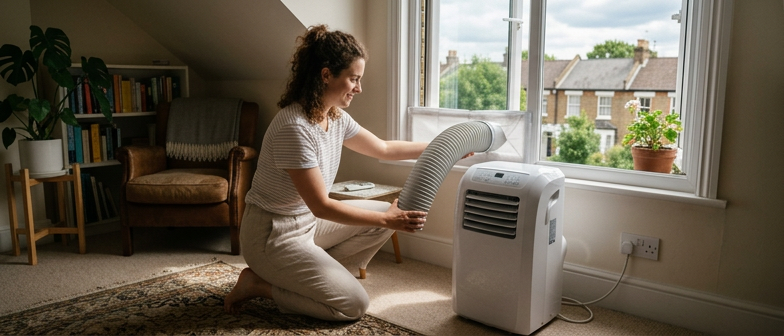
A portable air conditioner is a self-contained cooling unit that sits on the floor and can be moved between rooms, making it a flexible air conditioner for home use when fixed systems are not practical. A fan draws in warm indoor air and passes it over cold evaporator coils filled with refrigerant. As the refrigerant absorbs heat, the air is cooled and blown back into the room, while moisture condenses on the coils and is either collected in a tank or drained away. The refrigerant then carries the heat to a condenser coil, where another fan pushes that heat outdoors through an exhaust hose, usually vented through a window kit.
Because of this design, a portable air conditioner can usually be set up without major changes to the property, unlike most built-in systems that need professional work and permanent outdoor units. It makes sense if you rent, only need to cool one or two hot rooms, or cannot install a traditional split system but still want focused comfort from a compact home cooling unit. It does require a suitable window or venting point for the hot air hose, and performance depends on matching its capacity to the room size.
When comparing models to find the best portable air conditioner, start by matching the unit to the room you want to cool. Manufacturers list a recommended room size alongside cooling capacity in BTU or kW. A compact air conditioner for home offices or bedrooms can be overwhelmed in an open-plan living area, while an oversized unit may cycle on and off too quickly, wasting energy and leaving the room unevenly cooled. Factor in ceiling height, room layout, and direct sunlight, as these all affect how hard a portable air conditioner has to work.
Energy efficiency and running costs matter as much as cooling power. Look for clear efficiency ratings or energy labels, and compare power draw to understand likely electricity use. Modern units often offer eco modes, variable fan speeds, and programmable timers so you are not cooling the space when no one is there. Also consider how the model handles condensation, because self-evaporating designs can reduce the need to empty tanks and make everyday use more convenient.
Comfort also depends on noise and setup details. Check sound levels in decibels if the unit will sit close to a bed, desk, or sofa, and see whether a sleep mode or quieter fan setting is available. Make sure you can vent the exhaust hose through a suitable window or door without complex installation, and confirm the size, weight, and handle design so you can move and store the air conditioner for home use easily.
| Typical Use Case | Room & Layout Match | Cooling Capacity & Efficiency | Noise & Comfort | Portability & Setup Ease |
|---|---|---|---|---|
| Small bedroom or home office | Compact, enclosed, limited sun | Lower capacity, higher efficiency focus | Low noise, sleep or quiet mode | Very light, simple window kit |
| Medium living room | Mixed layout, some sun | Medium capacity, balanced efficiency | Moderate noise, multiple fan speeds | Stable wheels, sturdy hose and seals |
| Open‑plan living area | Large space, strong sun | Higher capacity, efficient eco mode | Noticeable noise, best away from seating | Heavier unit, careful vent routing |
| Temporary rental or student flat | Varied rooms, changing layouts | Flexible capacity, reasonable efficiency | Moderate noise, timer for off‑peak use | Easy to move, non‑permanent installation |
| Bedroom for light sleepers | Small to medium, darker room | Capacity matched closely to size | Very low noise, dedicated night setting | Compact body, discreet window fitting |
When you compare a Portable Air Conditioner, the energy label and efficiency rating show how costly it will be to run. Figures such as EER or a seasonal efficiency ratio tell you how much cooling you get for each unit of electricity. A higher number means more of the power you pay for becomes useful cooling rather than waste heat, so you stay comfortable while drawing less from the socket. Running costs depend mainly on the unit’s wattage, how long you use it, and your local electricity price, so two models with similar output can have very different long‑term Air Conditioning Cost. Choosing an efficient air conditioner for home use can also lower your carbon footprint, and over a few summers a slightly pricier but efficient model often works out cheaper than a bargain unit with poor efficiency.
A portable air conditioner is usually simple to set up, but it still needs some planning. Choose a room with a suitable power outlet and enough floor space so air can move freely around the unit, keeping furniture and soft furnishings a little distance away. Because this type of air conditioner for home use expels hot air, it must sit close to a window, door, or purpose‑made vent so the exhaust hose can run without sharp bends, which cuts efficiency and can cause overheating. When comparing models, check how each air conditioning installation kit works with your style of window, especially sliding or sash designs, and make sure the seals fit properly to limit draughts, noise, and insects coming in from outside.
For most households, venting through a window with the manufacturer’s kit is the simplest and safest option, and it usually keeps the overall air conditioning cost lower than fixed systems. Some people consider venting through a wall or a permanent grille in a door, but altering the building fabric may need permission from a landlord or local authority, and poor workmanship can cause leaks or security problems. If you are unsure about drilling, working at height, or any wiring, or if the portable air conditioner will run in a nursery, server room, or other space with stricter safety needs, it is wise to ask a qualified installer or electrician. They can advise on safe cable loading, routing of hoses, and ways to reduce noise and condensate spills so your home unit runs reliably and safely.
Many problems with a portable air conditioner come from poor air conditioning installation around the window kit. If the panel or hose is loose or badly sealed, warm air and moisture leak back in, wasting energy and reducing cooling. Gaps can also let in dust, insects and noise. Adjust the kit to the correct size, add foam or weatherstripping where needed, and keep the exhaust hose short and as straight as possible so hot air is expelled efficiently.
When you look at the overall cost of a portable air conditioner, think beyond the ticket price. The real air conditioning cost includes electricity use, window or door kits, extension hoses, filters and basic maintenance over several summers. A model with better energy efficiency may cost more up front but draw less power, especially during heatwaves when it runs for long hours. Checking the official energy label and choosing cooling capacity that actually matches your room size helps you avoid paying for more power than you need, or running an undersized unit flat out and wasting money.
Genuinely good portable AC deals balance price, safety and reliability. Look for clear product information, proper safety markings and air conditioning reviews that mention noise, build quality and performance after months of use, not just first impressions. Very cheap Portable Air Conditioner bundles that add lots of accessories may cut corners on materials or customer support, which can cost more if something fails just after the warranty. Focusing on total value for money over the lifetime of the appliance, rather than short‑term discounts alone, is the most effective way to control your overall air conditioning cost without compromising on comfort.
How does a portable air conditioner cool a room?
It pulls in warm indoor air, passes it over cold evaporator coils with refrigerant, and blows cooler air back out. The unit sends heat outside through the exhaust hose, while condensed moisture is collected or drained.
What matters most when choosing the best portable air conditioner for home use?
Match cooling capacity (BTU or kW) to room size, ceiling height, layout and sunlight. A unit that’s too small struggles to keep up, while one that’s oversized can cycle on and off and cool unevenly.
How do energy ratings affect overall air conditioning cost?
Higher EER or seasonal efficiency ratings mean more cooling per unit of electricity. Efficient models may cost more to buy but usually reduce running costs and energy use over several summers.
What helps make portable AC installation quick and simple?
Place the unit near an outlet and a window, leave space around it for airflow, and keep the exhaust hose short and fairly straight. Use the window kit so the opening is sealed to your window style.
Which common setup mistakes hurt portable AC performance?
Loose or unsealed window panels and hoses let hot air back in. Adjust the kit to fit, seal gaps with foam or weatherstripping, and avoid sharp kinks or long runs in the exhaust hose.