
x
By evaluating apprenticeships and earning potential, you can determine if the rapidly growing, well-paying field of electrical trades is the right hands-on career path for your goals.
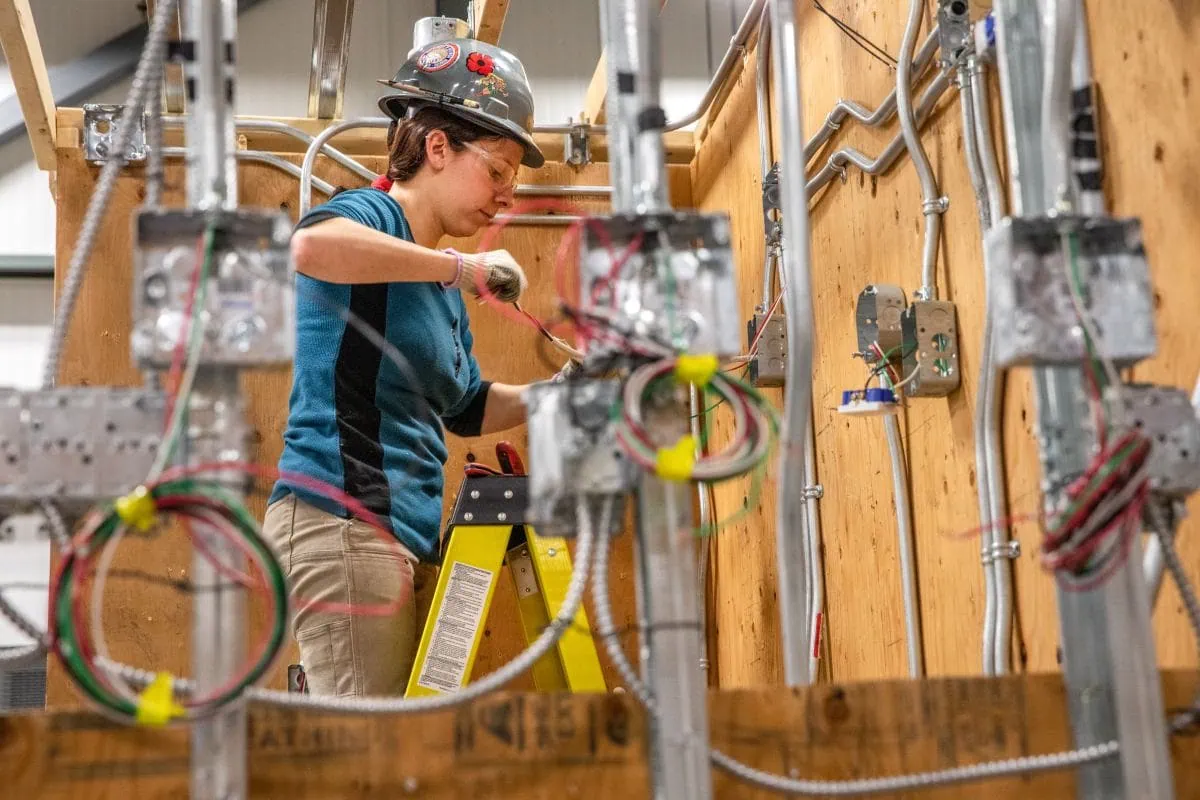
Electricians are much more than “people who fix the lights.” Their work blends hands-on problem‑solving, safety rules, and long‑term training. Knowing what the job really looks like day to day can help you decide whether this path fits your skills, lifestyle, and goals.
Most electricians start as apprentices, spending several years combining paid work with classes. Over that time they log thousands of hours of supervised on‑the‑job experience plus hundreds of hours of classroom learning in electrical theory, wiring methods, life‑safety systems, and code compliance, including the National Electrical Code and OSHA‑related safety practices.
On a typical day, an electrician might install or repair wiring, check circuits, read blueprints, or track down why a system keeps tripping. Work happens in homes, office buildings, factories, and busy construction sites. Early on, you work under licensed pros, gradually taking on more complex tasks until you qualify for a journeyman license and can specialize in residential or commercial projects.
Typical Tasks and Work Environments for Electricians
| Aspect | Residential Settings | Commercial / Industrial Settings |
|---|---|---|
| Common daily tasks | Installing outlets, lighting, panels, EV chargers | Wiring offices, maintaining motors, working on controls |
| Work rhythm | Short jobs, frequent customer contact | Longer projects, more teamwork on larger systems |
| Environment | Finished homes, tight spaces like attics | Noisy sites, unfinished structures, factory floors |
| Main challenges | Explaining issues to homeowners, clean finishes | Coordinating with other trades, complex equipment |
| Skills emphasized | Customer service, neat surface work | Reading plans, troubleshooting large systems |
This path is usually open to adults 18 or older who have a high school diploma or GED and feel comfortable with algebra. You need enough physical stamina to climb ladders, lift materials, and stay focused around live power. People who enjoy steady, in‑demand work and like seeing a visible result at the end of the day often feel at home here.
Many beginners start with a trade school program lasting several months to two years. It is optional, but classes in circuits, lab work, and safety can make apprenticeship applications stronger and help you learn faster once you are on site. Over time, experience plus licensing can open doors to higher‑earning roles, from jobsite lead to specialized technician.
If you want to become an electrician, the first big fork in the road is how you train. Both trade school and apprenticeship can get you to a license, but the money, timeline, and daily routine feel very different, so it is worth comparing before you commit.
Most people start with a high school diploma or GED, then look at an Electrical Technology program. Trade school leans heavily on classroom theory and lab projects, so you get a safe, structured place to practice wiring, code basics, and troubleshooting before you touch real job sites. The upside is a clear schedule, faster exposure to many systems, and in some areas, credit toward apprenticeship hours. The downside is that you usually pay tuition up front and do not earn much while you study. This path fits someone who wants confidence with tools and terms before dealing with job‑site pressure.
An apprenticeship throws you straight into paid work under a licensed electrician while you also attend scheduled classes. Programs commonly last around four to five years, because states often want thousands of documented hours for a general electrician license. The big plus is earning while you learn and seeing real‑world problems every day. In return, you accept a longer timeline and juggling work with study. Because licensing rules and total hours vary a lot by state, it is smart to check local requirements early and, if possible, combine some pre‑apprenticeship schooling with supervised field work to move faster toward a stable, higher‑earning career.
Comparison of Trade School and Apprenticeship Paths
| Dimension | Trade School Focus | Apprenticeship Focus |
|---|---|---|
| Main learning style | Classroom lessons and lab practice | On‑the‑job training with supporting classes |
| Daily routine | Fixed timetable, school‑like structure | Varies by site, mixes workdays with evening or weekend classes |
| Financial pattern | Pay tuition first, limited income during study | Earn income while training, slower move through theory |
| Confidence on tools | Early practice in low‑risk lab environments | Gradual exposure to real‑world tasks and conditions |
| Best fit for | People who prefer clear structure before job‑site pressure | People who like learning by doing and joining the workforce quickly |
Getting into electrical work is not just about fixing wires; your tools and safety habits quietly decide how fast your income grows. If you are wondering how to move from trainee pay to top rates, it helps to see how gear, training, and experience connect.
When you start as an apprentice, you mostly carry basic hand tools and PPE, and learning safety can simply make you easier to hire and keep on jobs. As you gain experience, the tools you add and the rules you follow start showing up directly in how valuable you are to employers and clients.
As you move toward journeyman and master levels, you are trusted with more complex diagnostics, planning, and supervision. That usually comes with leadership on safety practices, more responsibility for lockout/tagout and inspections, and better chances to negotiate higher‑pay projects or specialized roles.
Location also shapes your earnings, especially when local codes and safety standards are strict. Putting money into reliable meters, PPE, and training often pays off as higher wages, steadier work, or fewer unpaid breaks due to injuries.
Over time, choosing to follow the stricter standards, buying solid tools early, and keeping up with training can be the difference between just getting by and building a well‑paid electrician career.
Growing your electrician career is really about stacking the right steps in the right order. With some planning around training, local job research, and smart specialization, you can move from entry-level work to stable, higher‑pay roles without feeling lost.
Start with solid foundations: finish high school, then look for vocational or college programs that teach wiring, safety, and how to read plans. That mix of classroom and lab work makes it much easier to handle real tools and real customers later.
Government job banks are a great place to see what employers actually want. Industrial electrician postings in places like Etobicoke often list high school completion plus hands‑on skills such as testing continuity, current, and voltage. Building construction roles in areas such as Hamilton tend to ask for a one‑ to two‑year college or CEGEP diploma, often moving from site to site, which shows how post‑secondary training can become a bridge from school to your first site job.
Once you are working, pay attention to which environments you enjoy most. Industrial settings lean on troubleshooting heavy equipment and control systems, while construction work centers on installing new systems in homes, towers, and commercial spaces. Both paths can pay well if you keep adding skills.
Use local job banks as a career map, not just a job board. Look at higher‑level postings to see which certifications, tickets, or extra courses appear again and again. That makes it clear that steady demand and better pay usually follow a mix of formal education, targeted credentials, and on‑the‑job practice. From there, you can aim for senior technician roles, site lead work, or even your own small contracting business over time.
Q1: What are the main roles and daily tasks of electricians across different work environments?
A1: Electricians install and repair wiring, read blueprints, test circuits, and solve why systems trip. They work in homes, offices, factories, and construction sites under strict safety rules.
Q2: Which safety regulations and codes do electricians typically learn and follow on the job?
A2: Electricians study the National Electrical Code, OSHA-related safety practices, and state or city rules like Cal/OSHA Title 8, NFPA 70E, NYC Electrical Code, and relevant building codes.
Q3: What tools and protective equipment do electricians use at different career stages?
A3: Apprentices rely on basic hand tools and PPE. Journeymen add multimeters, pliers, and voltage testers. Masters use advanced diagnostic tools and lockout/tagout kits to work safely and efficiently.
Q4: How do trade school and apprenticeships differ as training pathways for electricians?
A4: Trade school focuses on classroom theory and lab work, usually with upfront tuition. Apprenticeships mix paid on‑the‑job training with classes over four to five years, meeting state hour requirements.
Q5: What career growth opportunities and next steps exist for electricians who want higher pay?
A5: Electricians can move from apprentice to journeyman to master, specialize in industrial or construction work, gain certifications, follow strict safety standards, and eventually lead sites or run a small business.