
x
Dental patient education videos can turn confusing diagnoses, gum disease without symptoms, and consent discussions into clear visual stories patients trust. This guide helps you decide between licensed video libraries, DIY filming, and different delivery options on your website, in the waiting room, or chairside on tablets.
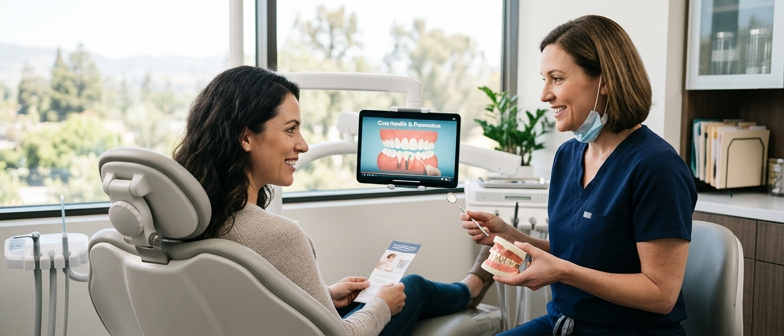
Dental patient education videos have become central in modern practice because they turn complex clinical information into clear, visual stories that patients can understand and remember. Instead of relying only on verbal explanations or static brochures, your team can use short videos to walk patients through procedures, risks, benefits, and aftercare in a consistent way. This is especially helpful when you are explaining a complex dental diagnosis to patients who may be anxious or overwhelmed by unfamiliar terminology. When patients see animations of how a cracked tooth progresses or how a crown will be placed, they connect the diagnosis with what is happening in their own mouths, which reduces confusion and strengthens trust in your recommendations.
Video education also helps with one of dentistry’s hardest communication challenges: explaining gum disease to patients who have no symptoms. Many people feel fine and struggle to accept that periodontal pockets or bone loss are serious and need treatment. A carefully designed video can show the difference between healthy gums and early or advanced disease, and how silent inflammation can lead to tooth loss and wider health impact even when nothing hurts. By weaving these dental patient education videos into your website, consultations, and follow‑up messages, you create a consistent visual narrative that supports informed consent, helps patients understand long‑term treatment plans, and presents your practice as a transparent partner in their oral health.
When you add dental patient education videos to your website, it becomes a place where people can explore treatment options before they call or book online. Short, clearly narrated clips on fillings, crowns, implants, or gum therapy explain procedures and risks in plain language that patients can replay as often as they need. Placing videos on key service pages and in your FAQ section supports informed decisions, reduces anxiety, and sets expectations, so new patients arrive already familiar with the basics of their diagnosis and possible treatment plan.
Inside the practice, showing dental videos in the waiting room keeps patients engaged while reinforcing messages about prevention, oral hygiene, and common restorative or periodontal care. A looping playlist of clinically accurate visuals can answer routine questions and address fears before the appointment begins, making chairside conversations more efficient. Because the content is consistent and non‑confrontational, it is useful for explaining early gum disease or the impact of missed cleanings in a way that feels educational rather than judgmental.
Once patients move into the operatory, tablets and other mobile devices become tools for point‑of‑care education. Playing a patient education video on a tablet at the chair lets you pause, rewind, and link what is on screen directly to their x‑rays or intraoral photos. This helps you explain complex treatment plans and support informed consent, and it extends home‑care guidance when patients later watch the same trusted video from a link you shared, keeping the message consistent from website to waiting room and chairside discussion.
| Patient Touchpoint | Primary Communication Goal | Recommended Video Style | Key Benefits For Patients | Practice Use Considerations |
|---|---|---|---|---|
| Dental website | Pre‑visit understanding | Short procedure explainers | Lower anxiety before first visit | Embed on service and FAQ pages |
| Waiting room screens | General prevention messaging | Looping education playlist | More informed questions at check‑in | Use calm visuals and subtitles |
| Chairside tablet | Diagnosis and consent clarity | Point‑of‑care walkthroughs | Better grasp of complex treatment plans | Pause and link to x‑rays or photos |
| Post‑visit mobile viewing | Reinforce home‑care instructions | Shareable follow‑up videos | Consistent reminders after appointment | Send secure links in follow‑up messages |
Adding dental patient education videos to your website turns it into a practical pre‑visit resource. Short, procedure‑specific clips on new patient, hygiene, implant, or orthodontic pages help visitors understand what to expect before they contact the office. When these online videos are paired with downloadable or printable brochures, patients can review details, share them with family, and arrive better prepared, which smooths digital intake and supports treatment acceptance.
The same education videos can appear in patient portals, email or text reminders, and social channels to reinforce key messages before appointments. Linking to a video about an upcoming procedure, along with a brochure patients can print at home, turns routine confirmations into brief education moments. On social platforms, short clips answer common questions and guide people back to the full video library on your site, creating consistent, low‑stress pre‑visit communication.
Dental videos in the waiting room turn passive time into gentle education on common procedures and prevention. Short loops with clear visuals, everyday language, and no graphic scenes can ease anxiety and prompt better questions. When choosing content for reception, focus on topics your team discusses often, avoid hard selling, and use audio and subtitles that still work in a busy space so patients can watch without feeling pressured.
Chairside tablets work well for patient education because you can pause, replay, and show a video that matches the diagnosis being explained. This is especially helpful when you need to explain gum disease to patients who have few or no symptoms, because they can see plaque, bone loss, and pockets illustrated step by step. Follow the video with a brief conversation that connects what they saw to their own X‑rays and chart notes, supporting clearer decisions about care.
Dental patient education videos can streamline how clinicians explain complex diagnoses when chairside time is limited. For conditions involving biomechanics, occlusion, and long‑term prognosis, a structured video presents each factor with consistent terminology and clear visuals. The dentist can pause, highlight key points, and connect the content to the patient’s own intraoral photos or radiographs. This mix of standardized explanation and personalized commentary clarifies why the recommended treatment is necessary, reduces confusion when patients discuss it with others, and keeps the message aligned with what they later read online.
Informed consent requires more than a signature; patients must understand the procedure, benefits, risks, and alternatives. An informed consent video for dental procedures gives every patient the same baseline description of what will happen, possible complications, and options, including declining treatment. After the video, the dentist can address individual risk factors such as medical conditions or previous failures. When these videos are paired with printable brochures that summarize steps and risks in plain language, patients leave with a clear takeaway, and the practice can document a consistent, repeatable consent process.
Asymptomatic conditions, especially gum disease without pain, are difficult to explain because patients may doubt the need for therapy. Targeted gum disease videos that show plaque, calculus, pocket formation, bone loss, and the contrast between healthy and inflamed tissue help patients see problems they cannot feel. A concise brochure outlining periodontal stages, consequences of inaction, and maintenance expectations reinforces this visual story. Together, dental patient education videos and printed materials create clinical clarity around invisible disease, leading to more informed decisions and better long‑term adherence to periodontal treatment.
Using an informed consent video for dental procedures lets patients see clear visuals that support your verbal explanation and written forms. A short, neutral animation can outline treatment steps, expected benefits, realistic risks, and main alternatives before they sign. It does not replace the conversation but standardizes it, helping anxious patients or those with language barriers understand what will happen and ask more focused questions.
Dental patient education videos paired with printable brochures extend informed consent after the appointment. Once the video is shown, a matching handout can summarize the procedure, home‑care instructions, and warning signs to watch for, so patients and family members can review everything later. Together, your discussion, the video, the consent form, and the take‑home brochure create a consistent record that supports both understanding and defensible consent.
Why do dental patient education videos matter more today than traditional brochures?
Short, visual explanations make complex diagnoses, risks, and benefits easier to understand, reduce anxiety, and keep information consistent across your team, unlike verbal-only or static handouts.
How can I use patient education videos effectively on my dental website?
Place procedure-specific clips on key service and FAQ pages so visitors can review treatment steps, risks, and aftercare before booking, then link printable brochures for deeper reading and sharing with family.
What is the advantage of a licensed dental video library versus filming my own videos?
A licensed library offers professionally written, clinically reviewed content, clear animations, and regular updates, saving time and reducing clinical and legal risk compared with DIY recordings.
How much does a dental patient education video library or subscription usually cost?
Pricing ranges from low monthly subscriptions to larger annual licenses, depending on library size, languages, customization, and whether you need content for website, waiting room, and tablets.
How can videos help me explain gum disease to patients who have no symptoms?
Animations can show plaque buildup, bone loss, and future tooth movement, helping symptom‑free patients see invisible damage, understand periodontal risks, and give more informed consent to treatment.