
x
Thinking about a hair transplant in Canada raises questions about FUE vs FUT, costs per graft, recovery time and whether you have enough donor hair to be a good candidate. This overview helps you compare common techniques, clinic qualifications and consultation steps so you can prepare for a regulated medical discussion.
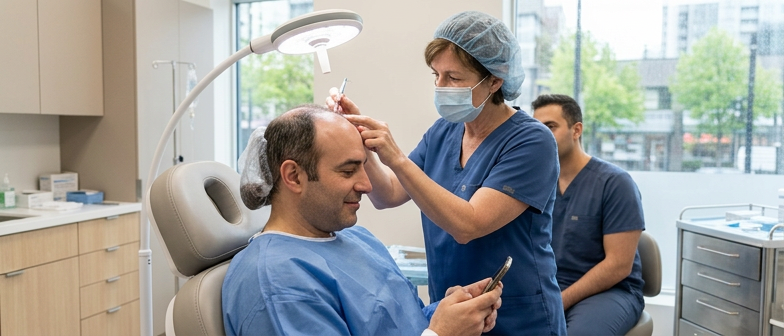
People considering a hair transplant in Canada usually hear about three main techniques: follicular unit extraction, follicular unit transplantation, and direct hair implantation. All move hairs from a stable donor area at the back or sides of the scalp to thinning regions, but they differ in how follicles are removed and how precisely grafts are placed. During an initial consultation, the clinic typically reviews your pattern of hair loss, scalp health, and medical history, then explains which method may fit your goals, tolerance for scarring, and preferred recovery time.
Surgical hair restoration in Canada is performed by physicians who must hold a provincial licence and be regulated by the relevant College of Physicians and Surgeons. Some doctors pursue extra training or join professional societies dedicated to hair surgery, and clinics may share these details during a direct consultation. When comparing a hair restoration clinic near you, it is useful to ask about the surgeon’s experience with FUE, FUT, and DHI, review before‑and‑after photos, and clarify who carries out each step of the procedure, as well as the risks, realistic limits of the result, and the follow‑up care offered.
Follicular unit extraction, strip follicular unit transplantation and direct hair implantation are three common ways of moving hair from a donor area to thinning zones, usually compared by how grafts are harvested and placed rather than by promised results. FUE removes individual follicles with small punches, creating many tiny scars and often requiring shorter hair during the procedure, while FUT takes a strip of scalp that is dissected into grafts and leaves a linear scar that may be hidden by longer hair. DHI is described as a variation that uses specialized tools to implant grafts into recipient sites, but actual availability, costs and scarring risks depend on the clinic, the surgeon’s approach and your hair characteristics, so people are generally encouraged to discuss these methods during consultation instead of assuming one technique is always best.
| Technique | Donor Area Impact & Scarring | Session Practicalities | Who Might Consider It |
|---|---|---|---|
| FUE | Multiple small scars, dispersed appearance | Often longer sessions, hair trimmed short | Readers prioritizing flexibility in styling and avoiding a single linear scar |
| FUT | Single linear scar, may be covered by longer hair | Typically shorter harvesting time, sutures or staples used | Readers comfortable wearing longer hair and seeking larger graft numbers in one |
| DHI | Scarring and impact vary by tools and approach | Implanting can be more time‑intensive and technique dependent | Readers interested in dense placement and willing to discuss clinic‑specific met |
Whether someone is a suitable candidate for hair transplant surgery depends on the pattern and stability of hair loss, overall health, and scalp condition rather than a single test. Doctors look at how long thinning has been progressing, any family history of alopecia, and signs of sudden or patchy shedding or scarring. Active scalp diseases or medical issues that affect healing or circulation may lead a physician to recommend treating those problems first or to suggest non‑surgical options. A review of medications, smoking, and other lifestyle factors is also important because these can influence safety and hair growth after the procedure.
A central question in any assessment is whether there is enough donor hair to support the planned restoration. In both follicular unit extraction and strip methods, grafts are usually taken from the back and sides of the scalp, where hair tends to be more stable. The density and quality of this area affect how many grafts can be harvested without causing new visible thinning and how natural the result may appear. If the donor area is very sparse or miniaturized, the achievable coverage is limited, and expectations need to be adjusted, especially for people with advanced hair loss who may need to preserve grafts for possible future procedures.
Many clinics ask for clear photos before arranging a full consultation to decide whether an in‑person visit is likely to be useful and which techniques could be discussed. Images are typically requested from the front, top, sides, and back of the head in good lighting, with the hair both styled and left unstyled so thinning is visible. These photos give the physician an initial sense of the pattern of loss, apparent donor density, and any obvious scalp concerns, but they do not replace a medical examination. Final decisions about candidacy are usually made only after a regulated health professional has assessed the scalp, reviewed medical history, and explained potential benefits, limitations, and risks in detail.
Before a hair transplant, the clinician evaluates whether the back and sides of the scalp contain enough suitable donor hair. They look at hair density, thickness, and the pattern and stability of hair loss, and check the skin for scarring or conditions that could reduce graft survival. Based on this, they estimate how many grafts can be taken without visibly over‑thinning the donor area.
For an initial consultation, clinics usually request clear photos to understand your hair loss and donor supply in advance. You may be asked to provide images of the front, top, crown, both sides, and back of the head, taken in good lighting and without styles that conceal thinning. These pictures help the clinician judge whether in‑person assessment, scalp examination, or referral to a hair or skin specialist is needed.
When comparing local hair transplant or broader hair restoration clinics, it is useful to begin with safety and regulation. Physicians are licensed at the provincial and territorial level, so you can check that the doctor holds a current medical licence and is registered with the appropriate College of Physicians and Surgeons. Some practitioners highlight training in dermatology, plastic surgery, or related areas, and list memberships in professional societies, but titles and affiliations vary. Regulatory status is best verified directly with provincial bodies, and marketing claims are better treated as information to confirm rather than assurances about outcomes.
After confirming that a clinic is properly regulated, you can look at whether its services fit your situation. People often search for a nearby clinic that offers methods such as FUE, FUT, DHI, or non‑surgical options. Clinic websites and consultation materials typically outline available procedures, how candidacy is assessed, and the level of medical supervision. For approaches like DHI, an initial consultation may be used to discuss goals, examine donor hair, review photographs, and explain how the technique differs from other transplant methods, including practical limits and uncertainties.
Experience, clear information and communication help you decide where to book a consultation. Some clinics share before‑and‑after images, describe typical recovery timelines, and explain scarring risks with different techniques instead of promising specific results. They may also describe how costs are structured, including any per‑graft pricing, while noting that detailed quotes depend on an in‑person assessment. Asking who will perform the procedure, how complications are managed, and what follow‑up is offered can give a better sense of whether a particular hair restoration clinic near you feels clinically appropriate for your needs.
When comparing a hair transplant clinic near you, start by confirming that the physician responsible for diagnosis and surgical decisions holds a licence from the provincial College of Physicians and Surgeons where the clinic operates, using the public registers these bodies provide. Clinic websites and consultation documents should clearly state which regulated health professionals perform each part of the procedure, how pre‑ and post‑operative care is organized, and what training or experience the team has in hair restoration. Because requirements and titles can differ between provinces, treat online information as a starting point and rely on official regulatory listings and written disclosures from the clinic to understand who will be involved in your care and under what oversight.
What are the main hair transplant methods in Canada?
Common options are FUE, FUT and sometimes DHI. They differ in how follicles are removed and implanted, typical scarring, and recovery. The choice depends on hair loss pattern, donor area and discussion with a qualified physician.
How do I know if I am a hair transplant candidate?
You are more likely to qualify if hair loss has stabilized, donor hair at the back and sides is adequate, and you have no uncontrolled medical or scalp disease. Doctors often review your health and type of alopecia and may suggest medical or topical treatment first.
How do clinics check donor hair and what photos are needed for consultation?
Clinicians assess density, hair thickness and stability of the donor area, and look for scars or skin problems. For remote review they usually ask for clear, well‑lit photos of the front, top, sides and back, plus close‑ups to estimate safe graft numbers.
How can I evaluate a hair restoration clinic near me in Canada?
You can confirm that the doctor leading diagnosis and surgery holds an active licence with the relevant provincial College of Physicians and Surgeons. Ask who performs each step of the procedure and what training they have in hair surgery.
What affects hair transplant cost per graft and FUE recovery time?
Per‑graft fees vary by clinic, province, technique and case complexity, so detailed quotes are usually given only after assessment. After FUE, many people plan several days to about a week off work; full healing and visible regrowth take months and depend on job demands and individual recovery.