
x
Shifting from textbooks or office desks to wagging tails and rustling treat bags can feel surprisingly achievable. Across Australia, neighbourhood shops and national chains quietly offer roles where curiosity, patience, and a love of animals matter more than a polished résumé or long employment history.
Walking into a pet shop as a brand‑new staff member often feels like stepping into a different universe, but the gap is smaller than it seems. Many Australian stores hiring beginners care far less about past job titles and far more about attitude, reliability and willingness to learn. “No experience” usually means you haven’t been paid to do this work yet, not that you’re incapable of doing it. Managers pay close attention to simple traits: turning up on time, coping with smells and mess, staying calm with stressed animals and rushed customers, and following instructions safely. These qualities don’t sit on a certificate, but they stand out strongly during trial shifts and casual chats, and they’re often the reason one applicant edges out another.
A day often starts before the doors open: quick checks for spilled kibble, chewed‑open treat bags or scattered cat litter, then a walk through small animal and aquarium sections to flag anything urgent. Once customers arrive, tasks shift constantly between people, products and pets. You might greet a family choosing their first puppy harness, direct someone to senior‑dog food, then head straight to the back to haul out big bags of litter. In quiet patches, you’re straightening shelves, wiping down glass, checking tags and restocking popular items. By late afternoon there’s usually a mix of ringing phones, click‑and‑collect orders, grooming pick‑ups and last‑minute food runs. The work is rarely glamorous, but shifts tend to fly because there’s very little standing still.
Front‑of‑house roles are often the easiest entry point and also the most visible. The first smile or relaxed “G’day” at the counter sets the tone for both people and animals walking in. Main tasks include greeting visitors, asking a simple “What are you looking for today?”, guiding them to the right aisle, and handling basic questions without pretending to be a vet. The cash register can feel intimidating, but most systems are straightforward once you’ve run a few transactions under supervision. The real challenge is keeping your head when there’s a queue, a dog barking at the door and a phone ringing behind you. Small habits help: repeating the customer’s items before finalising, asking a colleague to double‑check discounts instead of guessing, and being honest if you need to pause and confirm a detail.
Out the back, the work is less visible but absolutely crucial. Beginners often start in stockrooms and cleaning rounds, which is where a lot of practical skills quietly develop. You learn to lift heavy bags safely, arrange pallets so nothing topples, rotate items so older stock moves first, and keep walkways clear. Cleaning isn’t just about making things look tidy; it’s about fur, feathers, droppings, occasional vomit and odours, each needing different products and routines. Animal enclosures must be sanitised without leaving harsh residues, and aquariums cleaned without disturbing water quality. This side of the job rewards people who notice details: a draft near rabbit hutches, a chewed cable, a damp patch under a fish tank. Over time, that knack for spotting small risks turns you into the person colleagues quietly rely on.
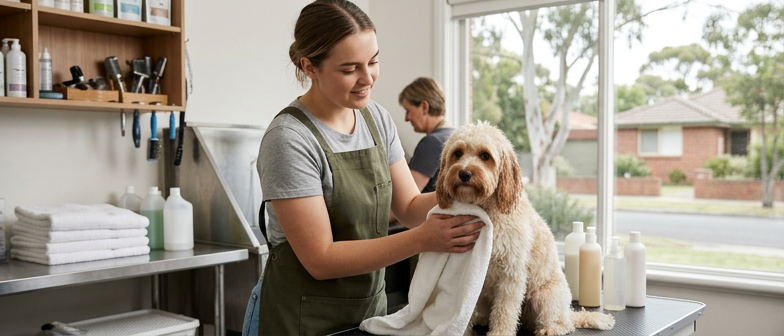
Closest contact with animals usually sits in grooming rooms and short‑stay holding areas. Beginners typically assist rather than take the lead: holding dogs securely on tables, passing clippers or nail trimmers, soothing nervous pets during blow‑dries, and cleaning down equipment between appointments. In holding pens or day‑stay spaces, you top up water, serve measured meals, check bedding, scoop litter and note any changes in behaviour or appetite. It can be emotionally heavy work; it’s easy to get attached when you see the same animals regularly. Learning to channel care into steady, gentle handling while also protecting your own emotional energy is a big part of staying in the field long term.
For beginner‑friendly roles, managers across Australia usually rank reliability, safety awareness and people skills above long job histories. Turning up when rostered, sticking to procedures around animal handling, and admitting when you’re unsure all build trust quickly. A calm manner with kids poking fingers at glass or dogs pulling on leads is another strong plus. Many stores are happy to train product knowledge from scratch if you show genuine interest in learning which foods suit which life stages, what toys are safer for power chewers, or why certain litters suit small units. Being comfortable working weekends, public holidays and split shifts is also highly valued, because those are peak times for pet‑related shopping and grooming bookings.
Entry jobs often don’t demand formal qualifications, but certain certificates and TAFE‑style courses can help you stand out. Short animal care programs, basic grooming units, workplace health and safety training or courses focused on customer service all signal commitment. Employers also care about how you learn once you start: do you read product labels, ask why a particular disinfectant is used in kennels but not near fish, or watch experienced groomers and request feedback? Many large chains offer structured online modules and in‑store mentoring, while smaller independents tend to rely on shadowing and gradual handover of responsibilities. Treat every new task as practice for the next step, not just a box to tick, and your learning curve steepens in your favour.
Not every role suits every person, even within the same store. Some thrive on constant conversation at the counter; others prefer quiet focus in the stockroom or grooming room. Thinking honestly about noise tolerance, comfort with bodily fluids, physical strength and patience with repetitive tasks helps you choose better.
| Starter role type | Best suited to people who… | Possible next steps |
|---|---|---|
| Front‑of‑house and register | Enjoy chatting, stay calm under pressure, don’t mind handling small tensions | Shift supervisor, customer experience lead, store management |
| Stock and cleaning focus | Prefer routine, notice details, like solving practical problems | Inventory coordination, operations support, assistant manager |
| Grooming and animal care assist | Have gentle hands, good observation, steady nerves with upset animals | Qualified groomer, animal care specialist, training assistant |
Thinking this through early reduces the risk of burning out in a corner of the shop that never really fit you.
Stay in one workplace long enough, and patterns appear: who organises rosters, who leads during busy weekends, who orders stock, who customers seek out for advice. Beginners who consistently show up, accept feedback and take small extra responsibilities often drift naturally toward more senior roles. That might mean supervising a particular section, acting as keyholder for open and close, mentoring new staff or helping to plan in‑store events. Larger chains sometimes advertise pathway programs into assistant manager or store manager positions, combining extra training modules with hands‑on experience. Even in small independent shops, owners notice the person who can be trusted to “run things” for a few hours without drama.
Time in an Australian pet shop can also be a springboard into wider animal‑related work. Hands‑on animal skills and customer experience are attractive to boarding kennels, doggy day care centres, specialist grooming salons, mobile wash services, training schools and rescue organisations. Product know‑how and familiarity with buyer behaviour appeal to wholesalers, pet‑supply reps and marketing teams for animal‑related brands. Confidence explaining care basics to everyday owners can open doors to workshop facilitation, community education roles or online content work focused on animal welfare and lifestyle.
| Where shop skills can lead | Experience that stands out | Typical first move |
|---|---|---|
| Day care and boarding | Group handling, routine setting, behaviour notes | Start as attendant or kennel hand |
| Grooming studios | Bathing, drying, restraint, tool care | Junior groomer or trainee |
| Product and brand work | Shelf trends, customer questions, feedback patterns | In‑store rep or entry‑level sales |
Seeing your current role as a stepping stone rather than a dead end changes how you approach each shift.
Whether you’re a student looking for flexible hours, someone changing careers, or simply testing if you can handle fur, feathers and fish tanks, entry roles in local shops can carry you far further than the pay slip suggests. The key is treating each small task as practice: practice in observing animals, in speaking clearly under pressure, in cooperating with a team that depends on you. Over months, those small practices compound into real competence. That’s how a casual shelf‑stacker or wash assistant in an ordinary Australian suburb can, with time and intention, grow into a person whose entire working life is built around the animals and owners they once just served across the counter.
What entry-level pet shop jobs can I get with no experience in Australia?
Many pet stores offer entry-level roles like shop assistant, stock replenisher or kennel hand with on‑the‑job training, especially for applicants who show strong animal-handling interest, reliability and good customer-service skills.
What is the typical salary range for a pet shop assistant in Australia?
Pet shop assistants are usually paid under the Retail or Animal Care Awards, with casual hourly rates often between minimum wage and a slight premium, varying by state, experience, weekend loadings and whether it’s a large chain or small independent store.
What qualifications or TAFE courses help me get into pet retail or animal care roles?
TAFE courses like Certificate II or III in Animal Studies, Companion Animal Services or Pet Grooming build practical skills, improve employability for pet retail, daycare or grooming roles, and are often preferred for more responsible positions or promotion pathways.
How can students find part-time or nearby pet care and grooming jobs in Sydney?
Students can search major job boards, chain store career pages and local Facebook or community groups, filter for “part-time” or “casual,” and target suburbs near campus or home, highlighting flexible availability and weekend or evening shifts in applications.
What are common career paths from entry-level pet shop roles to manager positions by 2026?
Many people start as retail assistants or dog daycare attendants, then move into senior assistant, shift supervisor, assistant manager and finally store or daycare manager, especially if they combine experience with TAFE qualifications and strong leadership performance.