
x
Whether you’re dealing with rotten posts, a gate that won’t latch, chain link damage, or storm‑leaning sections, smart fence repair starts with a clear inspection and cost comparison so you can decide when a DIY fix is enough and when to call pros or apply for assistance.
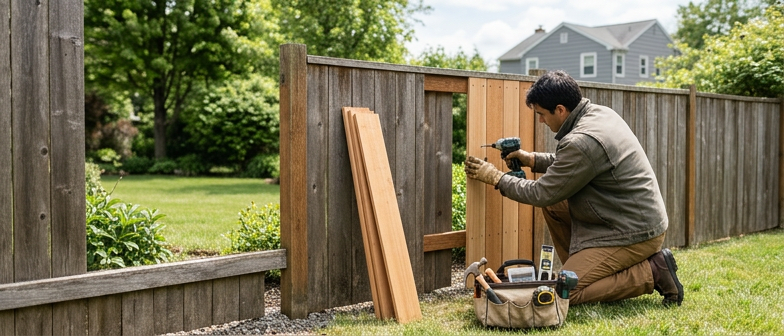
Most residential fence repair problems fall into a few predictable categories, and knowing them helps you spot trouble before it hurts safety or curb appeal. Wood fences often develop rot at the base of posts, loose rails, or broken pickets where moisture collects. Wind and shifting soil can make sections lean, and rusted or pulled fasteners leave panels wobbly and gates sagging. After a storm, you may see cracked posts, missing boards, or entire runs blown over. Deciding whether to repair or replace storm damaged fence sections usually depends on how many posts failed and whether the structure is still sound overall, because even damage that looks cosmetic can create security gaps, pet escape routes, and a drop in perceived property value.
Choosing whether to repair or replace a wood fence starts with looking for patterns, not just the worst spot. If problems are limited to a few boards or a single rotten post, focused repairs can restore strength and preserve the yard’s appearance. Widespread rot, several leaning sections, or the need to fix the same line repeatedly suggests the framework is near the end of its life, and patching may only delay a larger project while costing more over time. The same logic applies after bad weather: isolated storm impacts are usually worth repairing, but long runs that are structurally compromised are often safer and more economical to replace so the fence can reliably provide privacy, security, and visual appeal again.
Start with a slow inspection of the fence and note every problem spot. For rotten fence post repair, push each post at the base; posts that wobble may need to be reset in fresh concrete, while posts that are soft or crumbling usually should be replaced. As you count failed posts, cracked rails, and missing pickets, decide whether it makes more sense to repair or replace the wood fence; if a large share of sections are failing or the boards are near the end of their life, full replacement can be more practical than scattered patchwork.
On fences that are mostly intact, tackle structural issues before cosmetic ones. Loose or broken boards are often cheap to fix by reattaching them with exterior screws or swapping in new lumber, which is a modest line in any wood fence repair cost estimate. Costs climb when you add multiple new posts, heavy digging, or hauling away old concrete, so keep track of which tasks you can handle and which might be better for a contractor. Comparing material prices, your time, and tool rental against quotes from fence gate repair services near you helps you judge whether a modest repair now can safely extend the fence’s life.
Give the gate its own check, because a sagging gate can make a sturdy fence frustrating to use. To fix a fence gate that will not close, look first at the hinges for loose screws or stripped wood, then see whether the latch meets the catch when you lift the gate slightly. Simple hinge adjustments, adding a diagonal brace, or moving the latch plate are typical DIY fixes, while a badly twisted or oversized gate might call for professional help. Once you understand the condition of posts, boards, and hardware, you can decide whether to call a local repair service or plan a focused weekend of work to restore the fence.
| Option | When It Makes Sense | Pros | Cons |
|---|---|---|---|
| Spot repair of posts and boards | Most sections solid, damage isolated | Lower cost scope, keeps yard usable, minimal disruption | May not solve age‑related wear, future fixes likely |
| Gate‑only repair or adjustment | Fence sturdy, gate sags or will not close | Quick DIY potential, improves daily use, small material list | Does not address hidden post or rail issues |
| Mixed repair plus a few new sections | Several weak spots, but structure mostly sound | Extends fence life, targets worst areas, flexible budget | Appearance may be uneven, planning more complex |
| Full wood fence replacement | Many rotten posts, boards near end of life | Fresh structure, longer service life, lower upkeep short term | Higher project cost, more labor and hauling |
| Hire fence gate repair pro | Twisted gate, heavy posts, limited tools | Professional fit and alignment, safer for tricky work | Scheduling needed, higher labor portion of cost |
When requesting a wood fence repair cost estimate, think in terms of scope rather than a single price. Replacing a few pickets or tightening hardware stays on the low end, while fixing rotten posts, sagging rails, or a warped gate raises labor and material costs. A newer fence with isolated damage is cheaper to tune up than an older structure that needs staining, sealing, and several sections repaired at the same time.
To decide whether to repair or replace a wood fence, consider how many sections are failing, the remaining life of boards and posts, and how often you already pay for fixes. If more than about one third is in bad shape, full replacement can be more economical. For gate problems, contact nearby fence gate repair services, ask for inspections, and have each contractor compare short‑term gate repairs with the long‑term cost of replacing that part of the fence.
When planning fence repair for a chain link system, you usually choose between a quick patch and replacing damaged sections. Minor problems, such as a broken wire, small sag, or light bend, can be fixed with hand tools and a few fittings. Heavier damage from impacts or fallen branches may mean cutting out and installing new mesh, rails, or posts to bring back strength and security.
For localized damage, repairing a hole in the chain link fabric is often enough. New mesh can be woven into the opening and secured with tie wires or connectors so the patch blends in. Many people use a chain link fence repair kit that bundles mesh, tension hardware, and ties, making it easier to get compatible parts and extend the life of the fence without changing its layout or look.
If the damage covers a long run, compare the chain link fence repair cost with the price of replacement. Simple do‑it‑yourself patches are usually the least expensive, while hiring a professional is common when posts are loose, top rails are bent in several spots, or gates no longer line up. Labor, hauling away debris, and how easy the fence is to access all influence the final bill and help you decide how far to go with repairs.
For simple chain link fence damage, like a small gap or a single hole, a do it yourself repair can work if you are comfortable with basic tools and careful measuring. A typical chain link fence repair kit includes replacement mesh, ties, and sometimes tension bands, so you can patch a section, tighten sagging fabric, and restore basic security on your own. The tradeoff is saving on labor while investing more of your own time, learning how to cut and stretch the mesh correctly and working safely around sharp edges.
Hiring a professional usually makes more sense when the chain link fence repair cost is driven by complexity, such as long runs of damaged mesh, bent posts, or work near property lines and utilities. A fence company or handyman brings specialized tools, experience, and quicker troubleshooting, which can help avoid uneven tension, loose sections, or rust problems after a rushed chain link fence hole repair. Choosing between a kit and a contractor comes down to how much you value convenience, warranty support, and long term durability versus upfront savings and the satisfaction of doing the repair yourself.
Before you start fence repair after storm damage, check whether local rules require a permit for your project. Minor fixes like reattaching a loose panel usually count as routine maintenance, but replacing long sections, changing height, or shifting the boundary line can trigger permit and inspection requirements. If you are asking yourself, “Do I need a fence repair permit for this?”, call your building or zoning department, describe the work in plain terms, and confirm setback rules, height limits, and any special regulations for corner lots or pools. Take photos of the existing condition and talk with neighbors when repairs affect shared property lines or sections that lean into their yard, so you avoid disputes while restoring a safe barrier.
Safety should guide every decision when you repair or replace a storm‑damaged fence. After high winds, flooding, or fire, look for unstable posts, buried debris, or downed utilities before cutting or digging. If the damage is widespread, you may be able to apply for fence disaster assistance through local emergency management offices, relief organizations, or insurance programs to help cover costs. Keep receipts, photos of the damage, and records of temporary safety measures, because they support claims and aid applications. Whether you patch only the broken sections or choose full replacement, prioritize structural stability, clear boundaries, and any disaster recovery rules your community issues so the rebuilt fence is compliant and resilient.
How do I decide whether to repair or replace an old wood fence?
Count how many posts, rails, and boards are bad. If roughly a third or more of the sections are rotten, warped, or failing, full replacement is usually cheaper long‑term than scattered wood fence repairs.
What is normally included in a wood fence repair cost estimate?
You should see separate line items for labor, materials, and any post‑resetting or gate work. Small jobs cover a few pickets or hardware; costs jump when rotten fence posts, leaning sections, or a sagging gate need concrete and extra time.
How can I fix a fence gate that will not close?
Check whether the posts are plumb and tighten or replace hinge screws into solid wood. If it still drags, raise or lower the hinges, then adjust the latch. A badly twisted gate usually needs rebuilding instead of more adjustments.
What is the best way to repair a rotten fence post?
For shallow decay, remove the soft wood and add a concrete or steel repair spur. If the post is soft at or below ground, pull it out, pour new concrete, and set a new pressure‑treated post for a lasting wood fence repair.
Do I need a permit to repair a storm‑damaged fence?
Minor like‑for‑like fence repair usually does not, but replacing long runs, changing height, or moving the line often does. Call your local building or zoning office to verify permit rules before work or applying for disaster assistance.