
x
If you’re wondering whether you should get a hearing test as an adult, this guide helps you compare online checks with in‑person exams, understand typical test length and cost, and see how Medicare, free screenings, and other options may help with coverage.
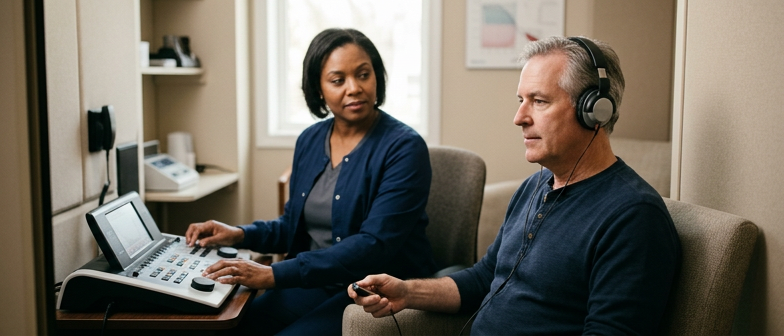
A hearing test for adults is a structured evaluation of how well you detect and understand sounds at different volumes and pitches. Hearing often changes gradually, so problems may not be noticed until they affect conversations, work, or safety, such as missing alarms or traffic. Early identification can support communication, reduce social withdrawal, and lower risks linked with untreated hearing problems, including increased falls or mental strain. Because hearing is connected to overall health, a professional assessment does more than measure volume thresholds; it can also reveal ear or nervous system conditions that may need medical attention.
Many adults are unsure when to schedule a hearing check. Reasons to consider testing include turning the TV or phone volume higher than others prefer, frequently asking people to repeat themselves, feeling that others are mumbling, struggling to follow group conversations, or noticing ringing or buzzing in the ears. If you recognize these changes, or if family and friends mention them, a hearing screening at a clinic or office near you can clarify your current hearing levels and possible next steps. Adults exposed to regular loud noise, with a history of ear problems, or experiencing age‑related changes may also benefit from periodic testing.
During a typical hearing test for adults, you first answer questions about your health, noise exposure, and symptoms such as ringing in the ears or trouble following conversations. The clinician then examines your ear canals and eardrums with a lighted instrument to look for wax, infection, or other problems. Next, you sit in a sound-treated booth and wear headphones or small earphones. You hear soft beeps at different pitches and signal each time you notice a sound. This pure-tone test shows the quietest sounds you can detect at each pitch and the results are plotted on an audiogram.
Most adult assessments also include speech testing. You may repeat words at various volumes or listen to speech with background noise to see how hearing changes affect everyday communication. If needed, extra tests can check how well the eardrum moves or how the inner ear responds to sound. A standard appointment usually lasts about 30 to 60 minutes, depending on your concerns and how many procedures are required. The cost of a full evaluation varies by clinic, region, and insurance coverage, so many people contact the provider in advance to ask about typical fees and what their plan is expected to pay.
| Test Component | Main Purpose | What It Tells You | When It Matters Most |
|---|---|---|---|
| Health and noise history | Identify risk factors | Clues about cause of changes | Long‑term loud sound exposure |
| Ear exam with lighted instrument | Check outer and middle ear | Wax, infection, or blockage signs | Fullness, pain, or sudden change |
| Pure‑tone beeps in booth | Measure quietest sounds heard | Audiogram of hearing levels | Trouble hearing soft voices |
| Speech testing in quiet | Assess speech understanding | How clearly words are heard | Missing words in conversation |
| Speech in background noise | Simulate real‑world listening | Ease or effort of hearing speech | Busy restaurants or group talks |
| Extra tests of eardrum or inner ear | Clarify unclear findings | More detail on ear function | Suspected ear disease or imbalance |
Most adult hearing appointments take about 30 to 60 minutes from check-in to checkout. A typical visit includes a brief medical and noise-exposure history, a look inside your ears, and listening to tones and speech through headphones in a quiet room. If results are simple, the visit can be shorter; if there are balance concerns, ear disease, or unclear findings, the clinician may repeat parts of the test or add assessments, which takes longer.
How often to test hearing depends on age, risk factors, and symptoms. Many adults benefit from a baseline test by midlife, then repeating it every 3 to 5 years if hearing seems normal and there is little loud-noise exposure. People over 60, or anyone with regular loud sound at work or during hobbies, are often checked every 1 to 2 years. At any age, new trouble following conversation, turning up the TV, ringing in the ears, or sudden changes should prompt a sooner evaluation.
Many adults try an online hearing check first because it is quick, free, and can be done at home with headphones. These tools can suggest that you might have trouble hearing certain tones or speech and can help you decide whether to speak with a clinician. However, results are strongly affected by your device, background noise, and how closely you follow the instructions. Online checks are best treated as a rough screening, not a diagnosis, and they cannot show why hearing is changing, whether both ears are affected in the same way, or whether medical problems need attention before thinking about hearing aids.
In‑person exams with an audiologist or ear specialist use calibrated equipment in a sound‑treated room and standardized procedures to measure hearing across pitches and speech understanding. The clinician can look in your ears, review your history, and explain whether any hearing loss seems temporary, related to noise, or linked with age‑related change. They can discuss treatment options, ear protection, or hearing technology when appropriate. If an online check raises concerns, or if you notice everyday listening difficulties, arranging a professional hearing screening for adults near you is the most reliable way to understand your hearing health.
| Option | Best Use Case | Accuracy Level | Clinical Insight | When To Choose |
|---|---|---|---|---|
| Online hearing check | Quick self-screening at home | Low to medium | No ear exam or diagnosis | Unsure about changes, want a first check |
| In-person audiologist exam | Comprehensive hearing evaluation | High | Full ear exam and counseling | Persistent difficulties in daily listening |
| Online check plus follow-up visit | Mixed approach for cautious adults | Medium to high | Screening first, then detailed review | Online results raise concern or are unclear |
| Community screening event | Basic public screening | Medium | Limited tests, referral only | Initial check when access to clinics is limited |
Many adults use online hearing checks when considering over‑the‑counter hearing aids because they are quick and can be done at home with headphones. These tools may suggest whether hearing is reduced and if one ear seems worse, but results depend heavily on device volume, background noise, and headphone quality, so they are best viewed as a rough guide instead of a clinical diagnosis. They can still help you decide whether to seek professional advice about your hearing.
Before buying OTC hearing aids, a formal hearing test with an audiologist or other qualified clinician is usually recommended, especially if you notice sudden changes, ear pain, dizziness, or have a history of ear disease. An in‑person exam can detect medical issues that online tools cannot and provide a detailed hearing profile to guide both OTC and prescription options. Online tests work best as a first screening step that encourages timely, in‑person evaluation rather than replacing a full examination.
For adults using Medicare, hearing coverage depends on whether the exam is diagnostic or routine. Medicare Part B may cover hearing and balance tests when a physician or other qualified provider orders them to investigate symptoms such as suspected hearing loss, dizziness, or ear disease. Deductibles and coinsurance can still apply, and routine checkups done only to update hearing aids or out of curiosity about hearing changes are usually not covered. Some Medicare Advantage plans include extra hearing benefits, so people need to review their plan materials or contact the insurer before making an appointment.
Adults who want a hearing test billed to Medicare typically start with a primary care visit or referral from another clinician. Diagnostic tests are often done in hospital outpatient departments, ear, nose, and throat clinics, or audiology practices that accept Medicare. Before booking, it is important to confirm that the facility is enrolled in Medicare and that the exam will be billed as medically necessary, not as an elective screening. Many people search for hearing testing in their area, then use the clinic’s website or call the office to check that the professionals are licensed and able to submit claims under the patient’s coverage.
Some adults can access free or low cost hearing screening through community health events, nonprofit organizations, public health programs, or workplace initiatives. These options usually offer brief checks that identify whether more complete testing should be considered, rather than a full diagnostic exam. Eligibility is set by the organizing group and may focus on older adults, people with limited income, veterans, or workers exposed to loud noise, and availability differs by region. To find nearby options, people can contact local health departments, senior centers, or large hospitals and ask what type of screening is provided and whether follow up care is available if a problem is detected.
How much is a typical hearing test for adults and what affects the cost?
Prices range from low‑cost screenings to higher‑priced full exams, depending on clinic, location, and test depth. Health insurance, employer programs, or community events may lower what you pay.
Are online hearing tests accurate compared with an in‑person exam?
They can flag possible hearing issues but depend on your device, headphones, and noise level. They do not examine your ears or give a full diagnosis, so they should not replace a clinic visit.
How long does an adult hearing test usually take?
Most visits last about 30–60 minutes, including health questions, a brief ear check, and tests of tones and speech in a quiet room or booth.
Does Medicare cover hearing tests, and where can I go?
Medicare Part B may help pay for tests ordered to check symptoms such as hearing loss or dizziness, with deductibles and coinsurance. Ask your primary doctor or audiology office if they take your plan.
If my hearing seems normal, how often should I be tested?
Adults without symptoms are often checked every few years. People with loud‑noise exposure, known loss, or ear disease may need more frequent exams, based on a clinician’s advice.