
x
Worried about your child’s first pediatric dentist appointment, costs, or insurance coverage like Medicaid or CHIP? This guide walks you through what happens during the visit, how long it usually takes, ways to keep kids calm, and how to choose and book a nearby pediatric dentist online.
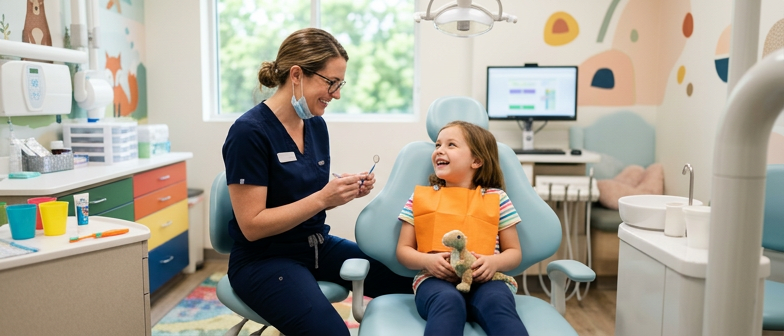
A typical pediatric dentist appointment starts with check-in and a brief review of your child’s health history and any concerns, such as tooth pain or thumb sucking. The dental team explains what will happen so the visit feels predictable and less scary. Your child is seated in the dental chair while the dentist or hygienist gently examines the teeth, gums, and jaw for cavities, bite problems, and growth issues. During most routine visits, the teeth are cleaned, plaque is removed, and fluoride is applied to protect against decay. Parents often wonder how long a pediatric dentist appointment lasts; most standard checkups take about 30 to 45 minutes, with first visits or appointments that include extra procedures sometimes running longer.
If your child needs dental X-rays, the team describes each step in simple, kid-friendly language before they begin. A small sensor or film is placed in your child’s mouth, and the X-ray machine quickly takes pictures while your child holds still. Parents may ask whether a child’s dental X-ray will hurt, but the process is usually painless, with only mild pressure from the sensor or a brief moment of awkwardness. The office uses protective shields and low radiation settings designed for children to keep X-rays as safe as possible. After the exam and any X-rays, the dentist reviews the results with you, offers brushing and diet tips, recommends when to schedule the next visit, and answers questions so future pediatric dentist appointments feel familiar and comfortable.
To help your child stay calm at the dentist, talk about the visit a few days ahead in simple, positive words. Describe a pediatric dentist appointment as a friendly place where a tooth doctor counts and cleans teeth, and remind your child you will stay nearby. Avoid focusing on pain, and keep the idea of the visit quick and routine. You can role-play at home by gently looking in your child’s mouth with a toothbrush so the exam feels familiar, and bring a small comfort item to the office.
If your child is nervous about dental tools, explain X-rays before you book the visit online. Say the X-ray camera takes a special picture inside the mouth to help the dentist keep teeth healthy. Let your child know that a dental X-ray will not hurt; they only need to stay still while a small card rests between their teeth. Reassure them that nothing sharp is used for pictures and that the dentist and staff will explain each step and pause if they need a break.
When planning a pediatric dentist appointment, look for a provider who is specially trained to treat children and teens and offers a kid-friendly environment. A strong choice clearly explains procedures, uses behavior guidance to help nervous kids, and is experienced with dental injuries or special health needs. Ask your child’s pediatrician, local parents, or a school nurse for recommendations, then review the dentist’s training, years working with children, and recent online feedback to see how the office responds to concerns and treats families.
Next, search online for a pediatric dentist near you using trusted health directories or your insurance website. Choose an office close enough for routine visits and urgent care if your child needs a kids dentist for a dental injury after a fall or sports accident. Check that the practice offers emergency time slots, clear instructions for urgent problems, and age-appropriate imaging and treatment. Make sure the dentist and staff are comfortable supporting children who are anxious, nonverbal, or have sensory sensitivities so visits can be handled calmly.
Many practices let you book a pediatric dentist appointment online through their website or patient portal. You can view available dates and times, pick a visit that fits school and work schedules, and share important details in advance, such as medications, allergies, or recent dental injuries. Some systems allow you to upload insurance information, sign consent forms, and set up text or email reminders. When using online booking, look for easy ways to contact staff if your child has urgent pain, needs siblings scheduled together, or requires special accommodations to feel comfortable.
| Pediatric Dental Office Option | Best For | Key Strengths | Potential Drawbacks | Online Booking & Emergency Support |
|---|---|---|---|---|
| Small, child‑focused practice | Families wanting personalized care | Calm atmosphere, familiar staff, flexible behavior guidance | Limited appointment slots, fewer specialist services | Simple online booking, may rely on phone for urgent injuries |
| Large multi‑provider pediatric clinic | Busy families and siblings seen together | Multiple dentists, extended hours, wider service range | More stimulating environment, less consistent provider | Robust portal with scheduling, forms, and clearer emergency paths |
| Hospital‑affiliated pediatric dentist | Kids with complex medical or sensory needs | Close coordination with medical teams, specialized equipment | Less playful setting, longer wait for routine checkups | Structured online requests, formal triage for urgent dental trauma |
| General dentist treating children | Older kids with simple needs | Convenient location, familiar for whole family | May have limited experience with dental injuries or behavior guidance | Basic online booking, emergency care may be referral‑based |
Some pediatric dentist appointments must happen right away, especially for dental injuries or sudden swelling. If your child knocks out a tooth, has a deep chip, heavy bleeding after a mouth injury, or severe tooth pain, contact a kids dentist who treats dental trauma immediately. Painful, red, or swollen gums, particularly with fever or trouble eating, also need a same-day child dentist appointment for swollen gums because these signs can mean infection. When you call, clearly describe what happened, how your child feels, and any changes you see in their teeth or gums so the office can fit you in quickly, give first-aid advice over the phone, and decide whether urgent in-office care or, in rare cases, emergency department treatment is needed.
Helping your child stay relaxed during a pediatric dentist appointment begins before you reach the office. Use simple, upbeat language about counting teeth, cleaning sugar bugs, and meeting a friendly tooth doctor, and avoid words like hurt or shot. Show online photos or short videos of the office so it feels familiar. On the day of the visit, bring a favorite stuffed animal or small toy, and try to book the appointment when your child is usually rested and has eaten. Tell the dentist and team if your child is very anxious or has sensory sensitivities so they can adjust lights and sounds and use gentle tell‑show‑do explanations before each step.
During the visit, your own calm body language helps your child stay comfortable at the dentist. Sit where they can see you, use a light, encouraging tone, and let the pediatric dentist lead most of the conversation to build trust. If dental X‑rays are needed, reassure your child that the pictures will not hurt and that the machine barely touches them while they hold still for a few seconds. Simple coping skills like slow deep breaths, counting, or focusing on a short story during the exam make the appointment feel manageable. Praise specific brave behaviors and remind your child that every checkup keeps their smile strong and makes future visits feel more routine.
When a child has developmental, behavioral, or sensory challenges, planning a pediatric dentist appointment carefully can make the visit calmer. Before you book, tell the dental team about your child’s medical history, communication style, and sensory triggers, and ask if they have experience supporting children with similar needs. You might request a quieter time of day, softer lighting, or shorter, more frequent visits so your child can gradually get used to the office. Some pediatric dentists offer social stories, office photos, or a brief meet-and-greet so your child knows what to expect, which can make it easier for them to stay calm at the dentist and feel safer during future checkups.
What happens at a typical pediatric dentist appointment and how long does it take?
A routine visit includes a brief health review, exam of teeth and gums, cleaning, and fluoride. Most pediatric dentist appointments take about 30–45 minutes unless extra treatment is needed.
How can I help my child stay calm during a kids’ dentist visit?
Use simple, positive words, practice “tooth counting” at home, show pictures of the office, and bring a favorite toy. Tell the dental team about any anxiety so they can explain each step gently.
How do I choose a pediatric dentist and can I book a visit online?
Choose a dentist with pediatric training, a child‑friendly office, and good local reviews. Many child dental practices let you book appointments online through their website or patient portal.
Does Medicaid or CHIP cover children’s checkups and what payment options are available?
Medicaid and CHIP usually cover preventive and medically necessary pediatric dental care. Offices often accept employer dental insurance, self‑pay, major cards, and sometimes payment plans; ask about fees in advance.
When should I schedule a visit for swollen gums or a dental injury, and do X‑rays hurt?
Red, painful, or swollen gums and dental injuries should be seen the same day by a kids’ dentist. Dental X‑rays do not hurt; your child just stays still for a few seconds while a low‑dose image is taken.