
x
If you have prediabetes and are curious about over‑the‑counter glucose or CGM options, it can be hard to judge what’s worth the cost and effort. This guide helps you weigh OTC CGMs against finger sticks, understand insurance and HSA rules, and use sensor data safely.
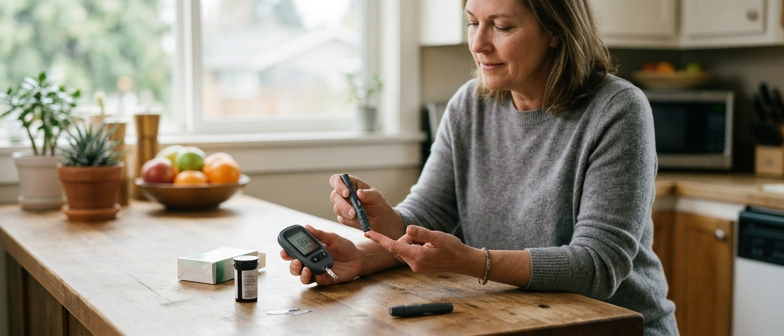
Prediabetes means blood sugar is above the typical range but not yet at the threshold for type 2 diabetes. Many people feel well and only learn about it through tests such as fasting glucose or A1C. At this stage, changes in eating patterns, physical activity, sleep, and stress management can influence future risk, but the impact varies by individual health factors. Monitoring glucose can help some people see how specific meals, late‑night snacks, or long periods of sitting affect their numbers. These insights may guide more focused lifestyle adjustments, yet not everyone with prediabetes needs frequent testing, and decisions about how often to check are usually made with a clinician.
Glucose monitoring options for prediabetes include traditional finger‑stick meters and newer over‑the‑counter continuous glucose monitors. Finger‑stick meters require a small blood sample, tend to cost less, and give single readings at particular times, such as before and after eating. Continuous monitors use a sensor under the skin to display patterns across the day and night, including changes with exercise or sleep. Some devices are available without a prescription, which can appeal to people who want more detailed feedback, but they have limits related to accuracy, sensor wear time, and the need to understand the data correctly. Choosing between finger‑stick checks and continuous monitoring depends on personal goals, comfort with technology, and medical advice on how much tracking is appropriate.
An over-the-counter continuous glucose monitor is a sensor system that shows glucose trends in real time and can be bought directly when cleared for nonprescription use. Prescription CGMs are authorized mainly for people with diagnosed diabetes and usually involve ongoing medical supervision. OTC models are framed for broader use, such as people interested in patterns that may relate to prediabetes. For someone with elevated blood sugar but no diabetes diagnosis, continuous data may help show how meals, activity, stress, or sleep are linked to glucose changes. These devices are not meant to replace diagnostic lab tests or personal medical advice. It is important to read the labeling to see whether a product is intended for diabetes management, general wellness tracking, or something in between, and to ask a clinician to help interpret the results in context.
Nonprescription access does not guarantee low cost or coverage by health plans. Some prescription-based monitors may be partly covered when medical criteria are met, while OTC devices are often paid fully out of pocket. The total monthly expense typically includes any starter hardware plus sensors that must be replaced after a fixed wear period, and prices differ by brand and retailer. People who want a CGM without a prescription need to check which options are available, review estimated ongoing costs, and weigh this against their budget and health priorities. Professional guidance remains useful, because a clinician can help decide whether continuous monitoring adds value at the prediabetes stage, how to pair it with lifestyle changes and standard blood tests, and when a basic finger-stick meter may be adequate.
| Option | Access & Upfront Steps | Ongoing Cost & Supplies | Clinical Guidance & Support | Best Fit For Prediabetes Use |
|---|---|---|---|---|
| Over-the-counter CGM | Direct purchase, no prescription | Out-of-pocket, recurring sensors | Optional, recommended for interpretation | Exploring daily patterns and lifestyle impact |
| Prescription CGM | Requires clinician evaluation | Possible partial coverage with criteria | Structured follow-up and care team input | Complex glucose issues or high progression risk |
| Finger-stick meter | Widely available, often OTC | Test strips and basic supplies | Used alongside routine lab tests | Occasional spot checks and confirmation testing |
| No home glucose device | Rely on clinic testing only | No device-related costs | Periodic visits and standard labs | Stable prediabetes managed mainly by lifestyle |
For people with prediabetes, paying for a continuous glucose monitor entirely out of pocket can be expensive, and prices differ by brand, sensor duration, and whether a separate reader is required, so checking current quotes from pharmacies or authorized retailers is more reliable than using generic estimates.
Some health plans treat CGMs as eligible medical expenses for tax-advantaged accounts such as Health Savings Accounts or Flexible Spending Accounts, but rules and documentation needs vary, so it is important to confirm with the plan or benefits administrator before using these funds for a purchase.
When insurance denies a CGM claim, common steps include reading the explanation of benefits, contacting the insurer for clarification, submitting an appeal by the stated deadline, and asking a clinician to provide supporting records or a medical necessity letter; if the situation is confusing, consumer assistance programs or patient advocacy groups may help explain options.
For people with prediabetes using an over the counter continuous glucose monitor, knowing how long a sensor is meant to stay on helps keep readings reliable. Most devices are approved for a specific wear period, often about one to two weeks, and may stop displaying data or prompt you to change the sensor after that time. Accuracy is evaluated only within this recommended duration, so trying to extend wear can lead to misleading results. Checking the manufacturer’s instructions for wear time, storage, and disposal is an important part of safe day‑to‑day use.
Careful application makes wearing a sensor more comfortable. Wash and dry your hands, clean the suggested site, and let the skin dry completely before putting the sensor on. Avoid skin that is scarred, irritated, or regularly rubbed by waistbands or straps. When attaching the sensor, press evenly for the time recommended so the adhesive bonds without causing pain, and then try to avoid knocking it on door frames, exercise equipment, or tight clothing, which can loosen the patch and shorten wear.
Skin reactions such as itching, redness, or rash around the adhesive can occur. Mild irritation may improve by rotating sites, avoiding previously inflamed areas, and removing the sensor gently with adhesive remover or oil. If you notice blistering, oozing, spreading redness, or significant pain, stop using the device at that site and seek medical advice to check for allergy or infection. Even when using a CGM, finger stick checks can still be useful when numbers do not match how you feel or when your care team suggests confirming a reading.
Continuous glucose monitor adhesives can cause itching, redness, or a rash, especially with longer wear or sensitive skin. To reduce irritation, clean and dry the site, avoid lotions or oils where the patch will sit, and rotate sensor locations so one area is not stressed repeatedly. Mild symptoms often ease after the sensor is removed. If you notice blisters, spreading or very red rash, warmth, pain, pus, or fever, contact a health professional, as these may signal an allergic reaction or skin infection. They can help you consider barrier films, different placement sites, or other glucose monitoring options if adhesive problems interfere with safe prediabetes tracking.
With prediabetes, a continuous glucose monitor is most useful for seeing patterns over days and weeks, not for reacting to every single number. Watching how your glucose responds to meals, snacks, activity, stress, and sleep can highlight which habits keep values in a healthier range and which lead to repeated spikes. CGMs measure glucose in the fluid around cells and usually lag behind blood levels by several minutes, especially when levels are changing quickly after exercise or a high‑carb meal. Because of this delay, trends and repeated patterns are more informative than brief rises or dips, and CGM data should complement, not replace, professional testing and medical advice.
Traditional finger‑stick checks still matter because they measure capillary blood glucose directly and are the usual way to confirm CGM readings that seem off. Many people use a CGM for everyday pattern awareness and a meter only when the sensor value does not match their symptoms. If the CGM shows a familiar range but you feel shaky, sweaty, or unusually tired, it is reasonable to pause, confirm with a finger‑stick if you can, and follow the plan discussed with a clinician. Sensor placement, hydration, pressure on the device, and technical issues can all affect readings, so occasional mismatches are expected. Frequent discrepancies should be reviewed with a health care professional to fine‑tune how you interpret and act on the data.
Does using an over-the-counter glucose monitor actually help with prediabetes?
It can help some people see how meals, activity, sleep, and stress affect glucose patterns. The data may guide lifestyle changes, but it does not replace lab tests or medical advice.
Can I get a continuous glucose monitor for prediabetes without a prescription?
Certain CGM systems are cleared for over-the-counter use and can be bought directly. Others still require a prescription, so you need to check the specific product’s labeling and local regulations.
Can I use my HSA or FSA to pay for a CGM when I have prediabetes?
Sometimes yes, if the device is considered a qualified medical expense and you meet plan rules. You should confirm with your HSA or FSA administrator and keep documentation from your clinician.
How long does a typical CGM sensor last, and do I still need finger-stick checks?
Most sensors are approved for about 10–14 days of wear. Some people still need occasional finger-stick tests, especially if readings seem off or if a clinician recommends confirmation.
What should I do if CGM adhesive causes itching or red skin?
Clean and dry the site before placement, avoid lotions, and rotate locations. If rash is severe, painful, or spreading, remove the sensor and seek medical advice about barrier films or other options.