
x
If you’re searching for low‑dose CT lung screening near you, you may be weighing cost, eligibility, and what actually happens during the scan. This guide walks through who typically qualifies, how LDCT works, time and false‑positive considerations, and how to check coverage such as Medicare Part B.
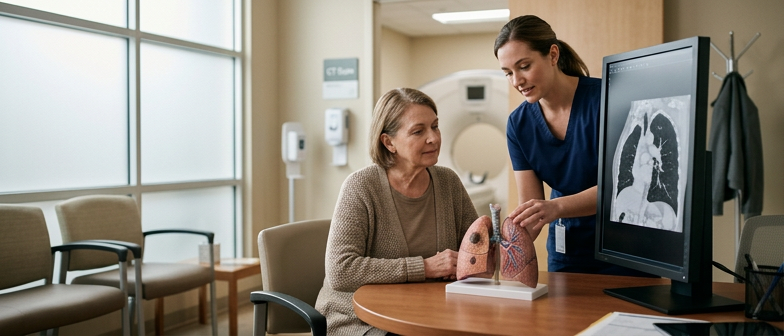
Low-dose CT lung screening is a type of chest CT scan that uses less radiation than a standard diagnostic CT to look for early signs of lung cancer in people at higher risk. During a screening visit, you lie on a table that moves through a donut-shaped scanner while X-ray images are taken in a few seconds. You remain fully awake, and most routine screenings do not involve needles, contrast dye, or breathing tubes. You are usually asked to hold your breath briefly so the images are clear. The purpose is not to explain a specific symptom but to find small lung nodules early, when treatment options may be broader.
Many people search for a low-dose CT lung scan near where they live because location affects how easy it is to start and maintain regular screening. Having an accredited imaging center or hospital program close to home can make it simpler to keep annual appointments, coordinate results with your usual clinicians, and return quickly if follow-up images are recommended. Practical factors like travel time, parking, appointment availability, and whether the facility works with your insurance or offers self-pay options also matter. Choosing a site set up specifically for lung cancer screening can help you understand what happens before, during, and after the scan.
Eligibility for low-dose CT lung cancer screening usually depends on age, smoking history, and whether someone currently smokes or is a former smoker. Many guidelines focus on adults about 50 to 80 years old who have smoked heavily and who still smoke or quit within the past 15 years. Screening is aimed at people with higher risk, because this is the group in which LDCT has been shown to reduce lung cancer deaths.
Pack years are a key part of deciding if you qualify. One pack year means smoking an average of one pack of cigarettes per day for one year. For example, 20 pack years could mean a pack a day for 20 years or two packs a day for 10 years. A minimum of about 20 pack years is often used as a threshold for offering a scan. People who still smoke may be eligible if they meet age and pack year cutoffs, and they are also encouraged to discuss support for quitting.
Most recommendations stop routine LDCT when a person reaches about 80 or when serious health problems limit life expectancy or make lung surgery unrealistic. For someone around 75, the issue is less about a strict age limit and more about whether they are healthy enough to benefit if an early cancer is found. Because LDCT can lead to false positives, follow-up tests, and radiation exposure, clinicians usually reserve screening for people whose overall risk is high enough that potential benefits outweigh these harms.
| Checklist Item | Typical Eligibility Signal | Why It Matters | Action With Clinician |
|---|---|---|---|
| Age range | Around 50–80 | Helps balance benefit and risk | Confirm age window and overall health |
| Smoking status | Current or quit within recent years | Higher ongoing lung cancer risk | Discuss smoking pattern and quit history |
| Pack-year history | Around 20 pack years or more | Identifies heavier long-term exposure | Calculate pack years together |
| Overall health | Well enough for possible treatment | Determines ability to benefit from early detection | Review major illnesses and surgeries |
| Screening goals | Understands pros and cons | False positives and follow-up testing | Clarify expectations and next steps |
Pack-years describe how much you have smoked over time and help decide if lung screening is reasonable. One pack-year means an average of one pack of cigarettes per day for one year. Twenty pack-years could mean a pack a day for twenty years, two packs a day for ten years, or half a pack a day for forty years. Clinicians estimate your total by combining how much you smoke with how long you have smoked.
Many guidelines suggest screening for people with at least a twenty pack-year history who are in a specific age range and who smoke now or quit recently. Routine upper age limits are often around the late seventies because other health problems can reduce the benefit. Being seventy-five or older is not an automatic stop; it is a signal to review your overall health, likely lifespan, and willingness to have follow-up tests before deciding.
When you arrive for a low dose CT lung screening, staff review your smoking history, medical background, and recent symptoms to confirm that this test is appropriate. You may change into a gown and remove metal objects like jewelry, glasses, or removable dental pieces, because these can interfere with the images. A technologist then brings you into the CT room, explains in simple terms what happens during a lung cancer screening, and answers basic questions so you know what you will see, hear, and feel.
The scanner is a large, doughnut-shaped machine with a narrow table that slides through the opening. You lie on your back, usually with your arms raised above your head, and may receive small pillows, supports, or straps to help you stay still. You are not fully enclosed as in some other imaging tests, and most people do not feel claustrophobic. During the scan, you hear soft whirring or clicking as the machine rotates and are asked several times to briefly hold your breath so the lung images stay clear.
The imaging itself is quick; in many centers the LDCT scan takes only a few minutes, although time at the facility is longer because of check-in and counseling. The scan is not painful, and standard screening does not involve needles or contrast dye. Afterward, a radiologist reviews the images for nodules or other changes. Because this test is very sensitive, it can show spots that are not cancer, so programs usually explain the chance of a false positive and possible follow-up scans or other tests. Results are sent to the clinician who ordered the exam, who then discusses the findings and any recommended next steps, including plans for future screening if you remain eligible.
Low dose CT lung screening is designed to find cancer earlier, when treatment options may be less intensive and outcomes can be better. The scan is very sensitive, so it often detects small lung spots that are not cancer. A false positive means a finding looks suspicious but later proves benign. The value of screening lies in weighing this chance of early detection against the worry, added tests, and possible complications that can come from investigating findings that turn out to be harmless.
When a scan shows a nodule, follow up usually starts with repeat or more detailed imaging, not an immediate invasive procedure. Decisions depend on the size, shape, and change over time. Only some people need a biopsy or other invasive tests. Most nodules are not cancer, but each extra test carries small medical risks and emotional stress, so screening is generally offered to people with higher lung cancer risk.
If you are wondering where to get a lung cancer screening, start by asking your primary care clinician whether there is a low dose CT program in your health system or local hospital network. Many hospitals, academic centers, and imaging facilities offer programs that follow national guidelines, sometimes through a dedicated lung clinic and sometimes through general radiology. Major cancer organizations and professional radiology societies often list accredited centers that meet quality and safety standards. When comparing options near you, you can ask whether the program has a structured intake process, uses standardized reporting, and helps coordinate follow up if the scan shows something that needs more evaluation.
Current and former smokers can speak with a clinician about which nearby screening site is appropriate and whether a referral is required under their insurance plan. You can mention that you are looking for a low dose CT scan close to home, ask how far you may need to travel, and whether the clinician regularly works with a specific imaging center. People who still smoke are often eligible for a lung scan if they meet other guideline criteria, and the visit is also an opportunity to discuss support for quitting. If you do not have a regular clinician, community health centers and public health clinics may help connect you with regional programs and explain what information to bring, such as your age, smoking history, and any prior chest imaging.
What happens during a low-dose CT lung screening and how long does it take?
You lie on a table that moves through a donut-shaped CT scanner. You may briefly hold your breath while images are taken. The scan itself usually takes less than 10 minutes, and most screenings do not use needles or contrast.
How do I know if I qualify for LDCT lung cancer screening?
Eligibility is usually based on age, how much and how long you smoked, and whether you still smoke or quit within a recent time frame. Many programs focus on adults around 50–80 with a heavy smoking history. A clinician needs to review your situation.
What does a 20 pack-year smoking history mean?
It means the equivalent of smoking one pack per day for 20 years, two packs per day for 10 years, or half a pack per day for 40 years. This measure helps health professionals decide if lung screening is reasonable.
Does Medicare Part B cover LDCT lung cancer screening?
Medicare Part B may cover LDCT when specific age, smoking history, and counseling visit requirements are met and properly documented. Because rules can change, it is important to confirm current criteria before scheduling.
How often does low-dose CT find something that is not cancer, and what follows?
Because LDCT is very sensitive, noncancerous spots are common. A false positive can lead to repeat CT scans and, less often, further tests such as PET-CT or biopsy. Follow-up depends on the size, appearance, and any change over time.