
x
Replacing missing teeth can feel as overwhelming financially as it is emotionally. Fees jump from one office to another, and the early estimate often grows once imaging, extractions, grafting, and anesthesia are added. Breaking the treatment into clear stages makes it easier to see where the money goes, what is optional, and where you actually have choices.
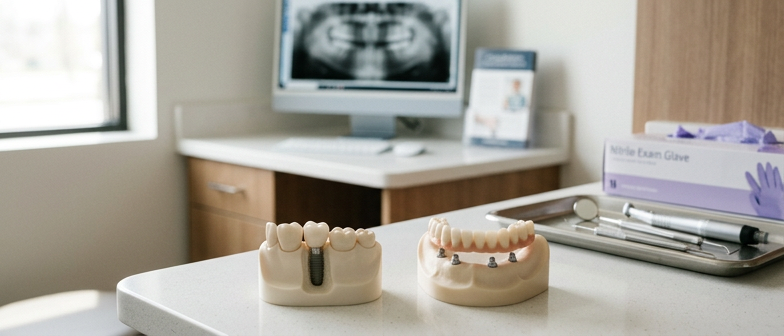
When a similar-looking treatment is far more expensive on one side of town than the other, the building behind the front desk is often part of the reason. A practice in a busy business district pays higher rent than a small office in a quieter area. Renovation expenses, insurance, utilities, and staff salaries are all baked into the fees for every service, including surgical work.
On top of basic overhead, some clinics invest in extra technology for planning and placing artificial roots. Three‑dimensional scans, digital planning software, surgical guides, and in‑house labs can improve accuracy and comfort, but they also raise fixed costs. Even if the specific components going into your jaw are from the same manufacturer, the overall fee may reflect a very different level of investment in imaging, planning, and lab support.
One office might send scans to an outside lab and schedule longer waits between visits. Another might design and adjust parts on‑site, shortening the timeline but charging more. Neither approach is automatically better; it is about how much you value speed, convenience, and high‑tech planning versus a leaner, lower‑overhead model.
Dentists and specialists do not all price their work the same way. One may have extensive surgical training, attend many advanced courses, and limit the number of implant patients per day. Another may follow a high‑volume model, using more standardised plans so they can see many people in the same time.
Both may use similar materials, but one is selling a highly personalised, time‑intensive service and the other focuses on efficiency. Extra planning appointments, more detailed follow‑up, and custom aesthetic work all add time.
What is bundled also matters. One quote might only cover the titanium fixture placed in the bone. Another might bundle the scan, provisional teeth, the final crown or bridge, and follow‑up visits. A lower sticker price can suddenly look less attractive if every step is billed separately.
A simple way to compare is to ask for an itemised plan from each office. That makes it easier to see which quote includes imaging, surgical guides, temporary teeth, and follow‑up adjustments, and which one leaves those as separate, later charges.
Here is one way to think about clinic differences when you are comparing estimates:
| Clinic style or feature | When it may cost more | When it may be worth it for you |
|---|---|---|
| High‑rent, central location | Often | If convenience and shorter commutes matter |
| Extensive in‑house technology | Often | If you want fewer outside referrals |
| Longer visits, fewer patients | Often | If you value slower, more personalised care |
| Very streamlined, high volume | Sometimes lower | If budget is tight and case is straightforward |
The meter does not start with surgery; it starts when you sit down to ask, “Am I a good candidate?” From there, each phase adds its own line items.
A typical journey begins with an exam and a three‑dimensional scan of your jaws. That scan shows bone height, sinus position, and nerve location. You are paying for the images and for the time a dentist or specialist spends reading them and designing a plan: how many artificial roots, which sizes, and exactly where they should go.
If there are gum problems, active cavities, or teeth that cannot be saved, preparatory work comes first. That may include cleanings, fillings, extractions, or treating inflammation around the remaining teeth.
Once the planning is complete, the day of surgery adds its own group of charges: the appointment time, the surgical team, sterilisation and materials, the anesthesia used, and the hardware that is actually placed.
From the outside it looks like “paying for one tooth,” but in practice you are paying for several pieces: the titanium post that goes into the bone, the connector that joins it to the visible tooth, and the crown or bridge itself. Each has its own lab work and material choice behind it, and each step requires chair time for try‑ins, adjustments, and checks during healing.
Some jaws need extra support before the post can be placed. Bone grafting or sinus‑related procedures are separate phases, each with their own materials, lab work, and healing visits. For multiple missing teeth, the same logic scales up: more planning, more parts, more lab time, and more follow‑up.
The overall bill, from first consultation to biting comfortably on a finished tooth, usually reflects:
Missing any of these items in an early quote can make a treatment look cheaper than it will actually be once everything is added.
Replacing one missing tooth is usually the clearest scenario to understand. In many offices, the fee is presented as a bundle for three main items: the post, the connector, and the visible tooth. Because everything is focused on one location, planning is simpler and surgery time is shorter.
Costs go up when the situation is less straightforward. If the bone is thin and needs grafting, that is an extra procedure. If specialised scans or surgical guides are recommended, those tools add another layer. For some people, insurance may help with the visible tooth or part of the surgery, but it rarely clears the entire balance.
People who are missing just one tooth can often take more time to compare clinics, look at photos of previous cases, and ask detailed questions about which steps are truly needed.
Once several teeth are missing, the conversation shifts from “price per tooth” to “price per project.” Instead of placing one post under every gap, dentists may place a smaller number of posts to support a bridge, a removable denture, or a full arch of fixed teeth.
A short bridge supported by artificial roots already involves more lab work and more materials than a single crown. When a person needs a full set on the top, the bottom, or both, the plan can include several posts, a reinforced frame, and a large, custom‑designed set of teeth.
The higher figure reflects:
For some people, it helps to see the difference between main options in a simple comparison:
| Treatment scope | Typical structure | Who often considers it |
|---|---|---|
| Single missing tooth | One post with one crown | Localised damage or one lost tooth |
| Several missing teeth | Fewer posts supporting a bridge | Gaps in one area but not the whole arch |
| Full upper or lower arch | Multiple posts with a full row of teeth | Little to no stable natural teeth in one jaw |
| Both arches | Posts in both jaws with two full rows of teeth | Widespread loss or failing full dentures |
Dental coverage can lower your out‑of‑pocket cost, but it rarely turns complex restorative work into a free service. Many plans label this kind of care as a major procedure. That often means:
Most structures pay more generously for preventive cleanings and simpler fillings than for surgical or prosthetic work. It is normal to still have a noticeable balance even after coverage is applied.
When comparing or choosing a plan, it helps to look past the monthly premium and focus on details like:
Sometimes, accepting a slightly higher premium in exchange for better coverage on this type of treatment can save more overall when you are facing multiple missing teeth.
If your current coverage is limited or you do not have any, there are other ways to lower the immediate hit to your budget.
Some offices offer discount or membership programs. Instead of traditional insurance rules, these provide a set percentage off each service, often including surgical and restorative work. There is usually no waiting period and no cap. You still pay the adjusted fee yourself, so the value depends on both the discount level and how fair the base fee is.
Many practices also work with in‑house or third‑party financing. These plans divide the total bill into smaller monthly pieces, sometimes with low or no added interest if payments are made on time. This does not reduce the total amount but can make a large project feel more manageable.
Some people combine several tools: using coverage for the visible teeth and part of the surgery, a discount or membership option where allowed, and a payment plan for the remaining balance. When available through an employer, flexible spending or similar accounts can also help by letting you use pre‑tax funds.
The most useful questions to bring to a consultation are about the full, end‑to‑end cost, how it breaks down by phase, and which parts of the plan are optional versus essential for long‑term success.
How much does a single tooth implant cost in the U.S., and what usually drives that price up or down?
For most patients in the United States, single tooth implant cost typically falls somewhere between 3,000 and 6,000 dollars per tooth. The fee changes with bone quality, need for grafting, type of crown, local overhead, and surgeon experience. Extra imaging, sedation choices, and custom aesthetics often push the total toward the higher end.
What should I look for when comparing “dental implants cost near me” between different local clinics?
When you compare dental implants cost near me, focus on what each quote includes: 3D scans, extractions, bone grafts, temporary teeth, final crowns, and follow‑ups. Also ask about surgeon training, complication policies, lab quality, and whether they use in‑network fees or membership discounts. A slightly higher upfront quote may give better long‑term value.
How is All‑On‑4 cost structured compared with traditional full mouth dental implants cost?
All‑On‑4 cost is usually calculated per arch and can be lower than placing many individual implants because fewer posts support a full bridge. Full mouth dental implants cost for both arches may include separate surgical stages, premium materials, and multiple provisional sets. Ask whether extractions, sedation, and repairs are included to avoid surprise bills later.