
x
Engineers comparing grinding options for minerals or slag need to understand how Raymond Mill capacity, fineness control, and Mohs hardness limits interact with energy use and wear. This overview helps you tune classifier and airflow settings, manage spare parts, and troubleshoot low output.
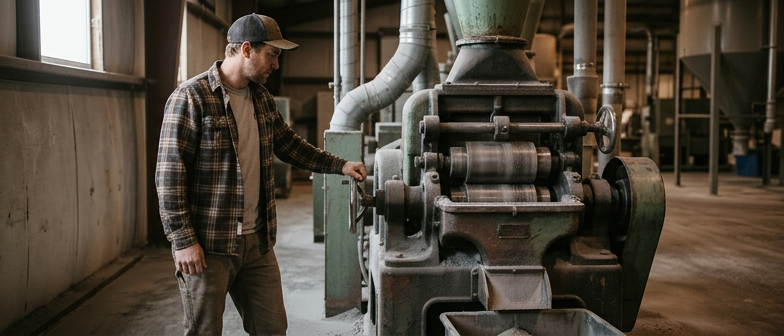
Raymond Mill is a vertical grinding system used to turn nonmetallic minerals, industrial by‑products, and some metallurgical materials into fine powder. A typical setup includes a main grinding unit, a feeder for controlled material input, an air classifier, a cyclone or bag collector, and a fan for airflow and dust management. Material is pressed between grinding rollers and a ring, then carried by air to the classifier. Oversized particles are returned to the grinding zone, while fine material is collected. This closed circulation helps keep product fineness and output relatively stable when operating conditions and maintenance are properly managed.
In industrial use, this type of mill is common for processing limestone, clay, and similar raw materials in building materials and chemical production. It is also applied to blast furnace slag, where feed size, moisture content, and hardness must be controlled so the equipment stays within its design limits. Raymond mills are often added in line expansion projects to increase grinding capacity without completely rebuilding an existing plant. The mill can usually connect to current conveying, storage, and dust collection systems, providing extra fine grinding capability for new product grades or higher throughput while keeping the additional footprint and energy demand moderate.
How a Raymond mill handles material depends mainly on feed hardness, moisture and particle size. Most designs are used for minerals and industrial by products with moderate abrasiveness, generally below about 7 on the Mohs scale, because harder particles speed up wear on rollers, rings and the classifier and increase drive load. When the feed contains very hard grains or tramp metal, pre crushing, metal removal or a lower feed rate is often needed to avoid vibration and pressure spikes. Moisture is also important, because damp or sticky feed can cake on internal surfaces, reduce grinding efficiency and make fine classification unstable, so upstream drying or tighter moisture control is often required.
Capacity per hour and final fineness are closely linked through classifier settings and fan airflow. Coarser product allows higher throughput because particles leave the grinding zone sooner, while very fine powder needs longer residence time, a reduced feed rate and more precise classification. Operators typically change classifier rotor speed or vane angle, together with fan volume, to shift the cut size and keep the circulating load within a workable range. A common strategy is to start from the desired fineness, then raise feed gradually until motor load, differential pressure and product size stabilize, using small corrections to classifier and fan settings to balance wear, energy use and capacity.
| Feed hardness & condition | Typical classifier setting tendency | Capacity per hour impact | Resulting product fineness | Operator focus |
|---|---|---|---|---|
| Moderate hardness, dry, fine feed | Balanced rotor speed, moderate air volume | Medium to high, stable output | Target fineness achievable | Maintain steady load and normal wear |
| Higher hardness, clean but coarse feed | Slightly higher speed, controlled air volume | Reduced, more constrained throughput | Finer cut harder to sustain | Monitor vibration and component wear |
| Sticky or damp material, mixed sizes | Conservative speed, higher air volume | Low, risk of fluctuations | Fineness unstable, variable cut | Prioritize drying and internal cleaning |
| Soft, non abrasive feed, uniform size | Lower speed, higher air volume | High, easier flow through | Moderately coarse but consistent | Maximize capacity with low wear |
| Very fine feed, well dried, pre classified | Higher speed, lower to medium air volume | Medium, limited by circulating load | Fine powder with tighter distribution | Fine tune rotor and fan balance |
Stable fineness in a Raymond Mill depends on how classifier rotor speed, air volume, and damper positions are balanced with feed rate. Higher rotor speed and lower airflow usually give finer powder but raise circulating load, cut capacity, and increase energy demand. Operators typically begin with the manufacturer’s setting, then change speed or dampers in small steps while watching motor amperage, differential pressure, and discharge temperature to avoid overload or coarse product.
Consistency is checked with regular particle size tests under steady operating conditions. Timed samples from the product stream are analyzed for a target residue or D50, then the classifier speed or damper opening is corrected to bring results back into range. Keeping records of settings together with feed moisture and hardness helps define a practical window so the operator can quickly restore the required fineness when raw material properties change.
Operating cost per ton for a Raymond Mill is mainly driven by electricity for the main motor and fan, wear of grinding parts, labor, and auxiliary systems such as dust collectors. Feed hardness, abrasiveness, particle size, and moisture strongly influence roller, ring, and liner life, so cleaner and well prepared feed can lower replacement frequency. Simple logs that track energy use, tonnage, and wear part consumption by shift or batch help operators see how changes in feed or mill settings affect overall cost per ton.
Availability of spare parts strongly affects real operating cost because downtime can exceed any saving on purchase price. Keeping essential components such as grinding rollers and rings, classifier elements, fan impellers, and seals in local inventory reduces the risk of long stoppages while parts are shipped. A practical parts plan is based on observed service life under specific feed conditions, supported by clear documentation, part numbering, and predictable lead times from distributors or manufacturers.
When comparing Raymond Mill machine prices and potential suppliers, users generally look at total cost of ownership rather than the initial quote. Installed power, expected hourly capacity at the target fineness, and typical wear rates are used to estimate long term cost per ton. Nearby suppliers may offer easier communication, on site service, and faster parts delivery, but buyers still need to review technical competence, safety and regulatory compliance, and the quality of after sales support, including commissioning assistance, training, and response to troubleshooting questions.
| Checklist Item | Impact on Cost per Ton | Impact on Uptime | Supplier Evaluation Focus |
|---|---|---|---|
| Feed preparation quality | Lower wear and energy demand | Fewer unplanned stoppages | Process support and guidance |
| Critical spare parts kept in stock | Stable maintenance budgeting | Shorter shutdowns | Clear parts plan and lead times |
| Installed power vs expected capacity | Predictable operating expenses | Reduced overload risk | Transparent performance data |
| Nearby service and parts support | Lower logistics overhead | Faster on site assistance | Local presence and response speed |
| After sales training and troubleshooting | More efficient daily operation | Quicker issue resolution | Documented technical competence |
Keeping key Raymond mill spare parts on hand helps avoid long stoppages when wear occurs. Plants usually store grinding rollers and rings, shovel blades, seals, drive belts, and heavily loaded bolts, plus basic lubrication fittings and sensors. Having at least one complete set ready supports replacement during planned shutdowns instead of waiting for external deliveries.
Fan impeller maintenance focuses on airflow stability and safe operation. Routine checks look for dust buildup, cracked or loose blades, and imbalance that causes vibration or noise. Cleaning should follow lockout procedures and reflect dust loading and material characteristics, and damaged impellers are normally replaced. Recording vibration, bearing temperature, and cleaning dates helps schedule work before output falls or the mill needs emergency downtime.
When a Raymond Mill shows lower capacity per hour, begin with basic operating checks instead of immediate setting changes. Compare the actual feed rate with the design capacity and confirm that material hardness and moisture stay within the recommended range, because very hard or damp feed lowers grinding efficiency. Inspect feed size distribution and remove tramp material, as oversized particles cause blockages and reduce effective grinding time. At the same time, verify that system air volume, fan pressure, and temperature are stable, since weak ventilation increases circulating load and cuts usable output.
After overall conditions are stable, focus on configuration, especially the classifier and fan system, which strongly affect fine product yield. Classifier speed, blade angle, and airflow determine cut size and recirculation; if the rotor speed is too high or airflow is restricted, more material returns to the grinding zone and apparent capacity drops while energy use remains high. Gradual adjustments to classifier settings, combined with monitoring product fineness and differential pressure, help balance capacity with required particle size. In parallel, check that grinding rollers and rings are not excessively worn and that the fan impeller is clean and correctly aligned, to avoid hidden mechanical losses.
If output remains low, use a structured troubleshooting method based on measurement rather than trial and error. Record feed properties, power draw, classifier parameters, and production rate over time to distinguish raw material effects from equipment or operational issues. Corrective actions may include improving upstream crushing, stabilizing feed dosing, optimizing classifier settings to realistic fineness targets, or scheduling maintenance for rollers, bearings, and the fan impeller. Treating low output as a system issue involving grinding conditions, classification efficiency, and mechanical integrity helps restore the Raymond Mill toward its intended throughput while maintaining consistent product quality.
What is a Raymond Mill typically used for?
It is a vertical grinding system that turns nonmetallic minerals, industrial by products, and some metallurgical materials into controlled fineness powder.
What Mohs hardness limit is practical for Raymond Mill feed?
Most designs work best below about 7 on the Mohs scale; harder material rapidly increases wear and load and may need pre crushing or lower feed rate.
How can I adjust Raymond Mill fineness through classifier settings?
Increase classifier rotor speed and slightly reduce air volume for finer product, but do it in small steps while watching motor load and differential pressure.
What factors mainly affect Raymond Mill capacity per hour and cost per ton?
Feed hardness, moisture, and size distribution, plus mill settings and ventilation, determine capacity; energy use and wear part consumption dominate cost per ton.
How should I troubleshoot low output on a Raymond Mill?
First check feed rate, hardness, moisture, and particle size, then verify fan performance, airflow, and classifier operation before changing settings or parts.