
x
Facilities weighing an ASRS system installation quote need clarity on building limits, timelines, and long‑term service costs. This overview helps you compare VLM and mini‑load options, plan go‑live and ramp‑up, understand ceiling and fire requirements, and evaluate maintenance and leasing decisions.
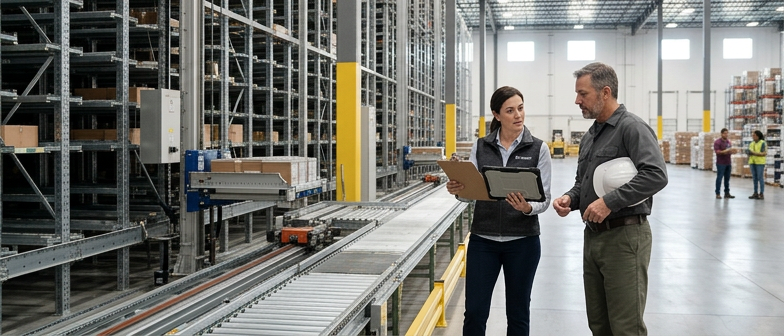
When a facility requests an automated storage and retrieval system installation quote, scoping clarifies what is being priced. The proposal should describe the site, including storage volume, order patterns, and required throughput, because these determine machine count, aisle configuration, and workstation design. It needs to state assumptions about building limits such as floor capacity, power supply, and ceiling height, and show how the layout fits these constraints. Target capacity, expected service levels, and special item handling rules are documented so the technical design and budget reflect realistic operating conditions.
A complete quote also defines integration scope, project services, commercial terms, and schedule. It should specify which systems integrator has primary responsibility, what connections are planned to warehouse or ERP software, and how testing, training, and go live will be organized. The document usually distinguishes between purchase and equipment leasing, and notes ongoing software and support charges so total cost of ownership can be evaluated. An installation timeline estimate is tied to milestones such as design approval, fabrication, on site installation, commissioning, and ramp up, giving a practical view of when the ASRS may be operational and what resources are needed at each stage.
Before requesting or accepting an ASRS system installation quote, facilities should verify that the building can safely accommodate the equipment and its operating profile. Ceiling height must fit the mast or lift below structural steel, lighting, and sprinkler piping while leaving clearance for maintenance. Floor capacity, slab flatness, and column spacing need review because dense storage and shuttle movements create concentrated loads. Power, grounding, and network paths should be confirmed early so the ASRS go-live project plan includes any new panels, dedicated circuits, and secure data connections. Local codes may impose specific fire suppression requirements for tall racks or enclosed machines, including sprinkler coverage, detection inside aisles, or separation from exits.
Operational safety and reliability are as important as structural constraints. The layout should support controlled material flow, clear walkways, and unobstructed access to interlocks, control cabinets, and emergency stops. Temperature, humidity, and dust can affect sensors and long-term reliability, so any zones needing enclosures, filtration, or climate control should be identified before installation. During ramp-up, jam prevention depends on both equipment design and consistent packaging, labeling, and handling, so staging areas and operator workstations should be arranged so loads enter the system stable and readable. Documenting these requirements in advance helps align installation timing with permitting, safety inspections, and internal readiness tasks.
| Readiness Area | Key Checkpoint | Risk if Ignored | Impact on Quote / Go-Live |
|---|---|---|---|
| Building structure | Ceiling height and slab capacity validated | Equipment clearance conflicts | Scope changes to mast height and rack design |
| Power and networking | Dedicated circuits and secure data paths planned | Unstable system performance | Additional panels and cabling added to installation quote |
| Fire protection | Sprinkler and detection coverage reviewed for ASRS | Non-compliance with local codes | Permitting delays and redesign of rack layout |
| Environmental conditions | Temperature, humidity, dust limits confirmed | Sensor faults and premature wear | Need for enclosures or filtration in project plan |
| Material flow and packaging | Stable, readable loads and safe access routes defined | Frequent jams during ramp-up | Extra operator training and layout tweaks before go-live |
A practical go-live plan for an automated storage and retrieval system should be embedded in the installation timeline estimate, with clear milestones for software setup, integration tests, and user acceptance that reflect real order profiles and peak volumes. Training is usually phased, beginning with core operators and maintenance staff, then extending to supervisors and backups so shift transitions do not introduce avoidable downtime once the system goes live. The quote should reflect these staged activities and associated labor.
Ramp-up stability relies on controlled volume increases and systematic jam and error reduction. Many sites begin with a limited SKU set, modest throughput targets, and close monitoring of exceptions, then scale up as data confirms consistent performance. Jam prevention typically involves agreed packaging standards, routine checks of load handling equipment, and defined alarm responses. Early dashboards, incident logs, and short daily reviews support adjustments to operating rules, staffing, and maintenance plans.
Vertical lift modules and mini-load automated storage and retrieval systems both automate storage, picking, and replenishment, but they suit different inventory profiles and buildings. VLMs concentrate small parts and slower movers in trays, bringing goods to the operator with dense vertical storage. Mini-load designs move totes or cartons in racking and are often chosen when order volumes and touch frequency are higher or when multiple workstations must be supplied. Clarifying which type better matches the application is a key step before requesting an ASRS system installation quote.
Physical layout and ceiling height strongly influence the choice and the installation scope. VLMs use enclosed towers that take advantage of building height when floor space is tight, yet they still require headroom and clearances that comply with local codes. Mini-load systems rely on aisles and racking served by shuttles or cranes, typically consuming more horizontal area but supporting sustained throughput. Available height, grid, and access routes can affect mechanical design, safety structures, and installation timeline estimates that appear in project proposals.
Cost and complexity differ between a VLM installation quote and a mini-load proposal. VLMs may involve fewer external interfaces but need attention to ergonomics, fire protection around the towers, and integration with inventory software. Mini-load projects usually demand more controls engineering, more devices on the network, and longer commissioning to test jam prevention and recovery. These factors shape not only upfront pricing but also expected service effort and help organizations compare technologies on both operational fit and long-term support.
| Solution Type | Space & Ceiling Fit | Typical Inventory Profile | Throughput & Integration | Quote & Project Implications |
|---|---|---|---|---|
| VLM | Best where floor space is tight; needs adequate ceiling clearance | Small parts, slower movers, mixed SKUs in trays | Moderate throughput; simpler external interfaces | More focused installation quote; ergonomic and fire protection emphasis |
| Mini-load ASRS | Requires wider footprint; flexible in medium to higher ceilings | Totes or cartons with higher touch frequency | Higher sustained throughput; more controls and network devices | Broader ASRS system installation quote; longer commissioning and testing |
| VLM | Enclosed towers near operators and workstations | Goods-to-person picking for compact zones | Lower integration complexity with existing inventory software | Installation timeline estimate often shorter and more contained |
| Mini-load ASRS | Aisles and racking spanning larger areas | Multi-workstation supply and batch order profiles | Greater need for jam prevention logic and recovery routines | Service contract discussions focus on ongoing tuning and support effort |
After an automated storage and retrieval system is installed, spending usually shifts from one‑time capital outlay to recurring service costs. Annual maintenance often covers planned inspections, software support, replacement of wear components, and remote monitoring, with pricing affected by system scale, operating hours, and uptime targets. Some facilities use time‑and‑materials service for occasional visits, while others select fixed‑fee programs that spread costs across the year. When reviewing proposals, it is important to see what is defined as preventive versus corrective work, how spare parts, travel, and after‑hours support are priced, and whether performance or response‑time targets are included.
Long‑term budgets are also shaped by formal service contracts and how the equipment is financed. Support agreements may bundle application software assistance, emergency call‑outs, and periodic training, and these elements are sometimes combined with a lease so that service payments follow operational cash flow. Leasing can shift some maintenance responsibilities, but the exact division between owner, financing party, and technology provider depends on contract terms, especially for upgrades, obsolescence, and conditions at the end of the term. Because contract structures vary between automation specialists, many organizations request comparable quotes from local systems integrators and weigh price, service scope, and technician availability before choosing a support model.
When reviewing ASRS proposals, distinguish between the equipment manufacturer, the systems integrator, and local service providers, because each may own different parts of the installation quote, software setup, and ongoing support. A reliable integrator should document scope clearly, including controls interfaces, testing responsibilities, and coordination with internal IT and operations, so there is one agreed description of what is included and what may require change orders.
Before agreeing to any service contract, request a detailed view of annual maintenance costs, expected response times, and escalation steps for downtime or safety issues. Check how preventive inspections are scheduled, how spare parts will be stocked, and whether remote diagnostics are part of the standard agreement or billed separately, as these points shape long term cost and system reliability in daily use.
What details should be included in an ASRS system installation quote?
It should cover storage volumes, order patterns, throughput, layout, ceiling height and floor limits, power and network needs, fire protection assumptions, and scope for software, training, and testing.
How do ceiling height and floor capacity affect ASRS design?
Ceiling height limits mast or lift size and clearance for sprinklers and maintenance. Floor capacity and flatness constrain rack height, aisle layout, and shuttle speeds to avoid excessive loads or instability.
When is a vertical lift module preferable to a mini‑load ASRS?
VLMs suit dense storage of small parts with moderate activity and limited floor space. Mini‑load systems fit higher order volumes, frequent touches, and multi‑station tote or carton handling.
What should I look for in ASRS annual maintenance and service contracts?
Compare what is defined as preventive versus corrective work, coverage for software and wear parts, response‑time targets, operating‑hour assumptions, travel charges, and remote support terms.
How does Section 179 typically relate to ASRS equipment purchases?
Some ASRS investments may qualify for accelerated expensing under Section 179, but eligibility and limits depend on current tax law and should be confirmed with a qualified tax professional.