
x
If you’re curious about wood‑fired barbecue but don’t want to babysit a live fire, an outdoor pellet grill offers set‑and‑forget digital control, steady heat, and consistent smoke flavor. This guide compares pellet grills with gas models and outlines key features, costs, and sizing for different cooking styles.
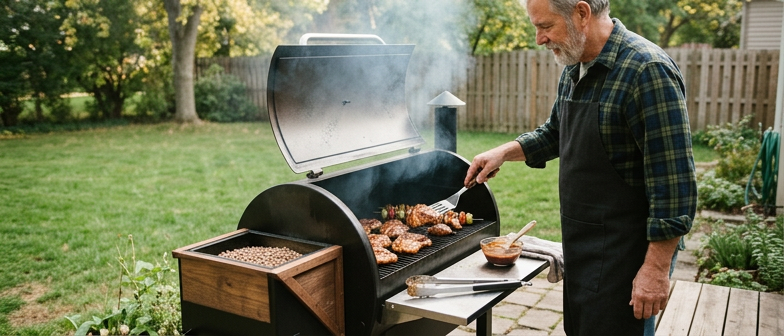
An outdoor pellet grill, often called a wood pellet grill or pellet smoker, is a backyard cooker that burns compressed wood pellets instead of charcoal or gas. Pellets sit in a side hopper and are fed into a small fire pot by an electric auger. An ignition rod starts the fire and a fan circulates hot, smoky air through the cooking chamber, so the grill behaves like a mix of an oven and a smoker. For beginners, this system is designed to keep temperatures steady with less hands-on fire management, which can make longer cooks such as ribs or pork shoulder easier to handle.
Compared with a typical gas grill that heats mainly with direct flame under the food, a pellet unit uses mostly indirect heat and steady convection, while adding a noticeable wood smoke character. Charcoal grills can provide similar heat and flavor but usually demand more frequent airflow and fuel adjustments. A modern pellet cooker relies on digital controls and thermostats to meter pellets as needed, so the user mainly chooses a temperature and lets the controller maintain it, which explains how these grills work and why they are often suggested for people learning outdoor smoking and slow cooking.
A modern wood pellet grill combines a firebox, digital controller, auger-fed fuel system, and electric igniter to deliver steady, convection-style heat. Instead of managing charcoal, you fill a hopper with compressed wood pellets and set a target temperature across a wide range for low-and-slow smoking or hotter roasting. A fan moves heat and smoke around the food, helping it cook evenly on an outdoor pellet grill with less flipping. Because heat and smoke come from the same fuel, the flavor is usually a consistent, mild wood profile, stronger than most gas grills but lighter than traditional stick burners.
Temperature regulation is a key advantage. Basic units use simple dial controls, while higher-end models rely on digital or PID-style systems that adjust pellet feed and fan speed to stay close to the set point. This steady heat reduces hands-on fire management, which is appealing to people who want smoked results without learning classic fire-tending techniques. The trade-off is dependence on electricity and pellet quality, so performance can be affected by extension cords, cold or windy weather, pellet type, and how cleanly the cooker is maintained.
Pellet grills are also valued for versatility and convenience. Many can smoke, roast, bake, and grill on one cooking surface, so ribs, poultry, pizzas, and side dishes can be prepared on a single appliance. Compared with typical gas models, they often heat more slowly and may not match the highest searing temperatures, but they add steady wood aroma in everyday use and frequently offer extras such as programmable cook modes, remote monitoring, and simplified ash or grease cleanup.
| Aspect | Pellet Grill Pros | Pellet Grill Cons |
|---|---|---|
| Heat control | Steady digital temperature | Depends on electricity |
| Flavor profile | Consistent mild wood smoke | Less intense than stick burners |
| Cooking effort | Low hands-on fire management | Needs clean pellets and maintenance |
| Versatility | Can smoke, roast, bake, and grill | Slower warm-up than gas grills |
| Everyday use | Even cooking with convection-style heat | High-heat searing can be limited |
| Outdoor conditions | Works well in moderate weather | Performance can drop in wind or cold |
A wood pellet grill uses an electronic controller, temperature probe, auger, and fan to hold a steady cooking temperature once preheated. You set a target heat level, and the controller meters pellets into the fire pot while adjusting airflow to stay near that setting. This makes low and slow cooking easier than on many charcoal grills, though accuracy still depends on wind, outside temperature, pellet quality, and how often the lid is opened.
Fuel use and smoke character change with cooking temperature. At low smoking settings, pellets feed less often and the fire smolders more, giving stronger smoke, slower cooking, and lower pellet use per hour. At higher grilling temperatures, the fire burns cleaner and hotter, producing milder smoke but using more pellets over the same time.
Compared with gas models, an outdoor pellet grill is built around wood-fired flavor and steady low-and-slow cooking. Pellets are fed automatically to maintain temperature, which can make it easier to hold consistent heat for ribs, brisket, or large roasts. Gas grills usually heat up faster, are widely available, and are often preferred for quick weeknight searing. People who want pronounced smoke and set-and-forget barbecue tend to look at pellet designs, while those who value speed and straightforward controls often choose gas, accepting a milder grilled taste.
A pellet smoker grill also differs from charcoal and electric options. Charcoal can deliver intense heat and a traditional backyard sear but usually needs more fire management and produces less predictable temperatures. Electric grills are convenient where open flames are restricted, yet they generally lack the depth of smoke that burning wood pellets creates. Pellet systems sit between these approaches, providing real wood combustion and digital temperature controls that allow smoking, roasting, and moderate searing without constant attention to the fire.
Running costs and practical considerations vary among all these grill types. Pellets, propane, charcoal, and electricity are priced differently by region, so it is useful to compare fuel use over a full season instead of only looking at purchase price. Pellet hoppers and auger systems need electricity and periodic cleaning, while gas and charcoal units require leak checks, ash removal, and safe fuel storage. For travel, a portable pellet grill can bring wood smoke to campsites or tailgates, but compact gas or charcoal models are often lighter and less dependent on power. The choice ultimately depends on the balance each user prefers between flavor, convenience, portability, and ongoing maintenance.
For fast weeknight meals, gas grills usually fit cooks who want quick heat and simple controls for burgers, chicken, or vegetables. A wood pellet model takes longer to preheat, but the digital controller and steady heat make it easier to hold a specific temperature for consistent results without constant attention.
For low and slow barbecue, a pellet smoker style grill can manage long sessions by feeding fuel automatically and using a thermostat to keep ribs or brisket at an even heat with steady smoke. People focused on intense searing often turn to gas or charcoal, while frequent campers or tailgaters may prefer compact portable pellet units or small gas grills that are easier to move.
Start by matching grill size to how and where you cook. For a small patio, balcony, or quick weeknight meals, a compact outdoor pellet grill is easier to store, fuel, and clean. Larger households and frequent hosts may want more grate space and a bigger hopper to cook several foods at once with fewer refills. Also consider the overall footprint, lid height, and safe clearance so heat and smoke do not crowd walls, railings, or neighbors.
Build quality and temperature performance often separate basic units from higher priced models. Thicker steel, solid welds, and tight lids help the grill hold heat, use fewer pellets, and stay stable in wind or cooler weather. Check the stated temperature range and how evenly the grill heats if you want both low and slow smoking and the option to sear. Independent pellet grill reviews can highlight real‑world performance and recurring issues with controllers, augers, or ignition.
Price usually reflects features and durability, but the highest cost model is not automatically the best choice. Decide which features match your cooking style, such as digital controls, Wi‑Fi monitoring, upgraded grates, or built‑in meat probes, and which ones you can skip. Compare several grills within your budget to see how much cooking space, warranty coverage, and build quality each offers so you can narrow down the best pellet grills for your needs instead of focusing only on the lowest pellet grill price.
How does an outdoor pellet grill work while cooking?
Wood pellets sit in a hopper, an electric auger drops them into a fire pot, an igniter lights them, and a fan moves hot smoky air. A controller adjusts pellet flow and airflow to hold a set temperature like a smoke‑flavored oven.
What are the main features and benefits of a wood pellet grill?
Typical features are a digital controller, electric start, auger-fed fuel, and convection-style heat. These help keep steadier low-and-slow temperatures, promote relatively even cooking, and provide mild, repeatable wood-smoke flavor with less fire management.
How does a pellet smoker compare with a gas grill?
Gas usually heats faster and works well for quick searing. Pellet cookers preheat more slowly but simplify temperature control and add more smoke character. Many people reserve them for ribs, brisket, and other longer, flavor-focused cooks.
What should beginners look for in a first pellet grill?
Seek straightforward controls, a temperature range from low smoke to roasting, a hopper sized for typical cook times, and easy ways to clear ash and grease. A mid-range cooking area often balances capacity with pellet use.
How do portable pellet grills differ from full-size models?
Travel-friendly units usually cost less, have smaller hoppers and cooking areas, and may not reach the highest heat levels. They trade capacity for lighter weight and easier transport while still offering basic digital control and wood-fired flavor.