
x
Looking for a reliable massage nearby without overpaying or guessing about credentials? Compare typical U.S. 60- and 90-minute spa and studio prices, state licensing checks, tipping rules, and membership contracts before you book.
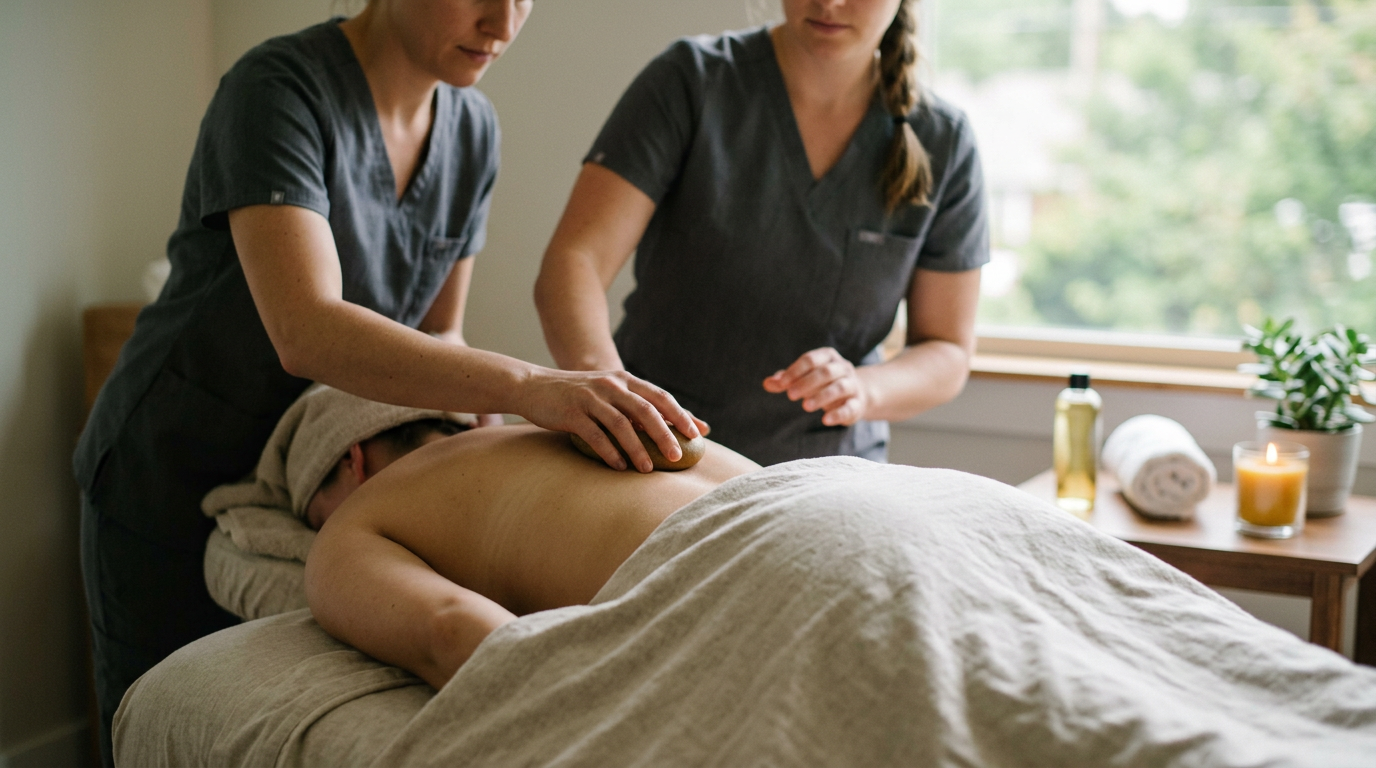
When stiff shoulders, lower-back tension, or long desk hours push you to search for a massage nearby, the hardest part is rarely finding an open appointment—it is knowing whether a local spa or independent massage therapist near me is properly licensed, fairly priced, and worth the total out-of-pocket cost. Across the United States, a 60-minute relaxation massage can run anywhere from roughly $85 at a franchise studio to $180 or more at a full-service day spa, and the headline rate often excludes a 15% to 20% tip or reflects only 50 minutes of actual hands-on table time. Comparing session formats, verifying state credentials, and checking cancellation or membership terms upfront prevents unpleasant surprises at checkout.
Prices for local massage therapy vary sharply by metropolitan area, provider setting, and modality. Independent studios and franchise chains generally charge less than hotel or resort spas, though specialty techniques that require extra training or equipment—such as hot stone or prenatal work—tend to carry higher rates. Exact national median prices are not published by a single federal regulator, so treat the ranges below as common U.S. market benchmarks and confirm final quotes directly with the local provider.
| Massage Type / Setting | Typical 60-Min Range (USD) | Typical 90-Min Range (USD) | Best Fit For | What to Check Before Booking |
|---|---|---|---|---|
| Swedish (Relaxation Massage) | $90 – $130 | $130 – $180 | First-time visitors, stress relief, light-to-moderate pressure | Confirm whether full 60 minutes is hands-on or includes intake/dressing |
| Deep Tissue Massage | $100 – $150 | $140 – $210 | Chronic neck, shoulder, or back tightness and muscle knots | Communicate pressure limits; avoid aggressive work over acute injuries |
| Hot Stone Massage | $120 – $170 | $160 – $230+ | Deep relaxation, warmth for stiff muscles | Ask if heated stones are included in base price or billed as an add-on |
| Thai Massage | $110 – $160 | $150 – $200+ | Assisted stretching, mobility, mat-based bodywork | Wear loose clothing; many studios recommend 90 minutes for full routine |
| Prenatal Massage | $100 – $150 | $140 – $200 | Pregnancy comfort and swelling relief | Verify specialized prenatal training and proper side-lying bolstering |
| Franchise Chains (e.g., Massage Envy, Hand & Stone, Elements) | Varies by franchised location | Monthly regulars who want predictable scheduling | Confirm contract lock-in, rollover expiry, and actual hands-on minutes |
If you only plan to book an occasional wellness session once or twice a year, paying per visit at a well-reviewed independent studio often costs less than committing to a recurring plan. If you book every month, compare the total 12-month membership obligation—including cancellation notice rules—against single-session local packages.
Many U.S. chains operate as independently owned franchises, meaning exact monthly dues vary by city and clinic rather than following one nationwide price list. Before signing up for a recurring plan to unlock an introductory discount, look closely at three contract details:
Massage therapy in the United States is regulated at the state level rather than by the federal government. According to the National Center for Complementary and Integrative Health (NCCIH), 45 states and the District of Columbia regulate massage therapists, typically requiring 500 to 1,000 hours of approved training, a licensing exam such as the MBLEx administered by the Federation of State Massage Therapy Boards (FSMTB), background screening, and continuing education.
State rules are not identical everywhere. Four states—Kansas, Minnesota, Vermont, and Wyoming—do not appear on the American Massage Therapy Association (AMTA) standard state-law list (relying instead on registration or municipal ordinances), and California operates a voluntary state certification system through CAMTC that many local cities still require for practice. To verify a local therapist before booking:
A realistic budget for a local spa or wellness massage covers more than the menu rate:
Research summarized by the NCCIH notes that massage therapy performed by a trained professional is generally low risk, yet rare serious complications—including blood clots, nerve injury, or bone fractures—have been reported, most often with forceful deep tissue work or high-risk patients. Consult your physician beforehand and tell your therapist about blood-clotting disorders, anticoagulant medications, osteoporosis, recent surgery, active skin infections, cancer treatment sites, or high-risk pregnancy so pressure and positioning can be adjusted safely.
Many visitors also ask whether a massage nearby can be paid with pre-tax HSA or FSA funds. Under IRS Publication 502 and IRS medical-expense guidance, routine relaxation or general wellness massages do not qualify. Massage therapy may qualify only when used to diagnose, cure, mitigate, or treat a specific physician-diagnosed medical condition—such as chronic back pain, sciatica, fibromyalgia, or post-injury rehabilitation. Plan administrators typically require a Letter of Medical Necessity (LMN) from a licensed healthcare provider detailing the diagnosis, recommended frequency, and duration, along with itemized receipts. Expenses paid through an HSA or FSA cannot also be claimed as itemized deductions on your federal tax return.
Most 60-minute Swedish massages at local studios run roughly $90 to $130 before tip, while deep tissue ranges around $100 to $150 and resort day spas commonly charge $120 to $180 or more. Franchise membership rates often fall around $60 to $95 per month depending on the city.
Visit the FSMTB Regulated States Directory or AMTA State Regulations page to reach your state licensing board's official lookup tool and verify that the therapist's license is active. For optional advanced credentials, check the NCBTMB certificant directory.
Standard U.S. spa etiquette is to tip 15% to 20% on the full regular service price rather than the promotional or member rate. Tipping is generally not expected in medical clinics or hospitals.
No. Per IRS Publication 502, general wellness and relaxation massages are ineligible. You need a diagnosed medical condition and, in most cases, a healthcare provider's Letter of Medical Necessity (LMN) plus itemized receipts to qualify.
Most U.S. studios and national chains enforce a 24-hour cancellation policy. Canceling inside that window or missing the appointment commonly incurs a 50% to 100% fee or consumes one membership credit.