
x
Wondering if laser treatment can safely fade facial sun spots, acne marks, or melasma without long downtime? This guide compares pigment lasers and IPL, realistic results, recovery time, color‑change risks, costs per spot, sessions needed, and when your medications or skin type make laser a good fit.
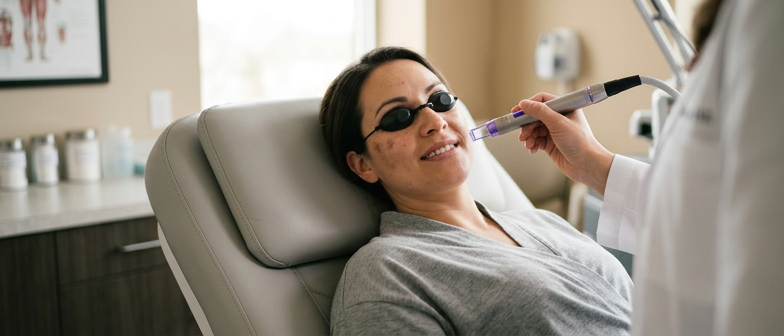
Laser treatment for dark spots targets extra pigment and breaks it into tiny fragments the body can clear. Freckles and sun‑related brown spots on the face respond best when they are sharply defined and near the surface. When you ask which laser helps facial sun spots, dermatologists may use Q‑switched or picosecond pigment lasers, or compare IPL and traditional laser options based on your skin tone and how deep the discoloration is. These devices can noticeably brighten uneven areas and reduce contrast between a spot and the surrounding skin, but they do not create instant flawless tone.
There are also clear limits to what laser treatment for dark spots can achieve. Deep or mixed pigmentation, scars, and ongoing triggers such as sun exposure, hormonal shifts, or inflammation may only partly improve and often need repeat sessions. Some melasma can return or worsen if the wrong settings are used, so a dermatologist may suggest non‑laser treatments or very gentle light‑based therapy instead. Even well‑faded spots can come back, or new ones can appear, if you skip daily broad‑spectrum sunscreen or irritate the skin. Realistic expectations focus on visible improvement, not permanent erasure, and on pairing light‑based procedures with consistent skin care so results last longer and risks stay low.
When dermatologists plan laser treatment for dark spots, they match the device and wavelength to the specific type of pigmentation. For flat brown facial sun spots from UV exposure, they often choose pigment‑targeting lasers like Q‑switched or Alexandrite systems because these focus on melanin and can clear discrete sun damage with limited impact on surrounding skin. Intense pulsed light, or IPL, is often compared with laser for sun spots; it uses broad‑spectrum light and works well for scattered sun damage and redness, but it is less precise than a single‑wavelength laser. In an Alexandrite versus IPL decision for age spots, a dermatologist may favor Alexandrite for sharp, well‑defined brown lesions and reserve IPL for more diffuse photoaging on areas like the face or chest.
Not every dark mark is treated the same way, and that matters when you ask if laser is right for melasma or acne‑related spots. Melasma is patchy, hormonally influenced, and highly reactive, so strong pigment lasers or aggressive IPL can sometimes worsen it. Many specialists instead rely on gentler options, such as low‑energy fractional or picosecond devices combined with topical therapy, or they avoid light‑based treatments if your melasma is unstable. In contrast, lingering acne marks or post‑inflammatory hyperpigmentation often respond to carefully selected laser or light treatments, especially when redness and brown discoloration appear together. Your dermatologist will compare laser and IPL for your specific sun spots or other pigmentation and may explain that the safest technology for one kind of dark spot is not automatically the best choice for another.
| Technology | Best Match For Spots | Precision Level | Typical Skin Scenario | When To Be Cautious |
|---|---|---|---|---|
| Q-switched pigment laser | Small, discrete facial sun spots | High | Sharply outlined brown marks on lighter to medium tones | Reactive or mixed-pattern melasma |
| Alexandrite laser | Well-defined age spots and facial sun spots | High | Clear brown lesions with minimal surrounding redness | Very sensitive or easily bronzing skin |
| IPL (intense pulsed light) | Diffuse sun damage with redness | Medium | Scattered sun spots plus mottled color on face or chest | Darker complexions or unstable pigment disorders |
| Gentle fractional devices | Patchy melasma and mixed pigment | Medium | Blended brown patches that need gradual softening | Inflamed or recently flared melasma |
| Picosecond lasers | Stubborn acne-related marks and sun spots | Medium to high | Residual brown and red areas after acne clearance | Very dark tones without careful parameter selection |
When dermatologists compare Alexandrite lasers with intense pulsed light, or IPL, for age spots and sun‑related dark spots, they focus on precision and skin type. Alexandrite is a true laser that targets brown pigment very specifically, so it is often chosen for clearly outlined sun spots on lighter to medium complexions. IPL is a broad spectrum light treatment that can address more diffuse sun damage, redness, and uneven tone at the same time, which makes it useful for scattered facial sun spots but less selective than a laser. The choice between Alexandrite and IPL usually depends on how sharply defined the spots are, how reactive the skin is, and whether a person prefers a focused laser treatment or wider photorejuvenation. An in‑person exam helps the dermatologist decide which option offers the safest and most effective result.
When you choose laser treatment for dark spots, safety and healing time are key. Most people notice temporary redness, mild swelling, and a sunburn‑like sensation for hours to a few days. With lighter, non‑ablative devices, recovery from dark spot laser work is often just a day or two of flushing. Deeper or ablative treatments can cause crusting or peeling that lasts up to a week or more. After treatment, dermatologists usually advise gentle cleansing, regular moisturizing, strict sun protection, and pausing makeup or active products such as retinoids until the skin barrier feels normal again.
Pigment changes are a main concern after laser sessions, especially for medium to deeper skin tones. Treated areas can briefly look darker, known as post‑inflammatory hyperpigmentation, or in some cases lose color and appear lighter than nearby skin. The likelihood of these issues depends on your natural skin tone, the laser settings, and how carefully you follow aftercare. Daily broad‑spectrum sunscreen, avoiding tanning, and not picking at scabs or flakes lowers the pigmentation risk after laser treatment. When needed, your dermatologist may add fading creams, anti‑inflammatory topicals, or adjust the timing of repeat visits to keep color shifts as small as possible.
Before any procedure, a dark spot laser risk consultation is your chance to review medical history and personal risk factors. Share past keloid or hypertrophic scars, cold sores, recent sunburns, pregnancy, and all medications and supplements you use, including acne treatments, blood thinners, or drugs that increase sun sensitivity. This helps your dermatologist decide whether laser is appropriate now or if it should be delayed, modified, or replaced with another option. A clear discussion of expected recovery, possible pigment changes, and alternatives makes it easier to balance the benefits of fading dark spots against realistic safety considerations for your skin.
Laser treatment for dark spots targets skin pigment, but the same process can trigger unwanted changes. Some people develop post‑inflammatory hyperpigmentation, where treated areas heal darker, while others see lighter or patchy hypopigmentation. Pigmentation risk after laser treatment is higher in medium to deep complexions, in anyone with melasma or past pigment issues, and when sun exposure is poorly controlled during healing. Aggressive settings, treating tanned skin, or skipping sunscreen further increase the chance of color changes.
Before you book a dark spot laser risk consultation, focus on safety questions. Ask how your skin type and color affect pigment risks, whether a test spot is recommended, and what warning signs of abnormal darkening or lightening to watch for. Discuss which laser or light device fits your specific spots, how energy levels are adjusted to reduce pigment problems, and the sun protection and aftercare they require. Review any history of melasma, acne marks, or reactions to cosmetic procedures so the provider can judge if laser is appropriate or if another fading method is safer.
Planning laser treatment for dark spots starts with estimating how many sessions you may need. Small, shallow sun spots or post-acne marks may fade after one to three visits, while deeper, long‑standing discoloration or mixed pigment types usually need more sessions spaced several weeks apart. Melasma is more complex: some people do well with very gentle laser or light‑based options, but others notice flares, especially with aggressive settings or poor sun protection. Your dermatologist will consider your skin type, the cause of your dark spots, and any history of melasma or hyperpigmentation to decide whether a true laser, an option such as IPL, or non‑laser therapy is the safest way to treat your pigmentation.
Candidacy also depends on your overall health and current medications, because these influence safety and healing. Drugs that increase photosensitivity, including certain antibiotics, acne treatments, and mood stabilizers, can raise the risk of burning or post‑inflammatory pigmentation after laser. Blood thinners, uncontrolled diabetes, and active skin infections may require adjusting the plan or postponing procedures. Before booking sessions, provide a full list of prescriptions, over‑the‑counter products, supplements, and topical creams, including any retinoids or bleaching agents you use on your dark patches. This review helps your dermatologist judge whether laser is appropriate for melasma or other spots right now and how to coordinate pre‑ and post‑procedure skin care to lower the chance of unwanted pigment changes.
What can laser treatment for dark spots improve, and where are its limits?
Pigment lasers can lighten freckles, sun spots, and acne marks and make color differences less obvious. They rarely create perfectly even tone, and deeper or mixed pigmentation often fades only partly.
Which laser types are used for facial sun spots, and how do they compare with IPL treatment?
Q‑switched and picosecond pigment lasers, plus Alexandrite systems, target clear individual spots. IPL uses broad light for diffuse sun damage and redness but is less precise than single‑wavelength lasers.
How many laser sessions are usually needed for dark spots?
Small, shallow sun spots or post‑acne marks may need one to three visits. Older or deeper discoloration, mixed pigment, or a history of melasma often requires more sessions spaced several weeks apart.
What are the main pigmentation risks after laser treatment, especially for darker complexions?
Post‑inflammatory hyperpigmentation, when areas darken, and hypopigmentation, when they lighten or look patchy, can occur. These problems are more common in medium to deep skin tones, in melasma, and after sun or aggressive settings.
When is laser suitable for melasma, and how do current medications affect eligibility?
For melasma, dermatologists often prefer very gentle devices or non‑laser options because stronger lasers can worsen it. They also review medications that increase photosensitivity or slow healing before suggesting pigment‑targeting treatment.