
x
Wondering if lung screening with low‑dose CT is right for you, whether you need a referral, or if Medicare helps with costs? This guide walks through who qualifies, how early lung cancer detection works, and what to expect when you schedule a lung CT near you.
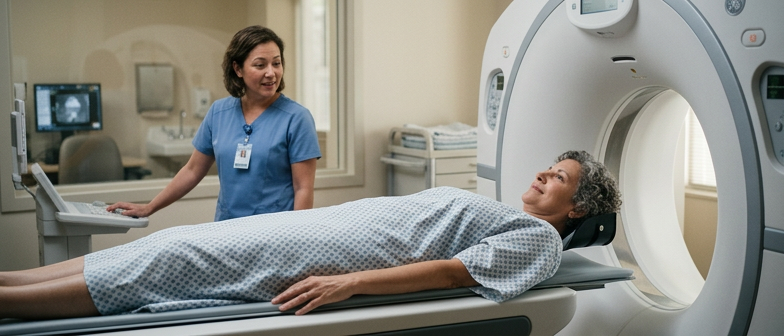
Lung screening is a medical test that looks for early signs of lung cancer before symptoms appear, usually in people who have a higher risk because of age or smoking history. The most common method is low-dose computed tomography, or LDCT, which uses advanced lung screening technology to take detailed images of the lungs with much less radiation than a regular CT scan. Unlike a chest X-ray, LDCT can reveal very small spots or nodules, giving clinicians a clearer view of lung tissue and helping them decide whether anything needs closer follow-up.
The main goal of lung screening is early lung cancer detection, when treatment is more likely to be effective and less aggressive. As part of a broader preventive lung health screening approach, LDCT can also uncover other lung issues that may need attention, such as scarring or inflammation. For people who qualify based on risk, making lung screening part of routine health planning can support better long-term breathing health, reduce the chance of finding cancer at an advanced stage, and create an opportunity to talk with a clinician about smoking cessation, symptom monitoring, and ongoing lung care.
When people ask if they qualify for lung screening, they are usually asking whether they meet medical guidelines for low-dose CT imaging used for early lung cancer detection. Most expert groups recommend yearly lung screening for adults at higher risk because of age and smoking history, generally people from their fifties to about their late seventies who have smoked heavily for many years, often around a pack a day for at least 20 years, and who either still smoke or quit within the past 15 years. These criteria keep lung screening focused on the group most likely to benefit from finding cancer at an earlier, more treatable stage.
Eligibility is not determined by age and cigarette packs alone. Your overall risk profile matters, including how recently you quit, whether you have lung-related symptoms, and whether other serious conditions would make treatment difficult. Lung screening is intended for people who feel generally well and do not have warning signs like coughing up blood, unexplained weight loss, or new severe shortness of breath; those symptoms call for diagnostic testing, not routine screening. A primary care clinician can review your smoking history, medical problems, and family history of lung cancer to help decide if you are in the group that should have regular low-dose CT lung screening.
Most people do need a CT referral from a health care provider to enter a structured lung screening program. The clinician confirms that you meet guideline criteria and discusses possible downsides, such as false positive findings that may lead to follow-up scans, and exposure to small amounts of radiation over time. If screening fits your risks and goals, your clinician can place the CT order and help schedule lung screening at a qualified center that follows established protocols.
| Checklist Item | Why It Matters | Typical Eligibility Fit |
|---|---|---|
| Age in midlife to later adulthood | Higher baseline lung cancer risk in this group | Often suitable for yearly lung screening |
| History of heavy cigarette use | Long-term smoke exposure raises risk | Frequently meets screening criteria |
| Quit smoking within recent years | Risk remains elevated after quitting | Often still qualifies for LDCT screening |
| No current red-flag lung symptoms | Symptoms may require diagnostic testing instead | Better fit for routine preventive screening |
| Able to undergo possible treatment | Screening is most useful when treatment is realistic | Generally appropriate for structured programs |
| CT referral from a clinician | Ensures guidelines review and informed consent | Commonly required to enter a screening program |
When people ask if they qualify for lung screening, they usually want to know whether their age, smoking history, and overall risk justify a preventive lung health screening with low-dose CT. National guidelines focus on adults with a significant cigarette history or those who recently quit, but the exact cutoffs and timeframes change over time. The most reliable way to know if you meet current criteria is to review your smoking history, medical conditions, and family history with a clinician who can apply the rules to your situation and explain potential benefits and downsides.
Many people also wonder if they need a CT referral or can schedule a scan on their own. Some lung screening programs allow self-referral, but many insurers and health systems still require an order from a primary care provider or specialist. Talking with your regular doctor first helps match the test to your risk level, avoid unnecessary radiation or duplicate imaging, and connect the results to a clear plan for follow-up instead of treating screening as a one-time test with no ongoing care.
When you arrive for a low-dose CT lung screening, you check in and confirm you are at an in-network lung screening center so your insurance benefits apply. Staff review your smoking history, health conditions, and recent symptoms as part of a brief lung health check. Whether you booked a lung health checkup in Bryant or searched for a lung screening near you, the process is similar: you may change into a gown, remove metal objects, and lie on a narrow table that slides into the scanner. The technologist explains each step, helps position your arms above your head, and focuses on keeping you comfortable and still.
During the scan, advanced lung screening technology uses a low dose of radiation to capture detailed pictures of your chest in just a few minutes. You might hear soft humming as the scanner moves and be asked to hold your breath briefly so the images stay sharp. You do not feel the X-rays, and most people find the test painless and quick. Afterward, you can usually return to normal activities while a radiologist reviews the images. Results are sent to the clinician who ordered your exam, and they can explain any next steps and where to schedule a future lung CT if follow-up is recommended.
After a low-dose CT lung screening, your report explains if the scan looks normal or if there are nodules that need attention. A normal result is reassuring for preventive lung health screening, though your provider may still suggest routine follow-up. If something unusual appears, it does not automatically mean cancer; it may be a scar, an infection, or a benign spot that simply needs monitoring.
When a nodule is larger, has a worrisome shape, or changes over time, your care team may suggest more detailed imaging or, in some cases, a biopsy. Low-dose CT can therefore lead to a biopsy aimed at early lung cancer detection. Your clinician will outline the nodule’s features, discuss the risks and benefits of watching versus sampling it, and explain why any additional testing is recommended.
Many people worry that lung screening will be too expensive, but there are ways to make it more affordable. If you meet age and risk criteria for annual low-dose CT lung screening, most private insurers and Medicare usually cover the initial test as preventive care when a qualified provider orders it and you use an approved facility. Your costs still depend on your plan, deductible, and whether you choose an in-network lung screening center or go out of network. Staying in network often means lower copays and negotiated rates, so confirm that the imaging site participates in your health plan before scheduling. If you are uninsured or underinsured, ask about self-pay pricing, discounts, income-based programs, or other financial assistance that can lower the cost of affordable lung screening.
Coverage for follow-up testing after an initial lung screening is often different. If a low-dose CT shows a lung nodule that needs more evaluation, additional scans, specialized imaging, or a biopsy are usually billed as diagnostic services, which may involve copays, coinsurance, or a deductible. Medicare may cover many of these follow-up tests when they are medically necessary and documented, but you can still have cost sharing depending on your specific plan. Before you agree to more testing, ask your care team and insurer how the visit will be billed, what you are likely to pay, and whether all recommended services are scheduled at in-network facilities so cost does not prevent you from getting needed care.
What is lung screening and how does low-dose CT help?
Lung screening uses low-dose CT (LDCT) to create detailed lung images with less radiation than a standard CT. This advanced technology can reveal very small nodules before symptoms start, helping with early lung cancer detection in people at higher risk.
Do I qualify for a preventive lung health screening?
You may qualify if you are in your 50s to late 70s, have smoked heavily for many years, and still smoke or quit within about the past 15 years. A clinician should review your age, smoking history, and overall health to confirm eligibility.
Do I need a referral to schedule a lung CT near me?
Most insurance plans, including Medicare, require an order from a qualified clinician before a low-dose CT at an in-network lung screening center. Checking with your doctor and insurer first can help you avoid unexpected costs.
Can an LDCT lung scan lead to a biopsy or other tests?
Yes. If LDCT shows a concerning nodule, your provider may recommend repeat imaging, PET/CT, or a biopsy. Many nodules are not cancer, so your care team weighs the chance of cancer against the risks of additional procedures.
Does Medicare cover lung screening and follow-up tests?
Medicare generally covers eligible annual LDCT lung screening at approved, in-network facilities when ordered by a qualified provider. Follow-up scans or procedures are typically covered when they are medically necessary under your specific plan.