
x
From a laptop at the kitchen table, it’s now possible to reach curious minds in bedrooms and playrooms across the world. Songs, stories, and games become your toolkit, while flexible schedules, ready‑made materials, and steady demand quietly turn everyday play into a sustainable career.
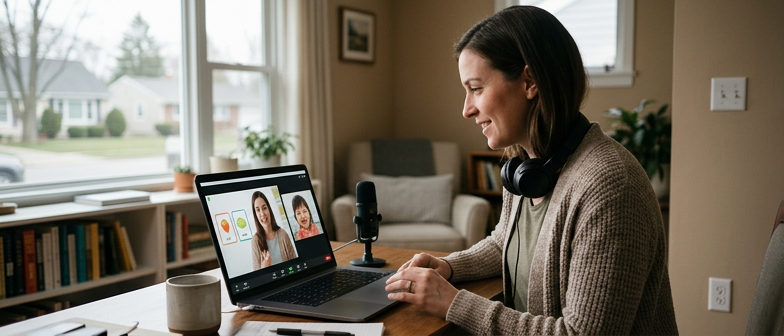
A child does not care whether you are in a fancy classroom or at a small desk by the window. What matters is whether they feel seen, heard, and safe enough to try new words without embarrassment. That starts with a stable, friendly corner at home that quietly says, “Here, it’s okay to make mistakes.” A simple wall, a small table, and a chair with good lighting already form a stage. Keep the camera at eye‑level, your face well lit, and the background calm enough that toys and dishes do not steal attention. A couple of bright posters, alphabet cards, or cute animal pictures make the space inviting without turning it into visual noise. When a child logs on and sees the same cozy setup each time, it becomes a cue: it’s time to sing, move, and talk in another language.
For young learners, words are easier to catch when they are attached to something they can see and “feel.” A small basket of simple props can transform a plain video call into a mini show. Hand puppets can “forget” words so the child can correct them. Tiny cars, toy food, or stuffed animals help act out daily life situations like eating, shopping, or going to bed. Home‑made flashcards, emotion faces on paper plates, and sticker charts become instant game pieces, rewards, or story starters. None of these need to be expensive or perfect. What matters is that they can appear close to the camera, move around, and help link sounds to meaning. When a puppet whispers the wrong color or a teddy bear “asks” a question, even shy kids start to talk back to the screen.
| Home props to keep nearby | How they quietly support learning |
|---|---|
| Hand puppet or plush toy | Becomes a “classmate” who asks simple questions or makes mistakes for children to fix. |
| Emotion cards or faces | Make feelings talkable and support basic social phrases during stories and check‑ins. |
| Simple picture cards | Help connect sounds to objects, actions, and categories through quick games. |
| Stickers or stamp chart | Turn small successes into visible progress without test pressure. |
Young brains are built for bursts of focus, not long explanations. A home session works better when broken into small, predictable chunks. A possible flow might be: a fun warm‑up song, a few minutes reviewing old words, a quick introduction of new language, an active game, a calmer task, then a cheerful goodbye. Each piece has one tiny goal: say a greeting, name three colors, use one simple question, and so on. To the child, it feels like one continuous game. To you, it is a quiet structure that keeps the lesson from turning into random chatter. A consistent rhythm also reassures parents that time is being used with intention, even when everything looks like play.
If kids sit still too long, their bodies rebel: they wiggle, hum, or run away. If they move nonstop, little stays in memory. Online sessions work best with a gentle “move‑rest‑move” pattern. You might start with a standing song, then switch to pointing at a picture on screen, then ask for a brief drawing or matching task before another quick game. Even simple movements help: clap syllables, touch your nose when you hear a certain word, stand up for “yes,” sit for “no.” These micro‑shifts burn off extra energy while locking new sounds into the body. When you treat movement as part of learning rather than a reward after “real work,” the whole half hour feels lighter and more effective.
Silence on video can feel scary. Many adults rush to fill every pause with extra talking, which easily overwhelms young learners. A tiny wait after a question gives the child’s brain time to search for words, remember a pattern, and build confidence. You can count slowly in your head or even show on your fingers that they have thinking time. If they are stuck, break the answer into tiny pieces, offer a choice, or model the first word and let them finish. Silence is not failure; it is processing. When children realize you will not jump in instantly or criticize them for hesitating, they dare to reach a little further with each sentence.
Memorizing lists rarely works for kids, but repeating the same phrase inside different games does. A single structure like “I see a…” can appear in a picture hunt, a card‑flipping challenge, a puppet show, and a quick drawing activity. Each time, the child hears and says it again without feeling forced. You might keep your own quiet tracker: a target word should pop up many times in varied ways during the session. Routines help, too. A “word of the day” chant, a regular goodbye question, or a favorite guessing game that appears every lesson gives both comfort and steady practice. The trick is to keep the frame the same while changing the content.
Story‑like scenes turn dry words into something kids can step into. Instead of teaching “big, small, fast, slow” in a list, you can create a race between toys. One character is very slow and sleepy, another tiny but quick. Children pick favorites, predict what happens, and repeat simple lines with feeling. Everyday moments work well: breakfast time, packing a backpack, visiting a park, caring for a pet. Start with just a few repeated sentences and let the child add sound effects, gestures, or extra details. In time, they begin to build their own mini plots using known structures. Confidence often appears first in these playful retellings long before it shows up on any worksheet.
No two children respond to the same activity in exactly the same way. Some love shouting answers; others freeze when all eyes are “on them,” even through a screen. Flexible game design makes it easier to reach everyone. Quiet kids may prefer pointing, circling objects on a shared screen, or typing a word first before saying it. Highly active kids benefit from games with clear physical roles: leader, robot, actor, detective. Letting students choose between two versions of a game also builds a sense of control: “Do you want to be the shopkeeper today or the customer?” That small choice can transform reluctant participation into real involvement.
In small groups, bold children often fill the audio space while softer ones disappear into the grid of faces. A simple “everyone gets a turn” habit changes the atmosphere. Start with a short opening circle where each child shares one tiny thing: a toy, a feeling face, or an answer to a very simple question. Use their names often and keep the camera time balanced. For anxious kids, begin with yes/no or this/that choices they can show with thumbs or cards. As trust grows, they usually start adding extra words on their own. The aim is not to push them into loud performance but to show their attempts are noticed and appreciated.
Young learners will mix languages, switch word order, and mispronounce almost everything at first. Strong learning happens when those attempts are treated as raw material, not problems. Instead of “No, that’s wrong,” you can rephrase gently: “Oh, you said ‘dog big.’ In English we say, ‘big dog.’ Big dog.” Smile, show the toy again, and invite them to repeat. Keeping your face relaxed and curious sets the tone. Over time, kids discover that trying is valued more than being perfect. That mindset matters far more than flawless grammar during early years.
Adults paying for lessons often hover just out of sight in the kitchen or hallway, wondering what is really happening on the screen. Short, honest updates reduce their worries and build long‑term trust. Every few sessions, you might send a quick note describing what their child can now understand, say alone, or do more comfortably. Avoid technical jargon; share tiny, concrete wins like “now answers ‘What’s your name?’ without help” or “loves using color words to describe toys.” Invite questions and gently explain why play, repetition, and comfort with mistakes matter more than drills at this age. When parents see how joy links to progress, they become allies instead of silent judges.
Working in sweatpants does not mean the work is casual. Reliability is what turns one trial lesson into months or years of sessions. That includes starting on time, having a clear plan, keeping records of what was covered, and setting simple policies around rescheduling or cancellations. A basic calendar system and a notebook or digital log for each child go a long way. Over time, patterns emerge: which activities clicked, which themes sparked curiosity, when attention usually fades. Responding to those patterns is part of being a professional, even if your “office” is a corner of the living room.
Some home‑based teachers naturally gravitate toward preschoolers with songs and puppets. Others connect best with older kids through stories, projects, and early reading. Leaning into your strengths makes sessions smoother for everyone. You might gradually build themed lesson collections around animals, feelings, food, or school life, recycling strong ideas and refining weaker ones. At the same time, keep learning: explore child development basics, behavior strategies, and playful methods that fit video calls. Changing one small element every few weeks prevents burnout and keeps the work fresh without constantly reinventing everything.
How can an English tutor for children keep young learners engaged during online lessons?
Using short, game‑like activities, visual props, songs, and frequent interaction keeps attention high; rotating tasks every few minutes and incorporating movement breaks works especially well for teaching English online to children.
What should effective English lesson plans for children include when teaching English as a second language?
Plans should blend vocabulary, simple grammar, listening, speaking, and phonics with age‑appropriate stories and games, plus clear objectives, built‑in review, and a quick assessment to track English learning for children.
What skills do I need to succeed in online English teaching jobs for children?
You need clear, slow speech, strong classroom management, familiarity with digital tools, basic ESL methods, and the ability to simplify instructions and praise effort, which is crucial for remote English teaching jobs.
How can parents support English learning for children outside tutoring sessions?
Parents can read simple English books together, play English songs, label objects at home, and encourage children to use new words in daily routines, reinforcing what the English tutor for children has taught.
What are common challenges in teaching English online to children and how can tutors handle them?
Typical challenges are short attention spans, tech issues, and shy students; tutors can prepare offline backups, use interactive tools, encourage small successes, and design flexible English lesson plans for children.