
x
Odd shaped windows can make light, privacy, and measuring feel complicated. This guide shows how custom blinds for arches, bays, and angled skylights are designed, measured, priced, and installed so your windows look intentional instead of improvised.
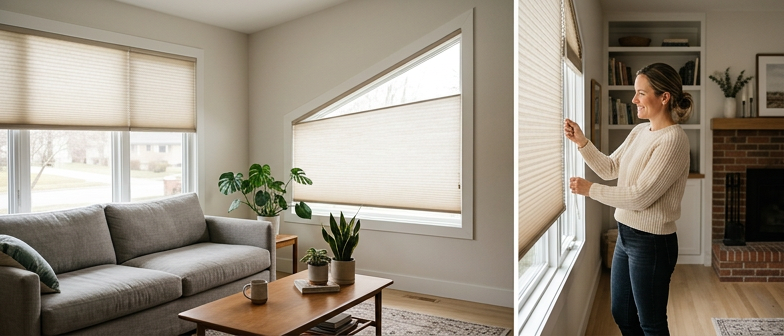
Custom blinds for odd shaped windows solve issues that standard rectangular treatments cannot. For arched openings and angled skylight windows, the main goal is a made‑to‑measure blind that follows the exact curve or angle instead of forcing a square frame into a rounded or sloped space. These solutions depend on accurate measuring and hardware designed for the window’s outline, from the radius of an arch to the pitch of a skylight, so they control light effectively and look intentional rather than improvised.
Because each unusual window shape presents its own technical challenge, tailored blinds typically cost more and take longer to produce than off‑the‑shelf options. Custom window blinds production time includes extra design work, fabrication, and often your review of drawings or measurements before anything is built. Any changes can extend the schedule, so planning ahead and allowing for this lead time helps you choose styles, materials, and operating systems that match your window and how you use the space, while setting realistic expectations about fit, price, and delivery.
For custom blinds on odd shaped windows, accurate measurements determine whether the fit looks tailored or sloppy. Decide first on inside or outside mounting, then use a steel tape and note every size to the nearest eighth of an inch. Always check window obstructions before measuring, including locks, cranks, handles, trim, and tile, because these limit mounting depth and may require custom blinds designed to work around existing window hardware instead of blocking it.
For arched, angled, or other non‑rectangular openings, create clear reference points so a fabricator can understand the shape. To measure an odd shaped window for blinds, take width at the top, middle, and bottom and use the smallest number for an inside mount. For an arch, record the straight width at the base, then the height from the center of the sill to the highest point. Angled skylight windows or sloped tops should be measured at both sides and the center so the angle and any unevenness are obvious on the drawing.
When hardware or trim sits inside the frame, plan for custom blinds around window hardware so the window still operates smoothly. Note where each lock, crank, or sensor is located and how far it projects into the opening, and include those details with your measurements. If depth varies, take a few extra readings near the glass and frame, especially on older specialty or bay windows, to avoid blinds that hit handles, rub the frame, or leave gaps that reduce privacy and light control.
| Window Shape | Key Measurement Steps | Obstruction Checks | Notes For Custom Blinds |
|---|---|---|---|
| Standard odd-shaped opening | Confirm mount type, measure width and height to nearest eighth | Locks, cranks, handles, trim, tile | Flag limited depth and need for blinds that clear hardware |
| Arched window | Base width, center height to highest point, compare side heights | Deep trim, arch molding, sill projections | Show arch curve clearly so blinds follow shape instead of forcing a rectangle |
| Angled skylight or sloped top | Measure both sides and center, note angle on sketch | Ceiling obstructions, beams, nearby fixtures | Highlight pitch and unevenness for secure mounting and smooth operation |
| Bay window | Measure each panel separately, record varying depth near glass and frame | Bench seating, side walls, corner trim | Prevent blinds from hitting frames or leaving light gaps across the bay |
| Frames with built-in hardware | Measure opening plus projection distance of each component | Sensors, tilt latches, lock housings | Request custom blinds designed to work around window hardware without blocking u |
To measure arched windows for blinds that fit the curve, first treat the opening like a rectangle. Measure the inside width at the top, middle, and bottom, then use the smallest number as the order width. Measure height from the sill to the highest point of the arch, and note any differences between the left and right sides. Before recording final sizes for these odd shaped windows, check window obstructions such as handles, locks, or deep trim so custom blinds can clear the window hardware.
For angled tops and skylights, blinds designed for angled skylight windows need both straight dimensions and angle awareness. Measure width at the base and then height along the sloped side, using the shortest height so the blind fits inside the frame. Use a level to confirm what is truly horizontal, and measure hard to reach skylights from a stable ladder, because accurate numbers are essential when you measure any odd shaped window for blinds.
Bay windows need a balance of style and light control for each separate panel. Custom bay window blinds cost depends on how many sections you cover, whether you choose cordless or motorized operation, and how much insulation and privacy you expect. Slim blinds or tailored shades keep the bay feeling open while still letting you tilt or raise to manage glare. When you compare shades for bay windows, focus on how the fabric filters light across the day, how the color works with your trim and seating, and whether the controls stay easy to reach around a built‑in bench or nearby furniture.
Arched windows add height and curves that standard rectangular blinds cannot match, so you need treatments made to follow the arch instead of forcing straight hardware into the opening. Well fitted blinds for arched windows follow the contour, sit neatly inside the frame, and avoid gaps at the top where light can leak. Some people like fixed fan‑style designs that soften direct sun, while others prefer operable options that allow full darkening. Keeping materials or colors consistent between the arched window and nearby rectangles, including headrails and trim, makes the whole wall cohesive while still respecting the unique shape.
When you compare shades for bay windows, look at how each style handles the angles and depth of the bay. Cellular shades hug the glass, emphasize the lines of the window, and add insulation and privacy, which helps if built‑in seating gets strong sun. Roller and solar shades create a clean, modern feel with precise light control but can leave light gaps at the sides, an issue for street‑facing bays. Layering a tailored shade with slim custom blinds can improve glare control and views while keeping hardware discreet. As you weigh options, consider custom bay window blinds cost, since treating several panels with made‑to‑measure products usually runs higher than a standard window, and cordless or motorized features raise the price but make daily use and safety better.
For Custom Blinds For Odd Shaped Windows, look for a local installer who regularly works with arches, bays, and angled openings. When you contact an arched window blinds installer or a bay window blinds specialist nearby, ask how often they handle non‑standard windows and whether they can measure around unusual trim or hardware. Request a clear Custom Blinds Installation Quote that separates product and labor so you can compare companies on the same basis.
Custom Bay Window Blinds Cost and pricing for arched or angled skylight blinds depend on material, window size, and how complex the shape is. Bay windows may need several panels or a continuous headrail, while Blinds For Angled Skylight Windows or designs that follow a true arch usually cost more because they require precise engineering and extra fabrication. Ask the installer to show how each option changes your total, and to provide good‑better‑best estimates so you can balance style, light control, and durability with your budget.
Custom Window Blinds Production Time can range from about a week to several weeks, especially for unique shapes. Your installer should outline the schedule from measuring through manufacturing to the final appointment and update you if lead times shift. When reviewing Custom Window Blinds Payment Options, confirm the deposit, what you pay at installation, and whether financing or staged payments are available, and make sure warranty and service terms are written into your agreement.
How do custom blinds help with light and privacy on odd shaped windows?
They’re built to match the exact arch or angle, using custom hardware so the blind follows the shape, reduces glare, and gives consistent privacy instead of a patched‑together look.
What should I check before measuring a tricky window for custom blinds?
Decide on inside or outside mount, then check window obstructions before measuring, including locks, cranks, handles, trim, and tile, so the blinds and brackets can clear the hardware.
How do I measure an arched window so blinds actually fit the curve?
Measure width at top, middle, and bottom and use the smallest. Measure height from sill to the highest point of the arch, note left and right heights, and mark any deep trim or hardware.
What usually affects the price of custom blinds for a bay window?
Cost depends on how many sections you cover, fabric or slat material, and upgrades like cordless or motorized lift, extra insulation, or blackout privacy liners.
When I contact a local blinds installer for arched or angled skylight windows, what should I ask?
Ask how often they install blinds on arches, bays, and angled skylights, if they can measure around unusual hardware, their custom production time, payment options, and for a clear quote separating product from labor.