
x
When bulky EPS and EPE foam start to overwhelm storage and hauling budgets, foam recycling machines and densifiers can turn that waste into manageable blocks. This overview compares hot-melt vs cold compaction, typical system costs, 220V options, and maintenance needs so you can plan practical foam waste management.
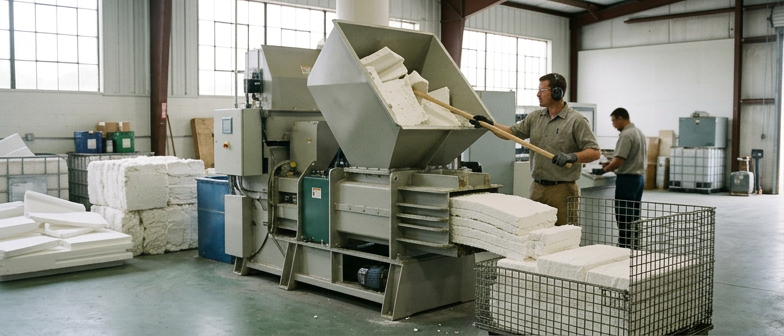
Foam waste is a growing concern in packaging, construction, and consumer goods because materials like expanded polystyrene (EPS) and expanded polyethylene (EPE) are lightweight, bulky, and slow to break down in landfills. Their low density makes transportation for conventional disposal inefficient, while loose foam can fragment into smaller pieces that are difficult to collect. As cities and companies look for more eco friendly ways to handle foam disposal, attention has shifted toward specialized recycling equipment that can turn scattered foam scrap into a more manageable resource instead of long‑term waste.
Modern foam recycling machines are designed to reshape the physical form of EPS and EPE so they can be stored, transported, and reprocessed more efficiently. Common foam waste management technology includes shredders that reduce foam to smaller pieces, densifiers that compress material under heat or pressure, and systems that produce compact blocks or ingots for later remanufacturing. For EPS, dedicated recycling units can significantly cut volume and support closed‑loop material use, while EPE‑focused options often emphasize gentle processing to protect its structure where reuse is possible. By matching machine type to foam material and expected output, organizations can select recycling approaches that balance environmental goals, operating safety, and the practical limits of their space and budget.
Foam recycling machines are used to turn bulky EPS and EPE into compact blocks or ingots for transport and further processing. A common category is the cold foam compactor, which relies on hydraulic or mechanical force in a closed chamber to crush and compress loose foam without melting it. The material keeps its polymer structure and can be baled or cut into blocks and sent to recyclers that convert it into pellets or new plastic products. These compactors are frequently used in industrial recycling where simple mechanics and limited heat exposure are preferred.
Hot melt densifiers combine mechanical compression with controlled heating to form dense ingots that are easier to stack, store, and ship. In comparing hot melt units with cold compactors, heated systems soften the foam surface so particles fuse, often reaching higher density but requiring attention to energy consumption, ventilation, and temperature control. Many installations use 220V foam densifier configurations suitable for common industrial power supplies. Typical process steps include feeding foam through a hopper, shredding or breaking it apart, then compressing and heating it before discharging a solid, consolidated log.
Specialized equipment can be matched to different foam types and processing scales. Machines designed for EPE often incorporate screw compression or tailored shredding to handle the material’s flexibility, while industrial EPS lines may add pre-crushers, automated feed systems, and controls that track load, pressure, and temperature. Across these systems, sensors and control panels allow operators to adjust compression force, cycle time, and heating level so foam is consistently reduced to a stable form suitable for established plastic recycling streams.
| Equipment Type | Typical Applications | Output Form | Energy Use & Heat Management | Operational Complexity |
|---|---|---|---|---|
| Cold foam compactor | General EPS and EPE volume reduction | Compressed blocks or bales | Lower energy, no intentional melting | Simpler mechanics, basic controls |
| Hot melt densifier | Higher density EPS ingots, space‑limited sites | Solid fused logs or ingots | Higher energy, needs ventilation and temperature control | More complex, requires process monitoring |
| Hydraulic foam press | Batch compaction where melting is avoided | Pressed blocks for downstream recycling | Moderate energy, minimal heat exposure | Intermediate complexity, hydraulic system oversight |
Hot-melt foam compactors apply heat and pressure to turn EPS and similar materials into dense ingots, while cold compactors rely only on mechanical force and keep the foam in solid form. Hot-melt systems usually reach higher density and reduce storage and transport volume more, which can be useful in industrial EPS recycling where space and freight costs are important. Cold units are generally simpler, may use less energy, and avoid thermal processing, which some operators view as closer to low-energy, eco-friendly foam disposal when material flow is moderate.
These operating differences lead to practical choices for foam waste management technology. Hot-melt units tend to suit sites with steady streams of clean EPS and a need for compact output that can be marketed more easily, but the heating components add maintenance needs and require attention to safety. Cold compactors fit facilities that want straightforward operation, lower temperature risk, or a wider mix of foam types, accepting bulkier bales and higher transport volume in exchange.
The cost of a foam recycling system is shaped by more than the price of a compactor or densifier. Buyers usually compare equipment type, throughput, and whether hot melt or cold compaction fits their material mix. Electrical compatibility also matters, including whether a 220V foam densifier can connect to existing power without major upgrades. Installation may require changes to wiring, floors, or ventilation, particularly for facilities processing large volumes of expanded polystyrene or similar foams. These early choices determine how well the system matches local waste patterns and the level of automation, which then influences long term budgets.
Day to day operating costs reflect energy, labor, and maintenance for the chosen foam waste management technology. Hot melt equipment often uses more power per hour but can reduce volume quickly, while cold compactors may draw less electricity yet need more run time to reach similar density. Labor costs depend on how much manual sorting and feeding is needed and whether the unit integrates with existing recovery lines. A basic operating cost estimate combines expected kilowatt hours, worker time, and consumables, then applies local utility rates and wages to arrive at a cost per pound or per ton of processed foam.
Maintenance requirements are a major factor in total cost and reliability. Foam compactors and densifiers typically need regular inspections, cleaning of hoppers and compression areas, lubrication of moving parts, and replacement of wear items such as seals or augers. For 220V units, electrical checks and protection against dust or moisture help reduce unplanned downtime. When assessing economic feasibility, organizations compare equipment and installation costs, ongoing energy, labor, and maintenance, potential repair expenses, and savings from lower hauling or landfill fees. Any revenue from densified output is weighed against these expenses to judge whether the system is sustainable at the expected throughput.
Foam compactors and densifiers in foam waste management rely on hydraulic, mechanical, and electrical systems that need routine care to remain reliable. Common tasks include checking oil and hydraulic lines, tightening fasteners, inspecting cutting or crushing parts for wear, and cleaning the hopper to reduce jam risks. Electrical panels and sensors should be kept clean and dry, with safety interlocks tested regularly. A simple checklist and maintenance log helps track service history and reveal recurring issues that may signal deeper reliability problems.
Planned maintenance has a direct impact on operating cost and long term performance. When bearings, motors, and hydraulic components are serviced as recommended, energy use is more predictable and unplanned downtime is less frequent, which matters where foam recycling equipment supports industrial processes. Setting a budget for wear parts, periodic professional inspections, and operator training helps estimate ongoing costs alongside labor and power. Well maintained units generally handle foam more consistently and produce dense output that is easier to store and transport.
Selecting foam recycling machines starts with understanding your foam types, such as EPS or EPE, and the volumes produced. Larger facilities usually consider industrial systems that densify material into blocks, while sites with mainly polyethylene foam need equipment suited to its different melting and compression characteristics. Power supply is another constraint, because many compactors and densifiers are designed around 220V circuits. When comparing options, operators focus on throughput, footprint, integration with existing waste handling, and automation level so that efficiency, cost, and staffing remain balanced.
Locating suitable suppliers is often a regional task that combines online searches with conversations in the local waste and recycling network. Businesses near hubs like Las Vegas may find recycling machine providers that specialize in serving logistics, retail, or manufacturing facilities, while smaller areas rely on vendors covering wider territories. Evaluation usually includes checking experience with similar foam streams, availability of equipment for both EPS and EPE, and whether installation, training, and maintenance support are offered. Feedback from nearby users and realistic travel distance for inspections and servicing help assess long term practicality.
What problem do Foam Recycling Machines solve in waste management?
They reduce the volume of bulky EPS and EPE, making transport and downstream recycling more efficient while keeping foam out of landfills.
How do hot-melt and cold foam compactors differ?
Hot-melt units heat and compress foam into dense ingots, while cold compactors only apply mechanical force, producing compacted blocks without melting.
What are typical benefits of an EPS recycling machine for industrial users?
Industrial EPS systems can lower storage and freight costs, turn loose foam into a standardized feedstock, and support more eco friendly disposal methods.
What should I consider when estimating Foam Recycling Systems cost and operating expenses?
Consider equipment type, throughput, power needs such as 220V densifiers, installation work, energy use, labor, and routine Foam Compactor Maintenance requirements.
How can local Recycling Machine Suppliers in areas like Las Vegas help with equipment selection?
Local Foam Equipment Vendors can review your foam types and volumes, advise on EPE Foam Recycling Machine options, and match solutions to site power and space limits.