
x
When you need same‑day set‑up to take card payments, it can be hard to judge what’s genuinely quick and what still involves detailed checks. This guide unpacks how rapid credit card processing approval works, what affects decisions, and how to compare fees, reserves and phone‑based payment options.
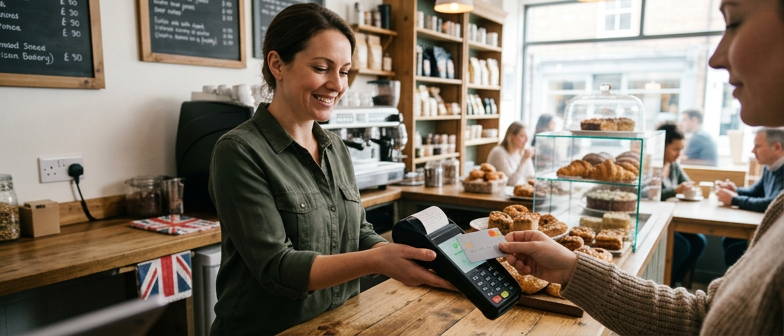
Same-day approval for card payment processing usually means being onboarded quickly enough to start accepting card payments, not a promise that every application will pass. Two main decisions are involved. A payment service provider or gateway checks business details, identity information and compliance with anti-fraud and anti–money laundering rules. An acquiring bank or similar institution then considers whether to offer a merchant account, assessing the business type, expected transaction volumes, chargeback risk and trading history. Some providers combine these stages and use automated digital checks to shorten the time between applying and being technically able to process cards, but the underlying assessment still follows risk and regulatory requirements.
What can be completed in a single day depends on how simple the business model is, the accuracy of the information supplied and how streamlined the provider’s internal processes are. Low-risk activities, such as straightforward online retail with clear records, may be reviewed fast enough for basic processing to be activated on the same day, often on a provisional basis. Higher-risk or more complex businesses typically face extra documentation requests and manual review, which can extend the timeline. Even when initial onboarding is rapid, further checks may follow, and tools such as rolling reserves, settlement delays or volume limits may be used until a trading record is established. In practice, same-day approval is about accelerated but still conditional onboarding rather than skipping due diligence.
The process usually starts when a business applies online to accept card payments, providing details such as legal identity, expected card turnover, typical transaction size and the nature of its products or services. Providers use this information to assess risk and decide whether to offer a merchant account, so missing or unclear data can lead to extra questions and slower review.
After an application is agreed in principle, the merchant account and card payment tools are set up. This typically involves confirming contractual terms, reviewing processing fees and any rolling reserve, completing identity and bank checks, and linking a payment gateway or point of sale system. Providers may also ask you to configure basic fraud controls before live use.
Before taking real customer payments, the new setup is tested with small transactions to check that authorisations work, settlement reaches the correct business account and reporting is accurate. If issues arise, they are often related to technical integration, queries about how the business operates, or the time needed to finish compliance checks and activate the account.
| Stage | Typical actions | Main sources of delay | Impact on time-to-activation |
|---|---|---|---|
| Online application | Provide business and card turnover details | Missing or unclear information | Medium impact; can pause initial risk review |
| Merchant account offer | Risk assessment and provisional approval | Extra questions about business model | High impact; approval cannot progress without clarity |
| Contract and fees review | Confirm terms, processing fees and rolling reserve | Slow contract sign-off | Medium impact; tools not configured until agreed |
| Compliance and bank checks | Identity verification and bank account checks | Extended verification or further documentation | High impact; account activation held until checks pass |
| Technical integration | Link gateway or point of sale and configure fraud rules | Integration errors or configuration issues | Medium impact; may require re-testing before live use |
| Test transactions | Run small payments and verify settlement and reports | Unresolved test failures or reporting queries | Low to medium impact; fine-tuning before first live payment |
People who only need a modest credit limit, for example around one thousand pounds, often care more about how quickly a credit card application is reviewed than about securing the highest possible limit. Card issuers still assess income, credit history and existing borrowing before offering any limit, even where the product is advertised as streamlined or quick. Starting with a smaller limit can help some users keep spending under control, maintain lower utilisation and build a record of responsible use, which may support later limit reviews under the provider’s own policies.
Fast decisions and cards that can be used almost immediately need to be understood in terms of the checks that sit behind them. Some providers may give a provisional outcome within minutes and enable online or mobile wallet spending shortly after approval, while the physical card is sent separately. These features remain subject to affordability and identity checks, and not all applicants will qualify. When comparing options, it helps to look at how each card handles digital access, security, any cooling off period, and whether the initial limit, pricing and fees match realistic spending plans.
For people who also want to accept card payments, small personal credit limits interact with wider payment choices. Using a low limit card to try subscription tools or online services can reduce exposure if something goes wrong, but it also constrains the volume and size of transactions that can be supported. Thinking about limit size, how quickly applications are processed and the devices used for payments, such as phones or simple readers, can make it easier to align borrowing and card processing arrangements with individual risk tolerance and day to day habits.
Eligibility tools for fast approval cards or tap to pay services usually run a soft search on your credit file and apply internal criteria. They help you see whether a product looks broadly suitable, but they do not replace a full application and cannot guarantee acceptance, because lenders and payment providers still review your details in more depth before deciding.
Terms such as instant approval or immediate card use generally refer to streamlined, automated checks rather than a promise that every application will succeed. When you come across these claims, it is useful to check which data is assessed, whether extra documents might be requested and what conditions apply to using the card or tap to pay straight away, so you can separate genuine process speed from marketing language.
Individuals and small businesses taking face to face payments can often start with a smartphone or simple card reader. Some payment services support contactless transactions directly on compatible phones, sometimes called tap to pay, but use depends on the device, operating system and service rules. Others provide compact readers that link to a phone or tablet via Bluetooth, effectively turning a mobile device into a point-of-sale terminal. Behind the scenes these tools rely on standard card payment processing, with each transaction routed through a gateway and acquiring bank, so fees, settlement times and dispute handling follow the provider’s published terms rather than being instant or guaranteed.
Pay as you go card readers are widely used for occasional or seasonal trading because they usually skip fixed monthly rental charges and instead apply a fee per transaction. This can suit market stalls, pop-up events or tradespeople visiting clients, but overall cost still depends on the fee structure, any rolling reserve arrangements and how often refunds or chargebacks occur. When comparing services, it helps to check whether in-person and online card payments can sit under one account, how clearly transaction history appears on a phone app, and what support is available if equipment fails during a sale, so you choose a practical way to accept cards on the move with transparent pricing and sensible safeguards.
| In-person card option | Flexibility for mobile use | Commitment level | Typical use case | Key point to check |
|---|---|---|---|---|
| Tap to pay on smartphone | High | Low | Very small traders, occasional sales | Device and tap to pay eligibility |
| Bluetooth card reader linked to phone | High | Low to medium | Market stalls, pop-up events | Transaction fees and rolling reserve terms |
| Standalone pay as you go card reader | Medium | Low | Seasonal or mobile services | Per-transaction pricing and dispute handling |
| Integrated phone and online card payments under one account | Medium | Medium | Small firms mixing in-person and remote sales | Clarity of app reporting and support if equipment fails |
When you take card payments using a phone or a simple pay as you go reader, the basics of reliability and security are important. A stable data or Wi‑Fi connection is needed or the transaction may not complete. Keeping devices charged and apps updated helps ensure the latest security fixes and fraud‑prevention tools are in place. Even when the app relies on standard card checks, it is still sensible to watch for unusual behaviour, follow guidance on strong customer authentication, and keep clear records in case a dispute or chargeback arises. Customer experience is shaped by small details such as confirming the amount before the customer taps, offering receipts by email or text, and briefly explaining how a digital card added to a phone wallet can be used immediately.
What does same-day approval for card payment processing actually mean?
It usually means your business can be onboarded to take card payments quickly, subject to checks on identity, risk and regulatory compliance, rather than a guarantee that every application is accepted.
If I apply for a credit card with about a £1,000 limit, how is my eligibility assessed?
The issuer typically reviews your income, credit history and existing borrowing, then offers a limit in line with its risk policies, even when the product is marketed as quick to review.
How do fast or instant approval credit card tools differ from a full application?
Eligibility tools usually run a soft search and internal scoring to suggest whether you might qualify, but the final decision depends on a full review of your details.
How can I accept card payments using my phone or a pay-as-you-go card reader?
You can use a tap-to-pay app on a compatible smartphone or pair a small reader with your phone, but you still need a payment service that handles authorisation, fees and settlement.
What should I compare when looking at UK card processing fees and rolling reserve terms?
Look at per-transaction fees, monthly charges, chargeback handling, how the rolling reserve is calculated, and how long funds are held before release.