
x
If you’re trying to arrange a dental check-up near where you live or study, you’ll need to weigh NHS and private options, eligibility for reduced or free care, and typical costs including X-rays, then use postcode and access tools to see who is accepting patients.
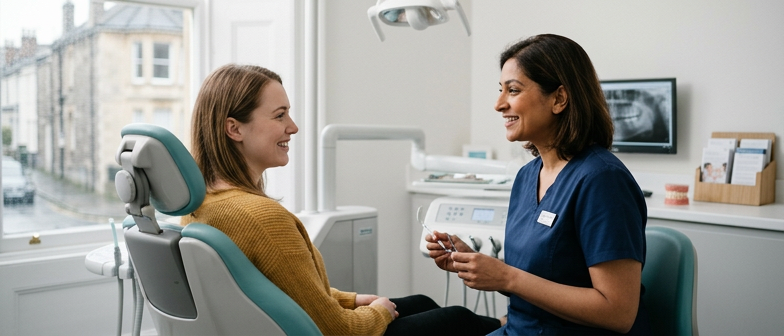
Routine dental check-ups focus on prevention. A dentist or hygienist can identify early tooth decay, gum disease, enamel wear and other issues before they cause pain or require complex treatment. They also examine your mouth, tongue and soft tissues for anything unusual that might need follow-up. Check-ups support daily care such as brushing with fluoride toothpaste and cleaning between teeth, and give you time to discuss sensitivity, bleeding gums or aesthetic worries. Choosing a dental check-up near where you live or work can make it easier to attend regularly, which helps keep your oral health stable.
There is no single timetable that suits everyone, so when to book your next dental check-up depends on your individual risk. After each visit, the dental team advises an interval that might be a few months for people with ongoing problems, or longer for those with healthy teeth and gums. Following this suggested recall date helps new changes to be spotted quickly and allows the plan to be updated if your health, medicines or lifestyle alter. Because oral health is linked with general health, it is useful to see check-ups as part of routine care rather than an optional extra.
To look for NHS dental services near you, a common starting point is the official postcode search tool, which shows practices in your area and whether they currently provide NHS treatment. Practice listings usually include phone numbers, addresses and sometimes notes on the types of care offered. It is useful to check opening hours and any practice website for recent updates, as NHS provision may change and older online information can be out of date. If you live close to a county or local authority boundary, try searching with more than one nearby postcode, because dental catchment areas do not always match other local health service boundaries.
High demand means many practices are unable to register new NHS patients immediately. In some regions, central access or dental portals allow you to record your interest and see if you meet local criteria for help with finding a dentist, but the structure and eligibility rules of these systems vary. Where a practice is not taking new NHS patients, you can ask whether they keep a waiting list and how they contact people when spaces arise. Keeping a simple record of where you have enquired and checking back from time to time can make it easier to respond quickly if you are offered an appointment, while continuing to explore other practices in neighbouring areas.
| Step | What to do | Eligibility focus | When to move on |
|---|---|---|---|
| Initial search | Use official postcode finder | Basic location check | If no nearby practices listed |
| Practice review | Check listings and websites | Service type and opening hours | If NHS provision seems unclear |
| Access portal check | Log details on dental access portal | Local criteria and priority groups | If portal shows limited options |
| Contact practices | Phone to ask about NHS registration | Whether new NHS patients are accepted | If told they are not registering |
| Waiting list enquiry | Ask to join practice waiting list | Fits local catchment and practice rules | If wait feels unsuitable for your needs |
| Broaden search area | Try neighbouring postcodes and regions | Wider geography rather than status | If repeated checks show little change |
Eligibility for NHS dental care usually depends on where you live, your immigration status and whether you qualify for help with health costs, rather than how quickly you want a dental check-up. Online access portals often ask for your postcode, age and information on benefits to assess local criteria and indicate practices that might be accepting new NHS patients. They do not guarantee an appointment, and the rules differ between England, Scotland, Wales and Northern Ireland, so it is important to read local guidance on entitlement and covered treatments.
The key distinction between NHS and private dental check-ups is how care is funded and what your fee covers. NHS appointments focus on clinically necessary treatment to keep teeth and gums healthy, with charges set in national bands and some patients meeting criteria for free or reduced-cost care. Private dentists set their own prices and often provide a broader choice of treatments and materials, which can appeal to people interested in options beyond routine care, including cosmetic work.
Costs and what is included in a check-up can differ between NHS and private care. For NHS services, the charge for an assessment and any clinically necessary X-rays is usually consistent across practices. Private practices decide their own fees for examinations, X-rays and advice, and these can vary by area. When comparing practices locally, it is helpful to ask exactly what the check-up fee includes, whether X-rays attract an additional charge, and how any follow-up treatment is priced so you understand the full cost rather than just the first visit.
Access and appointment flexibility also influence the choice. Some NHS surgeries have waiting lists or fewer routine check-up slots, especially in busy locations, while private practices may offer more immediate appointments and longer consultation times for discussion and planning. Deciding between NHS or private care often means weighing affordability against how quickly you wish to be seen and whether you mainly need essential treatment or prefer a wider range of options and convenience.
| Option | Access & Waiting | Scope of Check-Up | Appointment Flexibility | Typical Suitability |
|---|---|---|---|---|
| NHS dental check-up | Access varies, waiting list possible | Essential clinical assessment and X-rays | Standard slots, less timing choice | Best for budget-conscious routine care |
| Private dental check-up | Usually quicker access nearby | Broader assessment and treatment options | More flexible times and longer visits | Suited to those wanting choice and convenience |
| NHS with additional private visits | Mixed access depending on practice | Core care on NHS, extras done privately | Some flexibility for complex planning | Useful for combining affordability and extras |
| Private check-up with X-rays included | Access typically prompt | Comprehensive exam with imaging | Flexible scheduling for follow-up | Good for detailed monitoring of oral health |
A standard dental check-up usually includes an examination of your teeth, gums and mouth, a brief review of your medical history and a chance to discuss any symptoms. The dentist may look for decay, gum problems or signs of mouth cancer and give preventive advice. X-rays are sometimes added to assess areas that cannot be seen directly, and these can affect the overall cost.
For NHS care, check-ups and clinically necessary X-rays fall within set treatment bands, while private dentists decide their own fees for examinations, imaging and follow-up visits. Private check-ups nearby may list separate prices for X-rays or hygiene appointments. The amount you pay depends on the care you choose, what is needed and any eligibility for help with charges, so it is sensible to confirm what is included when you book.
Some people can receive NHS dental treatment free of charge or at reduced cost, depending on their circumstances and current rules. Those who are pregnant, or who have had a baby within the last 12 months, are usually entitled to NHS dental care without paying, provided they show suitable proof at appointments. Others may qualify through low-income schemes, certain benefits or exemption certificates, which are assessed by official bodies rather than individual dental practices. Because the criteria, accepted evidence and scope of treatments can change, it is sensible to check up-to-date guidance from official NHS or government sources before assuming that any course of care will be free.
Students are not automatically entitled to free dental care, but some may pay less or nothing if they meet the same income or benefit-based conditions that apply to other adults. Dental charges for students follow the standard NHS fee structure, so what someone pays depends on the treatment they need and whether they hold an exemption or receive partial help with costs. Information about student dental care eligibility is linked to wider support with health expenses, and students are usually advised to confirm their position using official eligibility tools or guidance before booking an appointment, so they understand any charges for a check-up or further treatment.
How often should I book my next dental check-up near me?
Most people are advised to attend every 6–24 months, depending on their oral health and your dentist’s assessment.
How do I use postcode tools to find an NHS dentist accepting patients?
You can search your postcode on the official NHS website, then call nearby practices to confirm if they are currently taking new NHS patients.
Am I entitled to free dental care while pregnant?
If you are pregnant or had a baby in the last 12 months, you can usually get NHS dental care without paying, provided you show valid proof of entitlement.
What is typically included in a private dental check-up with X-rays and how much might it cost?
A private check-up generally covers an examination, advice and, if needed, X-rays; fees vary by practice, so you should check a local price list in advance.
Do students get reduced NHS dental charges and how is eligibility checked?
Some students qualify for help with dental costs through low-income or benefits schemes; eligibility is assessed through official forms rather than by the dentist alone.