
x
Trying to choose between university music degrees and conservatoire training? This guide compares course types, entry routes, English requirements, tuition fees and audition‑free options, and explains how to prepare portfolios, interviews and placement‑year plans so you can pick the right music degree structure and length.
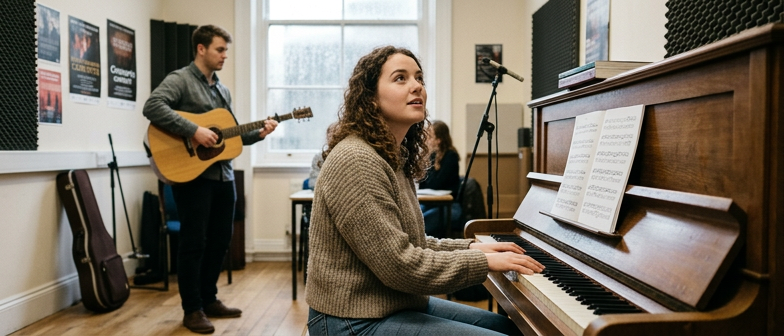
Music degree courses are broadly divided between university programmes and specialist conservatoire training, and this choice shapes the kind of musician you become. University music degrees usually balance academic study, such as analysis, history and musicology, with practical work in performance and composition. Conservatoire routes focus far more on intensive practical training, individual lessons and ensemble work, usually with more contact hours and regular performance opportunities. When deciding whether a university or a conservatoire suits you, think about whether you want a broad academic education or a focused preparation for a professional performing or composing career, and check how entry routes, application deadlines and audition expectations differ.
You also need to decide how long you want to study and what course structure suits you best. Many music degrees run for three years, which may appeal if you want to graduate quickly and move into work or further study. Some institutions offer four‑year options, which can include an extended performance focus, an integrated master’s year or extra time to develop advanced skills. Increasingly, there are music degrees that include a placement year or time in industry, allowing you to work with arts organisations, recording studios or education projects as part of your studies. Comparing three‑year and four‑year routes, and checking whether a placement or study‑abroad year is offered, helps you match the course design to your career plans and preferred way of learning.
| Route / Structure | Main Focus | Best For | Things To Consider |
|---|---|---|---|
| University music degree | Balanced academic and practical | Students who enjoy essays and varied modules | Check mix of analysis, history and performance options |
| Conservatoire music degree | Intensive performance or composition | Emerging professional performers or creators | Expect high practice load and frequent performances |
| Three‑year course | Quicker route to graduation | Those keen to enter work or further study sooner | Less time for extended projects or extra skills |
| Four‑year course | Extended skill development | Students wanting integrated master’s or deeper specialism | Requires longer commitment before graduating |
| Degree with placement year | Industry and workplace experience | Applicants wanting real‑world arts or studio practice | May extend course length but build contacts and insight |
When comparing Music Degree Courses at universities with conservatoire training, the main difference is emphasis. University programmes blend academic study of music history, theory and analysis with practical work and sometimes wider humanities options, which suits students who enjoy essays, critical thinking and varied modules. Conservatoires focus intensely on performance or composition, with timetables built around one‑to‑one lessons, practice and ensembles, appealing to applicants who already see themselves as emerging professional performers or creators.
Deciding between a university or conservatoire music degree means being honest about your priorities and long‑term plans. If you want broader academic study, flexibility to explore other subjects and clearer routes into non‑performance careers, a university course may suit you. If you thrive in competitive, performance‑driven settings and want daily immersion in specialist training, a conservatoire route might fit better. Many applicants apply to both, then choose based on course structure, teaching style and atmosphere.
Most Music Degree Courses expect both academic achievement and proven musical ability. Many universities ask for around AAB–BBB at A level, often including Music, while conservatoires focus more heavily on your playing or singing standard. You can sometimes start a music degree without A level Music if you demonstrate equivalent theory and practical skills through graded exams, references or a strong portfolio. International students normally need to meet the minimum English test score published for the course, such as a particular IELTS band or an accepted alternative, to show they can manage lectures, rehearsals and written work.
Conservatoires almost always require an audition with prepared pieces, sight-reading and sometimes aural tests, because they select mainly on musical potential. Some university music degree courses without live auditions instead assess your application, personal statement, academic record and submitted recordings or scores. Where English is not your first language, admissions tutors check your language results against the required minimum and may make your offer conditional on improving your score if it is slightly below the standard.
Many universities now advertise music degrees with no interview requirement, especially for more academic or technology-focused programmes, so that decisions are based on written materials and recorded evidence. Others invite shortlisted candidates to an online or on-campus conversation to discuss your interests in performance, composition or musicology and confirm that you meet their criteria. If you apply without formal Music qualifications or come from a non-standard educational background, these discussions and any portfolio or recordings you submit are crucial in proving that you are ready for first-year study.
Some Music Degree Courses are designed to admit students without a live performance test, offering routes that do not require an audition or even a formal interview. These music degrees with no interview requirement usually focus on academic achievement, written work and recorded material instead of asking you to perform on the day. They can suit applicants who are stronger in theory, analysis or technology, or those whose main instrument is composition or production rather than live performance, and who would rather be judged on carefully prepared work than on a single high‑pressure session.
Applications for conservatoire music degrees are made through UCAS Conservatoires rather than the standard university route, and deadlines are typically earlier. You create an account, choose the music degree courses you want to apply for, and enter details of your musical training, qualifications and referees. Most institutions ask for a music-focused personal statement, explaining your principal study, main performances and ensemble work. International applicants must also check the minimum English language test score for each course, as requirements can differ from other university music degrees.
After submitting your form, you are usually invited to an audition or interview, which may include theory or aural tests, so you should prepare your audition repertoire well in advance. Some programmes, especially composition or production courses, ask for recordings or a portfolio before offering a live audition. Selectors look for musical potential, stylistic understanding and evidence that you can handle the academic demands of the degree, including language skills for those relying on English test results. Check messages in your UCAS Conservatoires account regularly and respond quickly to any requests, as missing an audition or document deadline can mean waiting another year.
Conservatoires expect solid academic preparation, but they do not always insist on A level Music if your practical standard and theory knowledge are strong. When you apply for a music degree without school music qualifications, admissions look at your overall profile and may accept alternatives such as graded theory exams, a foundation year, or other relevant study. Check each institution’s entry criteria and contact admissions early if your background is unusual so they can advise whether you need extra study or a bridging course.
Alongside academic qualifications, you must reach the minimum English test score set for music degrees, often similar to university requirements. Typical offers use IELTS around 6.0 to 6.5 overall, with no component below a stated minimum, or an equivalent result in another recognised test. If English is not your first language and your score is short, you may receive a conditional offer based on retaking the test or completing a pre‑sessional language course, so plan test dates and keep results up to date.
What is the main difference between a university music degree and a conservatoire course?
University programmes mix academic study with performance or composition, while conservatoires offer intensive practical training aimed at preparing you for a professional performing or composing career.
How do I apply for conservatoire music degrees?
You apply through UCAS Conservatoires, usually by an earlier deadline, submit a music‑focused personal statement, details of your training and referees, and prepare for auditions or interviews if required.
Can I study a music degree without A level Music?
Yes, some courses accept equivalent evidence such as graded theory and practical exams, a strong portfolio or foundation study, but you must check each institution’s specific entry criteria.
Are there music degrees with no audition or interview?
Yes, certain programmes assess recorded work, written tasks and academic results instead of live auditions, which can suit applicants stronger in analysis, composition or music technology.
What should I include in a portfolio for a composition degree?
Include contrasting pieces showing different styles and ensembles, clear scores where relevant, good‑quality recordings, and a short commentary explaining your ideas, influences and creative process.