
x
Considering dental implants later in life can feel daunting when you’re weighing dentures, medical conditions and cost on a pension. This guide focuses on elderly dental implants, including health and bone checks, NHS options after mouth cancer and how to compare private treatment quotes.
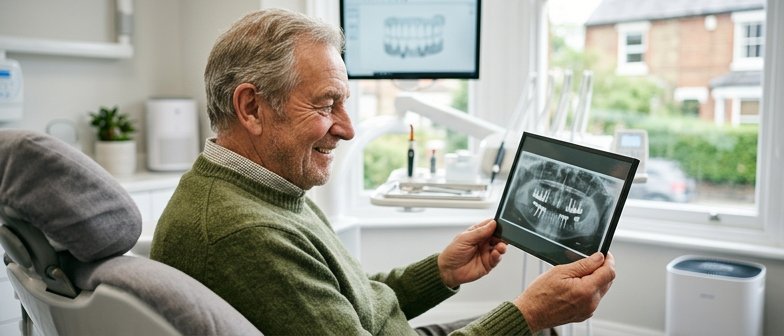
Elderly dental implants are now a routine option, and decisions are based more on your general health than on age. Many people in their 60s, 70s and even late 80s can benefit if they have reasonably healthy gums, enough bone and stable medical conditions. An implant dentist for complex medical history will look at your heart and blood pressure, diabetes control, previous stroke or osteoporosis, and any cancer treatment before advising you. They will also consider how well you manage daily cleaning around the implants, because long‑term maintenance is as important as the surgery.
When people ask whether those over 80 can get implants, age alone is not the deciding factor, but the safety threshold is higher. Your clinician will assess bone quality, medicines that affect healing or bleeding, and whether you can cope with longer appointments. For some older adults, a removable denture or a few implants to steady an existing denture may be safer than a full fixed set of teeth. A dentist experienced with older and medically complex patients will explain realistic benefits, risks and alternatives, so you can choose treatment that fits your health, lifestyle and expectations.
Before an older adult has dental implants, the dentist carries out a detailed bone check. This usually involves X‑rays and often a 3D scan to assess bone height, width and density and to see whether it can hold an implant securely. Previous tooth loss, long‑term denture wear or conditions such as osteoporosis can all reduce bone volume, and sometimes a graft or modified implant approach is advised. The focus is on how stable the implant is likely to be over time, rather than making decisions on age alone.
Gum and mouth health are checked just as carefully. If there is gum disease, the implant assessment looks at how active it is, how much support remains, and how well it can be brought under control before surgery. Deep cleaning, better home care and regular hygiene visits are often needed to stabilise the tissues and lower the risk of future infection around the implant. For people with a history of extractions or long‑standing loose teeth, the dentist will watch closely how the gums heal and respond to treatment.
A thorough medication review is essential before implants in later life. Drugs such as blood thinners, steroids, cancer therapies or some osteoporosis medicines can affect bleeding, bone healing or the risk of jaw problems, so the implant dentist may liaise with the GP or hospital team. Choosing a clinician used to caring for people with complex medical histories helps ensure overall fitness for surgery is assessed, timing or technique are adjusted if needed, and advice on benefits and risks is realistic and based on health rather than birth date.
| Pre‑implant check | What the dentist looks for | If problems are found | Impact on implant suitability |
|---|---|---|---|
| Bone assessment | Jaw height, width, density | Bone grafting or shorter implants | Suitable if support can be created |
| Gum health review | Active gum disease, past tooth loss | Deep cleaning and hygiene programme | Proceed once inflammation is controlled |
| Medication review | Blood thinners, steroids, cancer or bone drugs | Adjust timing, liaise with GP or specialist | Cautious or delayed if healing is uncertain |
| General medical fitness | Heart, diabetes, stroke, mobility | Modify surgery plan or consider alternatives | May be limited by overall resilience |
| Home care ability | Dexterity, vision, cleaning habits | Simplified implant design and clear training | Best for those managing daily cleaning well |
For older people considering Elderly Dental Implants, a structured medical review is as important as scanning the jawbone. An implant dentist confident with complex medical history will ask about heart disease, stroke, diabetes, osteoporosis, radiotherapy to the head and neck, gum disease and mouth cancer. These problems affect healing, infection risk and long‑term stability, so the plan may be adapted, extra healing time allowed, or surgery avoided if the risk is too high.
A careful medication review before dental implants focuses on drugs that affect bleeding, bone and the immune system. Blood thinners, osteoporosis treatments such as bisphosphonates, steroids, chemotherapy and immune‑suppressing medicines can all alter how safely implants are placed. The dentist may contact your GP or hospital specialist to confirm whether medicines can be paused or adjusted, or advise having treatment in a hospital setting.
For many people in later life, the main choice is between removable dentures and fixed Elderly Dental Implants. Conventional dentures are usually quicker and less invasive to provide, but they may move when you talk or eat, rub on delicate gums and feel bulky. Implants are placed into the jawbone to act like artificial roots, supporting single teeth, bridges or full arches. They usually give stronger chewing, a more natural bite and better taste because there is less plastic in the mouth. However, they need enough healthy bone, good oral hygiene and a careful medical assessment, so an Elderly Implant Dentist Near Me will review your general health and daily habits first.
When deciding on dentures or implants for elderly patients, comfort, cleaning routines and long term stability all matter. Dentures must be removed for cleaning and may need adhesive or regular adjustments as gums shrink. Implant supported teeth are brushed and flossed like natural teeth but demand very consistent cleaning to avoid gum problems around the fixtures. Some people prefer the simplicity and lower initial cost of dentures, especially if surgery feels daunting or healing may be slow. Others value the security implants can offer for social confidence and eating a wider range of foods. A detailed consultation with a dentist experienced in older implant care can help you weigh these options against your mobility, manual dexterity, expectations and budget.
When you search for an elderly implant dentist near you, choose someone who routinely treats people in their seventies, eighties and beyond, and is used to adapting care to mobility, vision or hearing issues. Check whether their website or leaflet mentions experience with older adults, longer appointment times and clear explanations, and ask your usual dentist or GP to recommend a clinician who often places implants for pensioners rather than mainly younger, low‑risk patients.
If you have gum disease or a complex medical history, ask how the dentist approaches these issues during the implant assessment. At your consultation, check that they take a detailed medical and medication history, liaise with your doctor when needed, examine carefully for active gum problems, and can explain how many similar patients they have treated and how they monitor gum health around implants long term.
For many people considering elderly dental implants, the main worry is how much they will cost now and over the years ahead. Pensioners are usually paying for the surgical placement of the implant, the abutment, the crown, and the scans and reviews around treatment. Ask for a written breakdown so you can see what is included, how many appointments are needed and whether follow-up X-rays or hygiene visits are part of the package. When you compare this with how long the implants may last, they can be more economical than often replacing loose or broken dentures, especially if they help you eat comfortably and stay independent.
If you are on a fixed income, ask directly about the typical dental implant cost for pensioners, including any discounts for older adults, staged treatment or instalment plans. Getting two or three itemised estimates lets you compare private implant quotes from nearby practices, not just the headline price per implant. Check what happens if something goes wrong, which guarantees apply, and whether routine maintenance is charged at standard check-up rates or specialist fees. This helps you judge value, and decide whether implants, improved dentures or a combination is realistic for you.
Once implants are in place, you still need to budget for upkeep and occasional repairs. Professional cleaning and periodic X-rays add to the lifetime cost but reduce the risk of infection and bone loss. If a ceramic crown chips or fractures, the metal implant is usually left in place, but there will be a fee for a new crown and the appointments involved. Ask your dentist for an estimated price range for repairing a chipped or broken implant crown so you can plan for these future expenses and maintain the benefits of treatment in later life.
Can someone in their late seventies or over 80 still have dental implants?
Yes. Age itself is not a barrier. Your general health, bone quality, gums and ability to keep the implants clean matter more. Many people in their eighties have implants after a careful assessment.
What checks are done on health and bone before implants in older adults?
The dentist reviews your medical history, medications, blood pressure and any heart disease, diabetes, stroke, osteoporosis or mouth cancer. X‑rays and often a 3D scan assess bone height, width and density and whether bone grafting is needed.
How do dentures compare with implants for older people?
Dentures are quicker, cheaper and avoid surgery, but can move, rub and affect speech or taste. Implants are fixed in the jaw, usually give stronger chewing and feel more natural, but they need enough bone, surgery and very thorough cleaning.
How are implant costs for pensioners usually arranged?
You normally pay separately for the implant, the abutment, the crown or bridge, scans and review visits. Always ask for a written quote so you can compare local private prices and see what long‑term follow‑up is included.
Why is reviewing medication important before implant surgery later in life?
Blood thinners, steroids, bisphosphonates for osteoporosis and some cancer or heart drugs can affect bleeding, bone healing and infection risk. An implant dentist used to complex medical histories may adjust your plan or contact your GP or consultant.