
x
Wondering if laser lipo can actually firm loose stomach skin as well as reduce belly fat? This guide explains what degree of tummy tightening is realistic, who is suitable, how many sessions you may need, downtime for work, and key risks such as bruising and blood‑thinning medicines.
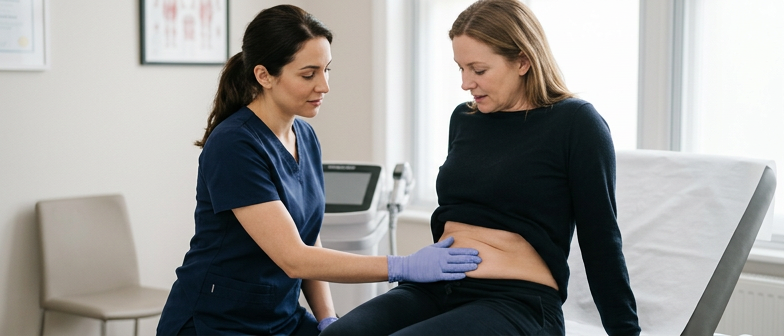
Laser lipolysis uses a fine fibre to deliver heat into the fatty layer under the skin, loosening fat cells so they can be removed or gradually cleared by the body. The same controlled heat can stimulate collagen in the overlying skin, so people understandably ask whether laser lipo can tighten stomach skin or only slim the waistline. In mild to moderate laxity, laser lipo for stomach skin tightening may give a modest lifting and firming effect, especially when the skin still has good elasticity and there is only a small to moderate amount of fat. However, its main role is fat reduction, not dramatic tightening, and it cannot replace surgical removal when there is a large apron of loose tissue.
Laser lipo works best on soft, pinchable fat just under the skin, and is not suitable for deep belly fat that sits around the internal organs. If most of the bulge comes from muscle weakness or stretched skin after pregnancy or major weight loss, even well performed laser lipolysis may leave crepey or sagging areas. In those cases, other treatment options for loose stomach skin, such as radiofrequency based tightening or abdominoplasty, may be more appropriate. Many people need a combined plan, using lifestyle changes for internal fat, targeted laser lipo to reshape superficial pockets, and separate skin focused procedures to tackle more significant laxity.
| Option | Best suited for stomach concerns | Expected skin‑tightening effect | Impact on fat | Recovery demands |
|---|---|---|---|---|
| Laser lipo | Soft, pinchable tummy fat with mild laxity | Mild to moderate firming | Good for superficial fat contouring | Moderate downtime, temporary soreness |
| Radiofrequency or similar tightening | Crepey or mildly loose skin with little fat | Mild, gradual tightening | Minimal fat change | Low downtime, repeated sessions |
| Abdominoplasty (tummy tuck) | Large apron of loose skin or muscle laxity | High, dramatic tightening | Removes excess skin and some fat | Higher downtime, surgical recovery |
| Lifestyle changes only | Internal belly fat and general weight | Indirect, depends on skin elasticity | Helps reduce deep visceral fat | Ongoing commitment, no procedure recovery |
When you are comparing treatment options for loose stomach skin, laser lipo sits somewhere between non‑invasive skin tightening and full surgery. Laser lipo for stomach skin tightening can modestly improve mild laxity while also reducing small pockets of fat, because the laser heat can stimulate some collagen remodelling. However, it does not remove large folds of excess skin and cannot replace the dramatic tightening achieved with an abdominoplasty, where skin is surgically cut away and the abdominal wall may be tightened at the same time.
When people ask, “Am I suitable for laser lipo on my stomach?”, clinicians first look at overall health, weight and lifestyle. The ideal person is at a healthy or near‑healthy body mass index, with small, stubborn fat pockets on the tummy that do not shift with sensible eating and regular activity. You also need at least moderate skin elasticity so the area can contract after treatment, because this technique is not a weight‑loss method or a replacement for improving diet and exercise. It can refine the outline of the midsection, but it will not reproduce a full tummy tuck or remove large amounts of loose skin or stretch marks.
People often ask whether deep belly fat is suitable for laser lipo, especially if their abdomen feels firm and rounded. Laser lipolysis works on fat just under the skin, above the abdominal muscles, rather than the deeper visceral fat around the organs. If most of your fullness is due to internal fat, bloating, muscle separation after pregnancy or general obesity, you are unlikely to see a dramatic flattening. In these cases, medical weight‑management, core‑strengthening programmes and other ways of dealing with loose or bulging stomach tissue, including surgical tightening, are usually more effective than trying to target fat the device cannot reach.
Safety and medical history are as important as appearance when deciding who is not a good candidate. Poorly controlled diabetes, significant heart or lung disease or immune problems can increase risks and may rule out treatment or require specialist advice. Laser lipo and blood thinners need special caution, because anticoagulants and antiplatelet medicines can raise the risk of bleeding and bruising; you must not alter these drugs without your prescriber’s approval. A tendency to abnormal scarring, active skin infections on the tummy, pregnancy or planned major weight change can also make this stomach‑focused procedure unsuitable, so an in‑person consultation is essential.
Before deciding whether laser lipo could help tighten loose stomach skin, you need to ask not just if you are suitable for laser lipo, but whether it is medically safe for you now. Uncontrolled heart disease, poorly managed diabetes, active infection in the area, or a history of poor wound healing may mean the procedure is postponed or avoided. Pregnancy, breastfeeding and significant obesity can also rule it out, as laser lipolysis is for local contouring rather than major weight loss.
Blood thinners are a key issue to discuss with your clinician. Combining laser lipo and anticoagulant medicines can increase bleeding, bruising and the risk of haematoma or delayed recovery. Never stop aspirin, warfarin, clopidogrel, newer anticoagulants or strong herbal blood thinners on your own; any change must be approved by your GP or specialist, who may instead suggest timing treatment carefully or choosing a non‑invasive alternative.
When you are getting ready for laser lipo on the stomach, your practitioner will usually give you clear guidance on what to avoid before treatment. Alcohol, smoking and recreational drugs can all affect circulation and healing, so it is sensible to cut these down or stop in the days beforehand. Many clinics also suggest avoiding ibuprofen and similar anti-inflammatory painkillers, certain herbal supplements such as ginkgo or high-dose fish oils, and heavy exercise the day before, as these can increase the risk of bruising or swelling. Eating light, staying hydrated and arranging loose, comfortable clothing for after the session can make the experience smoother.
The most important safety step is to discuss all medicines and medical conditions with your clinician well before your session, especially in relation to laser lipo and blood thinners. Drugs such as warfarin, clopidogrel, apixaban, rivaroxaban and higher-dose aspirin can increase bleeding and bruising, so your practitioner may need to liaise with your GP or specialist before any prescription is changed. You should never alter heart or stroke medication on your own. Providing a full list of tablets, inhalers and supplements and mentioning any history of clotting or bleeding problems helps your team plan a stomach procedure that is as safe and predictable as possible.
For stomach contouring, a laser lipo appointment usually starts with photos, marking the tummy and checking your medical history, including medicines that might affect treatment. The skin is cleaned, local anaesthetic may be used for invasive techniques, and a fine laser fibre is passed under the skin or an external laser pad is placed on the surface. People often ask how long laser lipo takes; for the abdomen, each session is usually around thirty to sixty minutes, plus time for preparation and aftercare checks, and a planned course of treatments is common.
During the procedure you normally feel warmth and pressure rather than sharp pain, although some areas can be uncomfortable. Mild bruising after laser lipo to the tummy is common, along with swelling and tenderness for a few days, because the tissues have been heated and disturbed. Your practitioner may recommend compression garments to limit swelling and support the skin, and will advise how many laser lipo sessions are likely to be needed, as some people see changes after one visit while others need several spaced treatments.
Immediately afterwards you rest briefly while your tummy is checked and you receive written guidance on activity, skincare and warning signs. Many people can return to work after laser lipo within a day or two if it is minimally invasive, and sometimes the same day after external treatments, as long as their role is not very physical. You will usually be asked to avoid heavy lifting, strenuous exercise, hot baths and alcohol for a short time so bruising and swelling can settle and the stomach skin can tighten over the new contour.
Does laser lipo tighten loose stomach skin or only remove fat?
It mainly reduces small fat pockets. The heat can stimulate some collagen so mildly loose tummy skin may look a bit firmer, but it will not tighten a large apron of skin the way a surgical tummy tuck can.
Am I suitable for laser lipo on my tummy?
You are usually suitable if you are near a healthy weight, have stubborn belly fat in specific areas, and your skin still has decent elasticity. It is not designed for major weight loss or very stretched, sagging skin.
Can I return to work soon after tummy laser lipo?
Most people go back to desk‑based work within a day or two, sometimes the next day. If your job is physically demanding, your practitioner may advise delaying heavy lifting or strenuous activity for a short time.
How many laser lipo treatments are needed for the abdomen?
Minimally invasive laser lipo is often a one‑off procedure, plus routine check‑ups. External non‑invasive laser slimming usually needs a short course, such as several sessions over a few weeks, depending on your goals.
What should I avoid before a tummy laser lipo, especially with blood thinners?
You are often asked to avoid alcohol, smoking, ibuprofen‑type painkillers, certain supplements and intense exercise to reduce bruising. Do not stop prescribed blood thinners yourself; changes must be agreed with your doctor and the clinic.