
x
If you’ve lost teeth to gum disease or still have inflamed gums, you may be unsure whether dental implants are safe or worthwhile. This guide helps you weigh up implant suitability, treatment stages, costs, referrals to a periodontist, and long‑term cleaning to reduce peri‑implantitis risk.
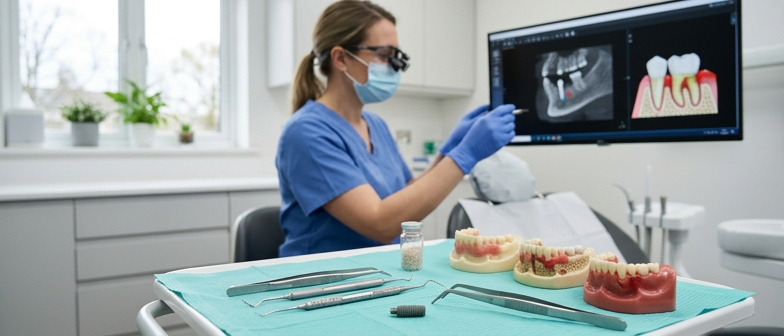
Gum disease is an infection of the tissues that support your teeth. In its early stage, gingivitis, the gums may look red, swollen and bleed when you brush. If it progresses to periodontitis, the supporting bone can be lost and teeth may loosen or fall out. Many people consider dental implants after losing teeth to gum disease because they offer a fixed, natural‑looking way to restore chewing and confidence. If you are thinking about dental implants with gum disease or a current gum infection, your dentist or periodontist must first check how stable your gums and bone are and whether the inflammation is under control.
Dental implants rely on healthy bone and well‑maintained gums to stay firm and comfortable in the long term. Previous gum problems can increase the risk of peri‑implantitis, an infection and bone loss around an implant similar to advanced gum disease. This does not automatically rule out treatment, but it means careful assessment, tailored cleaning advice and regular monitoring are essential if you want to replace teeth lost to gum disease with implants. When your dental team discusses implants after gum problems, they balance the benefits of replacing missing teeth with the long‑term risk of infection around the implants to recommend the safest, most predictable plan.
Dental implants with gum disease need careful planning. If you have active gum infection, the priority is to control the inflammation first, because the bacteria that damage natural teeth can also attack implants. Clinicians usually avoid implant surgery while gums are bleeding, swollen or losing bone, as the risk of complications is higher. You will normally have a periodontal assessment, professional cleaning and tailored home care to stabilise the condition before implants are considered.
Once gum disease or periodontitis has been treated and kept stable for a while, many people can still have implants placed successfully. A history of periodontitis does increase the risk of peri‑implantitis, which is inflammation and bone loss around an implant. To limit this risk, your dental team will review plaque control, smoking, diabetes and other healing factors, and may suggest more frequent maintenance and close monitoring of the tissues around the implants so early problems can be managed promptly.
If you are asking whether you can have implants after periodontitis, the key is an open discussion with a dentist or periodontist who understands both gum disease and implant care. They will assess your current gum health, bone levels and general medical status, explain whether implant treatment is sensible, and outline the long‑term cleaning and reviews you will need. For some, alternatives such as bridges or removable dentures may be safer, while others can go ahead with implants supported by a clear plan to protect against further disease.
| Gum health scenario | Implant suitability | Main clinical focus | Peri-implantitis risk level | Typical treatment direction |
|---|---|---|---|---|
| Active gum infection | Not suitable | Control inflammation and plaque | High | Periodontal therapy before any implant plan |
| Recently stabilised gingivitis | Cautiously suitable | Maintain bleeding-free gums | Medium | Review hygiene, consider delayed implant assessment |
| History of periodontitis, now stable | Conditionally suitable | Monitor bone levels and pockets | Medium to high | Implant assessment with close maintenance schedule |
| Advanced bone loss, limited support | Often not suitable | Protect remaining teeth and soft tissues | High if implants attempted | Discuss bridges or removable dentures instead |
| Healthy gums, no past disease | Generally suitable | Standard home care and check-ups | Low | Routine implant planning and periodic reviews |
If you have a history of gum disease, any active gum infection must be treated and stabilised before dental implants are planned, because ongoing inflammation makes healing harder and increases the chance of peri-implantitis, the implant version of advanced gum disease. After treatment, implant cleaning routines become crucial: your dental team will show you how to clean carefully around the fixtures and under the gum edge using brushes or other tools so plaque does not build up. By keeping the gums healthy, attending regular maintenance visits, and dealing quickly with early bleeding or swelling, you can cut the long-term peri-implantitis risk and help your implants remain firm and comfortable.
If you have gum disease and are thinking about dental implants, the first step is a full implant assessment. The clinician will check your gums, measure pockets, review X‑rays or scans and ask about any history of periodontitis or gum infection. They will assess how stable your gum condition is, because active inflammation raises the risk of peri‑implant problems. You should expect clear advice on whether implants are suitable for you, what extra care is needed after gum disease, and how treatment could replace teeth already lost to periodontal damage.
When your usual dentist feels implants might be appropriate, they can arrange a referral to an implant dentist or a practice experienced in managing gum disease. People with more advanced periodontitis are often referred to a periodontist, a specialist in gum health, who can work with the implant provider to lower the risk of peri‑implantitis. You can search online for a periodontist near you, but it is important that your dentist supports the referral and passes on relevant notes so the specialist understands your gum history before planning any implant care.
After your assessment you may decide to compare implant treatment quotes from different providers. Look beyond the headline price and check what is included, such as assessment fees, any gum disease treatment before surgery, follow‑up visits and appointments for ongoing implant cleaning. Ask how they monitor implants in people who have had periodontitis and how they respond if peri‑implant inflammation appears. Considering the clinician’s experience with patients who have a history of gum disease, and how clearly they explain risks and benefits, will help you choose an implant provider who supports long‑term oral health.
If you have gum disease and are considering dental implants, your general dentist may involve both an implant dentist and a periodontist. The periodontist checks the health of your gums and bone, treats any active problems and advises on long‑term risks such as peri‑implantitis before teeth lost to gum disease are replaced.
To arrange this shared care, ask your dentist for a referral to a gum specialist rather than relying only on online “periodontist near me” searches. Your dentist can send X‑rays and gum charts so both clinicians plan treatment together, stabilise your gum condition and then place implants with an agreed maintenance programme.
When you are considering dental implants with a history of gum disease, the fees usually cover far more than the implant and crown alone. You may need periodontal stabilisation, extra hygiene appointments and closer monitoring, which all add to dental implant costs in the presence of gum problems. Ask for itemised estimates that separate surgical fees, any bone or gum grafting, and the long-term maintenance programme. When you compare dental implant treatment quotes, look beyond the lowest price and consider the clinician’s experience, how many review visits are included, and whether ongoing management of your gum condition is built into the plan.
Ongoing upkeep is a major part of the financial picture if you have had gum disease. After treatment, implant cleaning must be meticulous, and you may be advised to see a hygienist more often than someone without a periodontal history. These extra visits and specialist cleaning techniques help keep the tissues around your implants healthy and reduce the risk of future peri-implantitis. When weighing up quotes, factor in the cost of regular reviews, professional maintenance and tailored home-care advice, as these continuing expenses are what support the long-term success of your implants, not just the initial procedure.
Can I get dental implants if I still have active gum disease?
Implant surgery is normally delayed until your gum infection is treated and stable. Ongoing inflammation and bone loss increase the risk of implant failure and peri‑implantitis.
What happens at an implant assessment when I have a history of periodontitis?
The dentist or periodontist checks gum pockets, bone levels on X‑rays, and any loose teeth. They then advise whether implants are suitable, and what extra care you’ll need after previous gum disease.
How do I get a referral to a periodontist or implant specialist near me?
Ask your general dentist to refer you, especially if your gum disease is complex. You can also search professional registers for local periodontists and implant clinicians, then request your records be shared.
How do dental implant costs change when I’ve had gum problems?
Fees usually increase because you may need gum treatment, more hygiene visits, and closer monitoring. When you compare dental implant treatment quotes, focus on experience and long‑term maintenance, not just price.
What cleaning routine is recommended after implants if I’ve had gum infection before?
You’ll be taught meticulous cleaning around each implant using interdental brushes or other tools. Regular check‑ups help spot early bleeding or swelling so peri‑implantitis risk stays as low as possible.