
x
Cleaning company insurance helps protect you if clients, the public or staff suffer injury or property damage linked to your work. This guide sets out the core covers for interior and exterior cleaning, legal requirements for employers’ liability, typical public liability limits and how claims such as water damage are handled.
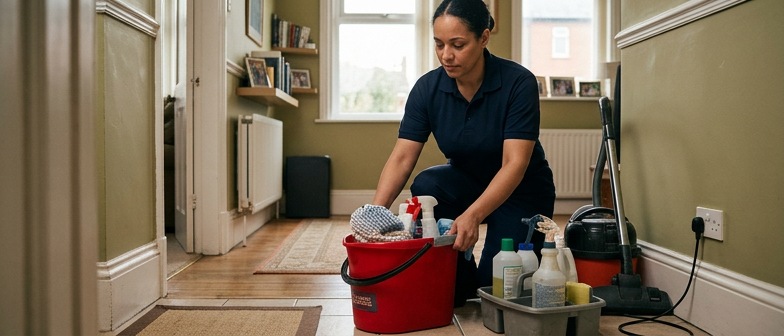
Cleaning company insurance is a group of policies that help protect a cleaning business against injury claims, damage to property and related legal costs. For most domestic and commercial cleaners the main cover is public liability, which applies if a client or member of the public alleges your work caused loss or injury, such as chemical damage to furnishings or a slip on a wet floor. Employers’ liability is generally needed when you take on staff and responds to claims from employees who suffer work‑related injury or illness. Depending on how the business operates, cover can be extended for treatment risks when using products on fabrics and surfaces, or for exterior cleaning such as pressure washing, gutter work and window cleaning carried out from the ground or at height.
These covers are usually arranged through insurers or brokers that deal with small business and trade insurance. The annual cost is influenced by turnover, the mix of domestic and commercial work, claims history and whether tasks involve exterior areas or working at height. Premiums for a sole trader doing mainly domestic jobs tend to differ from those for a larger firm with several employees and regular commercial or exterior contracts. Some businesses choose a package that combines liability cover with protection for tools and equipment, business interruption and legal expenses, aiming to reduce gaps between separate policies and match the overall insurance to the actual risk profile of their cleaning work.
| Policy type | Primary purpose | Typical cleaning scenarios | Relative importance |
|---|---|---|---|
| Public liability | Third‑party injury and property damage | Domestic homes and routine commercial interiors | High |
| Employers’ liability | Employee injury and illness claims | Businesses with cleaners on payroll or regular helpers | High |
| Treatment risk extension | Damage caused by products or cleaning methods | Carpet, upholstery and specialist surface cleaning | Medium |
| Exterior cleaning cover | Risks from working at height and outdoor areas | Window cleaning, gutter work, pressure washing | Medium |
| Combined cleaning package | Broader protection including tools and business interruption | Growing firms wanting simplified cover management | Medium |
Insurance requirements for routine interior cleaning usually focus on public liability for accidental injury or damage inside a client’s premises, plus cover for employees and basic equipment. Exterior cleaning, such as window cleaning at height or pressure washing, typically involves greater risk of falls, water damage, and impact on neighbouring property, so insurers may expect stronger risk management and higher liability limits. When arranging cleaning company insurance it can be helpful to distinguish between low‑risk indoor tasks and higher‑risk exterior work, as this can affect the type of cover offered, safety conditions imposed, and the overall cost of the policy.
Most cleaning businesses that employ staff are required by UK law to hold employers’ liability insurance. You normally need this cover if you hire anyone who is not a close family member, or run a limited company with more than one director, and you must keep a certificate available. The statutory minimum limit is £5 million, but many policies provide £10 million because serious work‑related injury or illness can lead to high claims. When deciding on a suitable limit, owners tend to look at how many people they employ, the type of cleaning they carry out and whether employees use hazardous substances or powered equipment.
Public liability insurance is not legally compulsory, but it is widely treated as core protection for cleaning firms because it responds to allegations of injury or property damage made by clients, visitors or other members of the public. Common limits start around £1 million, with many smaller businesses choosing £2 million. Pricing depends on turnover, services, claims history and whether you work in higher‑risk settings such as construction, healthcare or food production. Larger commercial sites, schools and local authorities often set minimum public liability limits in their contracts, so checking those requirements is as important as understanding the legal position.
Where work takes place in busy public spaces, large offices or multi‑storey housing, many cleaning businesses raise their public liability limit to £5 million or more because a single incident could affect several people or expensive property. Employers’ liability and public liability cover different groups, with one focused on employees and the other on third parties, but they sit alongside each other as part of an overall insurance programme. Reviewing both together and aligning limits with your risk profile and key contract obligations helps keep your arrangements consistent and proportionate.
Employers’ liability insurance is usually set at £10 million, with £5 million as the legal minimum for most businesses with staff. When deciding what limit is appropriate, think about how many employees you have and the risk level of their work, including use of chemicals, working at height or operating machinery. A larger or higher‑risk team typically needs cover towards the upper end of common market limits.
Public liability limits are often chosen based on typical job value and plausible worst‑case losses. Smaller domestic cleaners may use £1–2 million, while contractors in sizeable commercial premises or high‑value homes may be asked for £5 million or more in client contracts. Higher limits generally increase the premium, so it is useful to compare the extra cost with the possible impact of serious injury or significant property damage.
A typical cleaning business policy is centred on public liability cover, which responds if work carried out causes accidental injury to others or damage to their property. In practice this can involve scratching surfaces, knocking over valuables or creating a slip hazard. Standard liability insurance usually focuses on physical damage caused by negligence, and may not include harm caused by the cleaning process itself unless a treatment risk extension is in place. Treatment risk cover addresses damage caused by the method or product used, such as a carpet shrinking after cleaning or delicate fabrics being permanently marked by unsuitable solutions.
Water damage is a common source of claims and is usually assessed against the exact circumstances and the policy wording. If a cleaner leaves a tap running or equipment unattended and a room floods, this may fall under public liability, but insurers consider whether reasonable precautions were taken and whether any exclusions apply. Some policies are limited for gradual leaks or long term deterioration, and may set conditions around using appropriate equipment and reporting incidents promptly. When client property such as electronics or wooden flooring is damaged, the insurer normally bases any payment on the cost to repair or replace the items, minus any excess, provided the loss falls within the agreed scope of cover.
Policies often include cover for items temporarily in the cleaner’s care, such as carpets, soft furnishings and hard floors, if the insurer has accepted these tasks. Wider accidental damage to client property can also be insured, but wear and tear, poor workmanship and using products against manufacturer guidance are common exclusions. Work on high value surfaces, antiques or specialist finishes usually needs to be declared in advance, and exterior cleaning activities like pressure washing or gutter clearing may carry extra conditions because of the greater chance of damage. Knowing where general public liability protection ends and where treatment risk or other specialist extensions begin helps cleaning businesses check whether their insurance reflects the jobs they undertake and the realistic claims they could face.
Public liability insurance protects against accidental injury to other people and damage to their property linked to your cleaning work, such as slips on wet floors or general damage caused while moving equipment. It is usually a core element of a cleaning company policy, but many standard wordings exclude damage caused by the chemical effect of cleaning products or by methods that treat or alter surfaces.
Treatment risk cover is designed for claims arising from the cleaning process itself, for instance staining a carpet with the wrong solution or marking a stone floor with unsuitable techniques. Cleaners using specialist chemicals or restoration equipment may need both types of cover, depending on how their work could permanently affect the materials they handle.
What does cleaning company insurance usually cover?
It commonly includes public liability for injury or damage to clients or the public, employers’ liability if you have staff, and optional extensions such as treatment risk cover and protection for interior or exterior cleaning work.
Do I legally need employers’ liability insurance for my cleaning staff?
If you employ anyone who is not a close family member, or run a limited company with more than one director, the law generally requires employers’ liability insurance with a minimum £5 million limit.
How much public liability insurance do cleaners typically arrange?
Small cleaning businesses often choose between £1 million and £5 million, but higher limits may be appropriate for exterior work, larger contracts or where there is greater risk of injury or property damage.
What is the difference between public liability and treatment risk insurance for cleaners?
Public liability deals with accidental injury or physical damage, such as slips or broken items, while treatment risk specifically addresses damage caused by the cleaning process or chemicals used on fabrics and surfaces.
How should a cleaner handle a claim for water damage caused during work?
Report the incident to your insurer or broker promptly, provide accurate details and photos, stop further damage where safe, and follow the policy claims procedure so the insurer can assess liability and any payout.