
x
Considering Dubai real estate investment for diversification and potential Golden Visa eligibility, Canadian and other foreign buyers need clarity on freehold zones, transfer and closing fees, required documents, hidden ownership costs, and market volatility risks before committing capital.
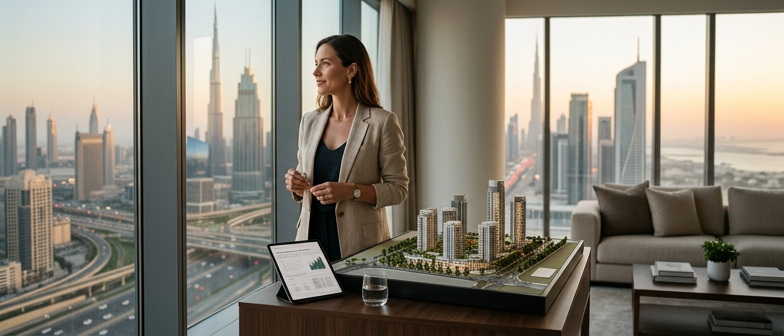
Dubai real estate investment attracts Canadian investors with relatively high rental yields, a transparent land registry, and no local annual property or capital gains tax. The city has modern infrastructure, global connectivity, and steady demand for both long term and short term rentals. For investors who already hold North American assets, Dubai offers exposure to a different economic cycle and currency, while freehold ownership rules in designated areas provide long term control over the property as part of a broader international portfolio.
Buying property in Dubai as a Canadian is accessible because residency is not required, and transactions can often be completed remotely using escrow and familiar documentation. The growing interest comes with closer Dubai property market volatility analysis, as new supply, off plan launches, global interest rates, tourism patterns, and currency shifts all influence prices and rental demand. Changes in lending and foreign ownership regulation can amplify gains or losses, so Dubai real estate investment is most compelling when approached with realistic risk expectations, careful review of official rules, and a strategy that fits overall financial planning.
For anyone considering Dubai real estate investment, the key rule is that foreign buyers can only own property outright in approved freehold zones. These include major areas in Dubai Marina, Downtown, Palm Jumeirah, Business Bay, and several master-planned districts along Sheikh Zayed Road. In these communities you receive full ownership and a long-term title deed, supported by modern infrastructure, strong rental demand, and active resale markets. As a result, they form the main target locations for most non-resident investors.
When comparing freehold areas open to foreigners, focus on how each district aligns with your strategy and risk appetite in a market known for price cycles and Dubai property market volatility. Prime waterfront and central locations tend to offer higher liquidity and rental returns but can be more sensitive to global conditions and new project launches. Newer communities may be cheaper yet carry greater uncertainty about future demand and resale values. Before committing to an area, review official maps of designated investment zones, verify project registration, and study developer reputation, planned infrastructure, and historical price trends so your location choice fits a long-term view of market risks rather than short-term pricing alone.
When evaluating Dubai freehold areas for foreign investors, link each district to one clear goal: rental income, capital growth, or lifestyle use. Established communities with strong tenant demand suit income‑focused Dubai real estate investment, while emerging zones near new transport or landmarks better fit long‑term appreciation. Lifestyle districts such as waterfront or golf communities may balance moderate returns with personal use, so factor in realistic occupancy and maintenance. For every area, review key Dubai real estate investment risks, including oversupply, short‑term price swings, regulatory changes, and shifts in tourism or corporate demand, and only choose neighbourhoods whose risk profile matches your tolerance and investment horizon.
For any Dubai real estate investment, foreigners must look beyond the advertised price to the full upfront cost. Core Dubai property buying costs include the Dubai Land Department transfer fee, registration charges, and administrative expenses, often estimated with an online transfer fee calculator based on the agreed purchase price or official valuation. Brokerage commission, bank fees for international transfers, and other transactional charges form the cash outlay that must be available before completion.
Closing and ongoing expenses can significantly affect net returns. Typical Dubai real estate closing costs include advance community or developer service charges, homeowners association fees, utility connection deposits, and, for financed purchases, bank processing and valuation fees. These hidden costs of purchasing property are not always highlighted in marketing but influence rental yield. Buyers should obtain service charge schedules, check for pending building maintenance contributions, and confirm any payments due to the developer or management company at handover.
Because Dubai relies on a fee-based system rather than recurring property taxes, investors need to understand how one-off and recurring costs combine over time. A Dubai property transfer fee calculator helps with statutory charges, but buyers should also budget for currency exchange spreads, bank wire costs, and any legal or advisory fees. Ongoing service charges, insurance, and maintenance may eventually exceed initial closing expenses, so careful due diligence and cash-flow modeling are essential when judging the long-term performance and risk profile of a Dubai real estate investment.
When planning a Dubai real estate investment, estimate the full cash outlay, not just the price. Use a Dubai property transfer fee calculator to gauge Land Department transfer and registration charges, then add typical Dubai real estate closing costs such as trustee office fees, agency commission, mortgage setup, and valuation if you use financing. Treat calculators as an initial guide, because many only cover statutory transfer amounts and miss case‑specific fees.
To avoid unexpected Dubai property purchase hidden costs, allow for developer service charge advances, owners’ association fees, insurance, utility deposits, and currency conversion spreads. Check your sales agreement to see who pays each item and compare with current schedules from official sources or major banks. Build a realistic budget as the price plus all transfer and closing costs, with a contingency margin for your true investment requirement.
For a foreigner planning Dubai real estate investment, the basic documents to buy property include a valid passport, proof of address and recent bank statements or a bank reference, with some developers requesting tax residency confirmation. If you take financing, the lender will ask for income and credit evidence and issue loan documents alongside the sale contract or memorandum of understanding, which sets the price, payment schedule and conditions. For off-plan purchases, a reservation form and developer sale agreement are added, and all paperwork must comply with Dubai Land Department rules so the deal can be formally registered.
Ownership proof in Dubai relies on official registration rather than private contracts. After completion, the main evidence is the title deed issued through the Dubai Land Department, showing your name, property details and any mortgage. In large schemes, electronic records or ownership certificates may complement the deed, while service charge bills and utilities support everyday occupation. Where investors use companies or family structures, authorities can require corporate documents or notarised powers of attorney, so all transfer receipts and legal papers should stay consistent for refinancing, resale or succession.
Dubai property can in some cases qualify an investor for a long-term residence permit under the Golden Visa framework if minimum property value and ownership criteria are met, which must be checked against current regulations. The application is submitted through Golden Visa service centre channels or online, using your title deed, identification and financial proof, followed by standard clearances. Because Golden Visa rules differ from ordinary property registration, the visa process should be treated as a separate step, not as an automatic result of buying real estate.
Why does Dubai real estate appeal to Canadian investors?
It offers relatively high rental yields, no local annual property or capital gains tax, modern infrastructure, and diversification away from North American markets in a different currency cycle.
Where can foreign buyers legally own freehold property in Dubai?
Non‑resident buyers can own freehold in designated zones such as parts of Dubai Marina, Downtown, Palm Jumeirah, Business Bay, and other approved master communities along major transport corridors.
What are the main upfront and hidden costs when buying property in Dubai?
Beyond the price, expect Dubai Land Department transfer and registration fees, trustee charges, agency commission, bank transfer and mortgage setup costs, plus ongoing service charges and maintenance.
What documents are required to buy and prove ownership of a Dubai property?
Typically a valid passport, proof of address, recent bank statements, income evidence for financing, and signed sale contracts; after registration, the official title deed serves as ownership proof.
Can a property purchase help qualify for Dubai’s Golden Visa, and what risks should investors consider?
Yes, property above the official value threshold can support a Golden Visa application through the service centre process, but investors must weigh market volatility, possible oversupply, and regulatory changes.