
x
Considering dental implants and treatment in Turkey or Istanbul to replace missing teeth? This guide walks through candidacy, full‑mouth options, bridges, costs, risks, recovery, and how to assess a dental implant clinic before you commit.
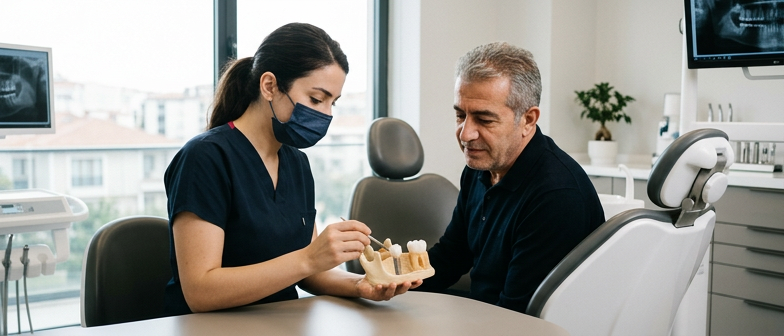
Dental implants are medical devices used for missing teeth replacement by acting as artificial roots placed in the jawbone. Usually made from biocompatible metals such as titanium, they can bond with the bone and form a stable base for a single crown, a dental implant bridge, or other fixed teeth. Unlike removable dentures or traditional bridges, implants are anchored in the jaw and aim to distribute chewing forces in a way that is closer to natural teeth, while helping support facial structure and often preserving nearby healthy teeth. Many people look at dental implants before and after photos to see cosmetic changes, but long‑term function, oral health, and medical suitability are more important than appearance alone.
Anyone considering dental implants should be examined by a qualified dentist or oral surgeon who reviews medical history, medications, habits such as smoking, and overall expectations. Typical candidates have one or more missing teeth, adequate jawbone, and reasonably controlled general health, but these are patterns rather than strict rules. Active gum disease, uncontrolled systemic illness, heavy smoking, or limited bone may mean that preliminary treatment or alternative forms of missing teeth replacement are safer. Even within the same mouth, one area may be suitable for implants while another is not, so candidacy is decided tooth by tooth using examination, imaging, and a careful discussion of both functional goals and realistic before and after outcomes.
| Option | Stability in Chewing | Daily Maintenance | Typical Indications | Candidacy Considerations |
|---|---|---|---|---|
| Single Dental Implant | High, close to natural tooth | Standard brushing and flossing, extra care around implant | One missing tooth or a few separated gaps | Adequate local bone, controlled health, good oral hygiene |
| Dental Implant Bridge | High, fixed multi‑tooth support | Careful cleaning under bridge, regular professional checks | Several missing teeth in one area | Enough bone for multiple implants, ability to clean around bridge |
| Traditional Tooth‑Supported Bridge | Moderate, depends on supporting teeth | Floss aids or brushes under bridge, routine check‑ups | Missing tooth with strong neighboring teeth | Healthy adjacent teeth, may require reshaping of natural teeth |
| Removable Partial Denture | Variable, may feel less secure | Removal for cleaning, careful handling and storage | Multiple gaps where fixed options are limited | Useful when bone or health restrict implants, tolerance of movement needed |
| Removable Full Denture | Lower stability, especially in lower jaw | Daily removal, cleaning, possible adhesive use | Complete loss of teeth in a jaw | Option when implants are not advised, requires adaptation to fit and movement |
Dental implants may suit adults who have one or more missing teeth and want a fixed form of missing teeth replacement instead of removable dentures. People with healthy gums, enough jawbone, good oral hygiene, and realistic expectations are common candidates, because implants restore chewing, speech, and smile appearance while working in balance with the remaining teeth.
Certain conditions mean implants need special caution or may not be advised. Uncontrolled diabetes, heavy smoking, untreated gum disease, severe bone loss, or strong teeth grinding can raise the risk of problems and slow healing. Growing children, pregnant patients, and people taking some bone‑affecting medicines often need careful assessment or postponement, and a dentist may suggest alternatives such as conventional bridges or removable teeth instead.
For people missing many or all teeth, Full Mouth Dental Implants offer a more stable form of Missing Teeth Replacement than removable dentures. Several implants are placed in the jaw and used as anchors for a fixed bridge or full arch of teeth, rather than one implant per tooth. Depending on bone quality, medical history, and expectations, layouts such as four or six implants may be chosen to support a complete prosthesis. These full-arch options can restore chewing and facial support but are not suitable for everyone and usually require detailed imaging, careful planning, and discussion of alternatives like conventional dentures or partial prostheses.
A Dental Implant Bridge is used when several neighboring teeth are missing in one area. Instead of placing an implant for every lost tooth, the dentist positions fewer implants and joins them with a bridge that carries several artificial teeth, spreading chewing forces across the implants and surrounding bone. This fixed solution can reduce the number of surgical sites compared with individual implants, but cleaning around and under the bridge demands specific tools and technique. Choosing between a full-arch implant solution, a localized implant-supported bridge, or a removable prosthesis depends on bone volume, gum health, general medical condition, budget, and personal priorities assessed by a qualified implant dentist.
When many teeth in one jaw are missing or beyond saving, the dentist may suggest full mouth dental implants to support a complete arch. This option is considered when chewing is poor or dentures feel loose, and it uses fewer implants than replacing each tooth individually. Your implant dentist will check bone volume, gum health, medical conditions, and how well you can clean around a large fixed restoration before recommending this type of treatment.
A dental implant bridge is usually chosen for a smaller gap, such as several neighbouring missing teeth, especially when nearby teeth are healthy or already crowned. This bridge avoids cutting down natural teeth and can often be cleaned with floss and small brushes under the false teeth. The final choice between a limited bridge and a full arch still depends on how many teeth are missing, the strength of the jawbone, and your ability to keep the implants and gums healthy with regular hygiene and check‑ups.
The treatment journey for Dental Implants begins with a detailed consultation. Your dentist reviews your medical history, examines your mouth, and may take X‑rays or 3D scans to assess bone quality and nerve and sinus position. This evaluation helps confirm whether implants are a suitable Missing Teeth Replacement option and what kind of restoration, from a single crown to a multi‑tooth solution, is appropriate. Smokers, people with uncontrolled diabetes, or those on certain medications may be advised to improve general health or change habits before surgery. You should receive an honest discussion of benefits, limitations, and alternatives, and you can ask to see Dental Implants Before And After examples so expectations stay realistic.
During the surgical stage, one or several implants are placed under local anaesthesia, with the bone prepared to receive titanium fixtures that act as artificial roots. Some patients also need bone grafting or sinus lifting, which can lengthen overall treatment time. After surgery, mild swelling, bruising, and discomfort are common but usually manageable with cold packs and prescribed pain relief. The healing phase, or osseointegration, takes several months while the implant bonds with the bone; temporary teeth or a removable appliance can support eating and speaking. Regular follow‑up visits allow the dental team to check how tissues are healing and to spot early signs of infection or problems with temporary restorations.
Once the implant has fused with the bone and the gums are stable, an abutment is fitted and the final crown or bridge is designed to suit your bite, speech, and facial features. Long‑term care is similar to caring for natural teeth, but cleaning around the implant and gum line is especially important. Daily brushing, interdental cleaning, and routine professional check‑ups help prevent peri‑implant diseases that can damage the supporting bone and cause even successful Dental Implants to fail. Grinding, poor oral hygiene, or changes in general health can also affect long‑term results, so ongoing maintenance and open communication with your dental team remain essential throughout the life of the restoration.
| Stage of implant journey | Main focus | Typical patient tasks | Comfort / risk level | Key long‑term impact |
|---|---|---|---|---|
| Initial consultation | Suitability for Missing Teeth Replacement | Share medical history, discuss goals, review Dental Implants Before And After photos | Comfort high, medical risk low | Sets realistic expectations and treatment roadmap |
| Surgical placement | Implant insertion and possible grafting | Follow pre‑op instructions, arrange support for first recovery days | Comfort moderate, surgical risk needs monitoring | Creates foundation for future crowns or bridges |
| Healing and osseointegration | Bone–implant bonding and soft‑tissue recovery | Maintain oral hygiene, attend follow‑ups, adapt to temporary teeth | Comfort variable, biological risk medium | Determines stability of Dental Implants and future function |
| Final restoration fitting | Placement of abutments, crowns, or bridges | Test bite and speech, give feedback on fit and aesthetics | Comfort high, adjustment risk low to medium | Restores daily chewing, confidence, and Missing Teeth Replacement result |
| Ongoing maintenance | Prevention of peri‑implant disease and mechanical issues | Brush and clean interdental areas, attend regular check‑ups | Comfort high, cumulative risk depends on self‑care | Supports long‑term implant survival and overall oral health |
Dental Implants, like any surgery, can cause pain, swelling, bruising, or minor bleeding that usually settles within a few days with medication and good oral hygiene. Less common problems include infection around the implant, poor bone healing, loosening, or changes in your bite. Dental Implants Before And After photos can show cosmetic results but cannot reveal these complications, so clear clinical advice from your dentist is more reliable.
Some patients face extra risks such as nerve irritation with numbness or tingling, sinus issues with upper jaw implants, or gum recession that exposes metal parts and affects appearance. You can lower these risks by choosing a qualified implant dentist, giving full medical and drug histories, quitting smoking if possible, and following all pre‑ and post‑operative and follow‑up instructions.
What are dental implants and how do they replace missing teeth?
Dental implants are titanium posts in the jawbone that act as artificial roots. After healing, they hold a crown, a dental implant bridge, or a full arch to replace missing teeth with a fixed solution.
Who is usually a good candidate for dental implants?
Adults with missing teeth, healthy gums, enough jawbone, good oral hygiene, and controlled medical conditions may qualify. A dentist reviews your health, scans, and expectations before treatment.
How do full mouth dental implants compare with removable dentures?
Full mouth dental implants use several posts to secure a fixed bridge, aiming for stronger chewing, better facial support, and more comfort than removable dentures. Careful planning is needed for each patient.
Why do some people choose dental implant clinics in Turkey, especially Istanbul?
Patients may go to Istanbul dental implant centers for experienced teams, modern equipment, and lower overall treatment costs. Quality, safety, and total fees should be confirmed before travel.
What should I check before and after dental implant surgery?
Before surgery, confirm the dentist’s training, imaging, plan, and fees. Afterward, keep strict hygiene, attend follow‑ups, avoid smoking, and report persistent pain, swelling, or looseness so issues are treated early.