
x
Facing your first bridal dress fitting and unsure what to expect, when to book, or how many appointments and alterations you’ll need? This guide walks you through timing, typical consultation steps, walk‑in versus appointment rules, and how fees and tailoring costs are usually handled.
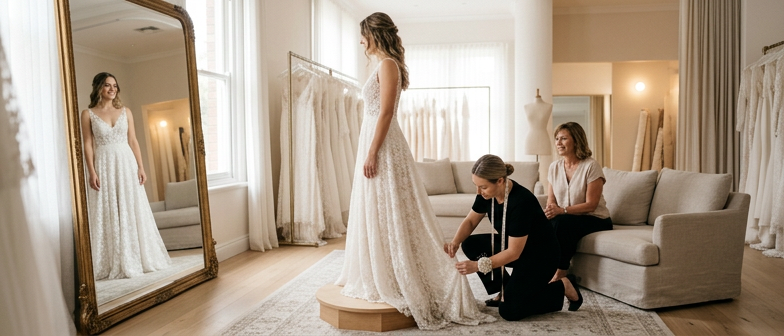
Your bridal dress fitting journey usually starts a few months before the wedding, once your gown has arrived and your weight is fairly stable. The first Bridal Dress Fitting is often the longest, because this is when you try on the dress with your wedding shoes and undergarments, talk through your ideal look and comfort, and decide what needs to be tailored. When people ask how long the first bridal fitting takes, it is typically around an hour, sometimes a little more if there are complex changes or accessories to finalise. At this stage you and the fitter discuss what can be realistically adjusted, so you understand how far the design can be pushed without affecting structure or support.
Many brides are surprised by how many bridal fittings they need, but two to three appointments is common, with more if the dress has heavy lace, beading or custom changes. After the initial session, the seamstress pins and marks the fabric, confirming where hems, bust, waist and straps will be reshaped. This is why the question of whether a wedding dress can be altered is almost always answered with yes, though there are limits based on fabric, internal boning and how much size change you want. Follow‑up fittings are usually shorter, focusing on checking those earlier adjustments, testing how easily you can move, sit and dance, and making small tweaks so that by the final visit your gown feels secure and made for your body.
| Stage | Typical Timing Before Wedding | Main Focus | Appointment Length | Bride’s Priority |
|---|---|---|---|---|
| Initial bridal dress fitting | Several months out | Discuss overall fit and alterations | Longest session | Clarify comfort and style |
| Mid fitting | Midway through timeline | Check pinned adjustments | Medium length | Test movement and ease |
| Additional fitting if needed | Closer to wedding | Fine‑tune complex details | Short to medium | Refine lace or beading changes |
| Final fitting and pick‑up | Very close to wedding | Confirm secure fit | Shortest visit | Practice walking and sitting |
When you are ready to book a wedding dress fitting, most boutiques and alteration studios ask you to reserve a time so they can prepare a fitting room, mirrors and a stylist or bridal seamstress for you. Searching online for a wedding dress fitting near you is a good start, but then check each place’s website or call to confirm how they handle appointments, how busy they are in peak season and whether they work with gowns similar to yours. Pre‑booking is especially helpful if your bridal party is coming, you need extra privacy or you want to discuss complex alterations such as necklines, sleeves or trains in the same visit.
Policies around walk‑ins vary, so you cannot assume every bridal shop accepts them. Some boutiques can offer a bridal fitting without an appointment on quiet weekdays if a fitting room and staff member are free, but you may need to wait and the session might be shorter with less time to pin details. Other studios only see brides by booking because they share space with a workroom or run on tight schedules, so arriving unannounced can mean being turned away or only getting a quick chat instead of a full fitting. Phoning a few hours before you hope to drop in lets the team tell you whether a same‑day visit is realistic.
Many places charge a bridal appointment fee for longer or premium sessions, so always ask whether that fee is refundable and in what situations. Some studios state that the fee is not refunded if you cancel late or do not show, but it can be credited towards your alterations or gown purchase once you proceed, effectively acting as a deposit. Others treat it purely as a booking charge that is never deducted from the final bill. When comparing options, consider how the fee is handled, how comfortable you feel with the fitter and whether the consultation gives you clear pricing and timelines, rather than focusing only on whether the fee might be refunded or credited later.
To book a wedding dress fitting that works with your timeline, count back from your wedding date and aim for your first visit about three to six months before the day. When you search online for a wedding dress fitting near you, check each studio’s lead times, opening hours, and whether they specialise in bridal gowns, as this affects how many appointments they can offer and how quickly they finish alterations. Once you have a shortlist, contact each bridal seamstress near you to confirm how their booking system works, how far apart fittings are, whether they offer evenings or weekends, and if there is an appointment fee or credit toward your alterations, then choose the schedule that fits your life.
If you hope to drop in for a bridal dress fitting without an appointment, check first. Many boutiques work by booking only and cannot always take walk-ins. Some smaller studios may squeeze you in between scheduled brides, while bigger stores might offer limited same-day spots, but it is never guaranteed. Because fittings need private space and enough time, policies on accepting walk-ins vary, so always call or check the boutique’s website before you go.
When you book a wedding dress fitting, the store may charge an appointment fee, especially for longer or premium sessions. In many Australian boutiques this fee is non-refundable if you cancel late or do not show up, but some will credit it towards your gown or bridal dress alterations cost once you proceed. Each business sets its own rules on refunds, credits and changes, so read the terms and confirm them when you book.
If you are wondering whether a wedding dress can be altered, the answer is almost always yes. A skilled bridal seamstress can usually adjust the bodice and waist, reshape straps or sleeves, and take the gown in or out within certain limits. Hemming for your height, adding or removing bra cups, creating a bustle, and making small tweaks to necklines and back details are all common parts of a bridal dress fitting. Major structural changes, like big size shifts, converting a zip to a corset, or redesigning lace placement, are sometimes possible but depend heavily on the original construction and fabric, which is why professional advice is crucial.
Because every gown and body is different, most specialists will start with a bridal dress alterations consultation before doing any work. During this appointment they assess how the dress fits you now, pin the areas that need adjustment, and explain what is realistic for the design and your wedding timeline. It is also the moment to mention comfort concerns, such as whether you can sit, hug, and lift your arms easily, and to discuss design tweaks like adding extra support or softening a tight neckline. This first consultation helps you decide which changes are essential for fit and function, and which are optional style upgrades.
Bridal dress alterations cost is driven more by time and complexity than by a flat menu of services. Simple changes like a basic hem on a plain skirt or taking in uncomplicated seams usually sit at the lower end, while layered tulle, beading, lace appliqué or intricate corsetry take far longer to adjust. Tight wedding timelines, multiple fitting appointments, or significant size changes can also increase what you pay. Use your initial consultation to ask how each proposed alteration affects the overall cost, so you can prioritise and keep the gown within your budget.
A bridal dress alterations consultation is usually your first proper fitting, focused on how the gown sits on your body. You try on your dress with your wedding shoes and undergarments, then stand, sit and walk so the seamstress can see how the fabric behaves. They check bust, waist, hips, hem and train, pinning and marking where the dress needs to be taken in or let out, shortened, or supported with extra structure such as cups or a bustle.
During the consultation you also discuss design tweaks and get clarity on the expected bridal dress alterations cost. The specialist explains what is possible without harming the original style and how each change affects price and timing. You can ask how many fittings are likely, when payments are due and, by the end, you should leave with a written outline of the recommended work, an estimated price range and approximate dates for return visits.
How long is the first bridal dress fitting and what happens?
The first bridal fitting is usually about 60 minutes. You bring your wedding shoes and undergarments while the seamstress checks overall fit, pins the bodice, waist and hem, and explains which alterations are possible without damaging the dress.
When should I book a wedding dress fitting in relation to my wedding date?
Plan your first fitting roughly three to six months before the wedding. When you contact a bridal seamstress near you, ask about their lead times, how many fittings they expect you will need, and whether they offer evening or weekend slots.
Can I walk in for a wedding dress fitting, or do I need an appointment?
Many bridal shops are appointment‑only so they can allow enough time and privacy. Some may squeeze in walk‑ins if they have a gap, but it is not guaranteed, so always check online or call ahead if you hope to have a fitting without an appointment.
Is a bridal appointment fee refundable or credited?
Policies differ. Some studios refund the fee if you cancel in time, others keep it but credit it toward your bridal dress alterations cost. Always confirm how refunds and credits work before you confirm your appointment.
What is a bridal dress alterations consultation and how many fittings are typical?
The alterations consultation is the first focused fitting, where the seamstress studies how the gown sits and pins areas to be taken in, let out or shortened. Most brides need two to three fittings, with an extra visit for more complex changes.